
Ant Group: Mobile Healthcare for 1 Billion Users

In China, Alibaba is a near-ubiquitous presence across the digital consumer economy.
Every year, around US$1.2tn worth of goods are estimated to be sold through the ecommerce giant's Taobao and Tmall platforms – equivalent to roughly 2–3% of China's annual GDP passing through Alibaba's marketplaces.
This vast reach now extends beyond online retail, with Alibaba and its affiliate companies expanding into sectors including cloud computing, logistics, digital entertainment and, increasingly, healthcare.
Among the companies within Alibaba's wider ecosystem is Ant Group, best known as the operator of Alipay, which has diversified from digital payments into AI-powered healthcare services.
Through its growing healthcare portfolio, including a medical platform, AI assistants and hospital partnerships, the company is becoming an increasingly important player in China's digital health ecosystem – and its sector exposure is only set to rise.
A pivotal launch
Ant Group’s healthcare focus accelerated in June 2025 with the official launch of the mobile app AQ, an AI healthcare manager designed to provide services such as health consultations, medical report interpretation and personalised health advice.
Ant Group’s myriad digital platforms, such as Alipay, possess around 1.3 billion registered users worldwide. AQ quickly gained strong uptake with more than 100 million users registered by February 2026, making it one of the world's largest AI-native health apps by user base.
The app connects users to digital services from more than 5,000 hospitals and nearly one million doctors across China, as well as 300 AI Doctor Agents reportedly co-developed with physicians and leading hospital departments.
Speaking at the time of the app’s launch, Cyril Han, CEO of Ant Group, explains: “Ant Group hopes that through AQ, it can provide everyone with a trusted healthcare manager, advancing inclusive healthcare and bringing every Chinese citizen one step closer to a healthier life.”
China’s medical challenges
Ant Group’s increased healthcare focus comes amid China’s myriad health challenges, which are only set to intensify in the years ahead.
According to projections from China’s National Health Commission, over 400 million people, or more than 30% of China’s population, will be aged 60 or older by 2035.
Around 75% of Chinese adults aged 60 and over also live with at least one non-communicable disease, including cardiovascular disease, diabetes and hypertension.
Alongside this heavy burden of disease and elderly demographics, China continues to face uneven access to care, with high-quality medical professionals concentrated in major cities, leaving rural areas and smaller urban areas struggling to recruit specialist clinicians.
Illustrating this, approximately 60% of AQ users live in “third-tier cities and below” – smaller, less economically developed urban areas outside the country's major conurbations where healthcare is generally less accessible.
- Headquarters: Hangzhou, China
- Number of Employees: ~16,000
- Market Cap: ~US$79bn
- Number of Countries: 50+
- CEO: Cyril Han
Amid this challenging medical environment, AI-powered digital health platforms, such as AQ, are increasingly being positioned as a digital bridge enabling improved access to medical advice, streamlined triage and reducing pressure on overstretched medical teams.
Other major Chinese tech companies have joined the digital healthcare ecosystem, including Baidu, Tencent and ByteDance, and have built online medical consultation tools, appointment scheduling infrastructure and medical AI chatbots.
However, Ant Group possesses a unique advantage: its platforms have hosted hospital appointment and payment systems for a number of years, while many Chinese citizens access their medical insurance accounts through AliPay.
A healthcare innovation testbed?
Many have touted China as a strong candidate to become an international testbed for healthcare innovation and AI-powered healthcare technologies.
China has already emerged as the world’s second-largest medtech market, while its AI healthcare market is expected to exceed RMB100bn (US$14.7bn) by 2030.
A perfect storm of strong government support for digital healthcare and AI, a vast, ageing population and strong existing digital infrastructure means China has the potential to become a unique environment for testing and scaling healthcare innovation.
Indicating clinicians' enthusiasm for AI integration into healthcare workflows, 84% of healthcare professionals in China see AI as critical to enabling earlier intervention, according to Philips’ Future Health Index.
Partnerships with health tech developers
Within this vast, AI-receptive environment, Ant Group has begun forming strategic partnerships with an ecosystem of health tech partners.
One of these is Sleep Cycle, a leader in AI-powered sleep technology based in Sweden.
Under the agreement, Ant Group will integrate Sleep Cycle’s proprietary AI-based audio technology into its digital health services under a one-year pilot license, making Sleep Cycle’s contactless sleep analysis technology available directly to users through the platform.
The deal marks a rare instance of a European health tech company directly integrating into a major Chinese platform.
Long-term trust and expertise
Erik Jivmark, CEO of Sleep Cycle, believes Ant Group understands that trust is non-negotiable for health technology vendors. Despite being neither a domestic vendor nor an Ant Group-developed technology, Sleep Cycle has established itself at the forefront of sleep innovation.
The application includes unique features designed to maximise sleep quality and oversight, including a smart alarm feature that wakes users up at their lightest phase of sleep within their pre-configured “wake-up window.”
“Trust is everything in health tech, and trust isn’t something you can build overnight, no matter how much capital or how many engineers you throw at product or solution,” Erik believes.
“Since our inception in 2009, we’ve been refining contactless audio-based tracking to be genuinely accurate, and today that means over four billion analysed sleep sessions and more than three million active users across 150 countries. That kind of scale and accuracy comes from a long track record, not a quick build.”
A universal health concern
Sleep, Erik also points out, is a health consideration that impacts everyone. Although an estimated 16% of the world's population suffers from insomnia, interest in sleep extends well beyond those with diagnosed sleep disorders. Millions of people want to better understand their sleep patterns and improve the quality of their nightly rest.
- Job Title: CEO
- Company: Sleep Cycle
- Industry: Health Tech
- Location: Sweden
- Executive Bio: Erik’s career spans nearly twenty years in technology. Before leading Sleep Cycle, Erik held positions at Accenture and Volvo Cars, where he developed digital platforms and tackled complex technical challenges.
While most health conditions naturally have a limited number of sufferers, sleep offers a “perfect entry point because it’s universal, it’s daily, and it’s one of the clearest signals we have into someone’s overall health and quality of life,” explains Eric.
“Better sleep touches nearly everything: energy, mood, focus, long-term health outcomes, so giving people real insight into their own sleep is one of the most direct ways to help them live better.”
“China isn’t waiting around for AI in healthcare to prove itself somewhere else first. ”
China takes the health tech initiative
Erik is among those who see China as an ideal testing ground for healthcare innovation – and believes it may have the upper hand over Western markets.
“China isn’t waiting around for AI in healthcare to prove itself somewhere else first,” he says.
“It’s moving now, at a speed and scale most Western markets aren’t close to matching. You have platforms like Ant Group with hundreds of millions of users already living inside their digital ecosystems, which means the infrastructure for mass adoption of preventive health tools already exists.”
China’s healthcare challenges resonate globally: workforce shortages, healthcare access challenges and rising demand for care among an ageing population are recurring concerns in health systems around the world.
What could set it apart as the AI transition continues apace is its ability to bring healthcare services to those that need it, when they need it, by delivering personalised, highly intelligent healthcare services directly to users’ personal devices.
“China is proving that AI-driven preventive health doesn’t have to live in a hospital or a doctor’s office.” Erik summarises. “It can be a natural, seamless part of an experience someone already uses every day.”
Did you know?
Company portals


Executives
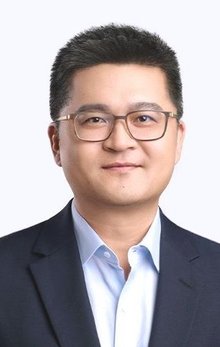
Cyril Xinyi Han
CEO
Erik Jivmark
Chief Executive Officer