
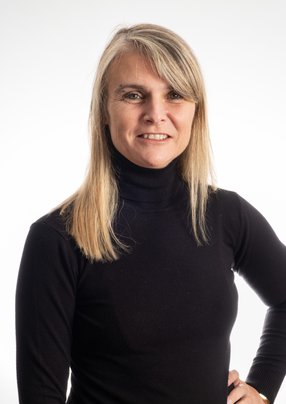
Sanofi's Vanessa Clemendot: Leading Healthcare Supply Chains

Agility, empathy and foresight. These are the three qualities Vanessa Clemendot says are crucial to leadership. Having spent 25 years at L'Oréal before moving to Sanofi as Global Head of Supply Chain, she is certainly talking from experience.
Vanessa joined the pharmaceutical and healthcare giant late in 2025 after spending a quarter of a century at L'Oréal, where she held a host of prominent supply chain leadership roles across the group’s four divisions in France, Canada and the US.
Her time at L'Oréal culminated in her position as Chief Supply Chain Officer for North America, which involved looking after US$11bn in annual revenue and taking responsibility for the end-to-end management of the supply chain across all distribution channels.
Now, Vanessa is embracing a new challenge in a new sector – and in a new city, Paris, as she settles into her new role. From beauty to biopharma, it’s a fascinating change – and “embracing” is certainly the word for one of supply chain’s most experienced leaders.
“The move to Sanofi represented a natural evolution," Vanessa says. “What attracted me most was the transformative purpose. In beauty, we helped people feel their best. In pharmaceuticals, we're saving lives every day. There's an urgency and meaning that's simply unique. Sanofi's global network – with more than 30 manufacturing sites, more than 100 distribution centres and complex regulatory requirements – represents an operational challenge that truly energises me.
“Sanofi had built a solid foundation through its transformation journey, and my mission is to accelerate and re-invent the future of supply chain, integrating AI at full scale. Finally, Sanofi's culture – ‘Aim Higher, Act for Patients, Be Bold and Lead Together’ – aligns with my personal values and with how I believe leadership should operate. When purpose, ambition and culture come together like this, it's not just an opportunity, it’s a calling.”

Human connections
Supply chain is unrecognisable from when Vanessa entered through an internship while she was at college in the UK. She completed a Master’s programme in Supply Chain and Logistics and then, when L'Oréal came calling, she would end up staying for 25 years.
Now, having crossed the Atlantic from New York for Paris, Vanessa’s day starts at 7.30am when she takes her children to school – “it grounds me before the day takes off” – and business begins as she checks in with the Sanofi network.
Sanofi is a truly global company, headquartered in Paris and doing extraordinary work in healthcare. The R&D‑driven, AI‑powered biopharma group focuses on medicines and vaccines, with a core strength in immunology and a growing portfolio in specialty care, vaccines and rare diseases.
Collaboration, as you would expect, is key, and makes for a busy life.
“I visit operations personally, from China to Barcelona, Hyderabad, Boston, Seoul, Tokyo and yes, France,” Vanessa says. “Not for ceremonial inspections, but to understand how teams innovate, where friction exists and what local excellence deserves to be scaled globally. These human connections are what make our global network operate as one coherent system.”
Beyond the numbers
Under CEO Paul Hudson’s ‘Play to Win’ strategy, Sanofi has spent the past several years refocusing on high‑growth, innovation‑led areas, completing the spin‑out and sale of its consumer health arm Opella in 2024-2025 and redeploying proceeds into R&D, business development and shareholder returns.
For Vanessa, however, success goes well beyond numbers and mission statements.
“For me, success in managing a global-scale network isn't just about numbers, though they matter,” she continues. “It's about three interconnected dimensions.
“First is operational excellence with purpose-achieving 99%+ OTIF, optimising inventory while maintaining reliability and enhancing cost-to-serve, all while ensuring no patient goes without their medication because of our supply chain.
“Second is intelligent resilience-anticipating disruptions before they materialise through digital twins and what-if scenario modelling, building strategic redundancy without waste.
“Third is sustainable transformation – being environmentally responsible throughout our operations, integrating sustainability into supply chain design and creating economic value while protecting the planet our patients call home. Success is when patients anywhere receive their medications on time, reliably, while we operate efficiently and sustainably.”
Strength in diversity
Sanofi’s modern structure dates back to mergers in the early 2000s. It now generates more than €40bn (US$47bn) in annual sales with a workforce of at least 90,000 people worldwide, positioning it among the world’s largest pharmaceutical companies.
Its long‑term growth is anchored by Dupixent, a blockbuster immunology drug developed with Regeneron, alongside newer launches such as the hemophilia A therapy Altuviiio and the cancer medicine Ayvakit, which together have significantly contributed to recent double‑digit quarterly sales growth at constant exchange rates.
Sanofi operates within a healthcare industry beset by unprecedented disruption over the past decade. What have these moments taught Vanessa about the balance between resilience and flexibility?
“The past years – COVID, the Ukraine war, trade tensions – have taught me profound lessons about how supply chains must evolve,” Vanessa says. “Resilience is not rigidity, it is all about fluidity. True resilience means structured flexibility – the ability to reconfigure rapidly without losing efficiency.
“Anticipation beats reaction. We can't predict everything, but we can build systems that sense changes earlier. Our AI risk agents now identify potential disruptions weeks before they materialise, allowing us to take proactive measures.
“Diversity is strength. Dual sourcing, densified networks and strategic specialisation aren't about having one perfect plan – they're about having multiple pathways that allow us to respond to different scenarios.
“People matter more than processes or technology. In moments of crisis, it was our teams – their creativity, courage and commitment – that made the difference.
Transportation transformation
Sustainability is a key part of Sanofi’s mission. It is a strategic pillar, tying environmental and social targets directly to its purpose of building “a healthier and more resilient world for patients, the planet and society,” and organising its efforts under the Planet Care program.
The company joined the UN Race to Zero and set science‑based goals to reduce Scope 1 and 2 greenhouse gas emissions by 55% and Scope 3 by 30% by 2030 compared to 2019, on a trajectory to a 90% reduction across all scopes and net‑zero by 2045.
“At Sanofi, sustainability is integrated into the DNA of how we operate across our entire value chain,” Vanessa says. “Since we know that 80% of a product’s environmental impact is determined early in development, we've embedded a systematic eco-design approach into our key development and manufacturing activities. All our new medicines and vaccines – and 50% of our top 20 selling products – now follow our Eco-design approach.
“In transportation transformation, we've established operational rail corridors between France and China with innovative containers specifically designed for pharmaceutical cold chain requirements. We've made a strategic transition from active to passive cooling solutions, which simultaneously reduces CO₂e emissions and generates cost savings, and we've established new qualified sea lanes for vaccines in strategic markets worldwide.
“We also focus on healthcare system resilience, collaborating with others to reduce the environmental footprint of healthcare systems and understand how our treatments can support healthcare decarbonisation.”
Miracles of science
On every level, Sanofi’s mission is deeply human. The claim, “we chase the miracles of science to improve people’s lives” is a lofty one, and at another organisation might be a soundbite. At Sanofi, it is clear that this purpose has a deep influence on the everyday running of the company – and of its supply chain.
“It’s our common purpose which guides every significant decision,” Vanessa expands. “This manifests in concrete ways throughout our operations. When we designed our inventory automation capabilities, we could have optimised purely for cost, but instead we deliberately excluded life-saving drugs from full autonomous execution.
“The reason is simple: a patient's life is more valuable than any cost savings we might achieve.
“Similarly, when we invest in resilience – dual sourcing, redundancy, stress testing – we recognise this costs money, but when a life-saving drug almost went out of stock and our AI agents detected it weeks in advance, the return on that investment was infinite.
“The result is a supply chain that not only functions efficiently but serves with genuine purpose, where every team member understands that their work directly impacts whether patients receive the treatments they need.”
Space for solutions
Leadership requires so many attributes. It is rare to find an individual with both the professional drive and personal qualities to make profound differences to every organisation they work at. For Vanessa, however, leadership is not just about taking others along for the journey – it is about allowing them to discover their own path.
“At 50, I've come to realise that true leadership isn't about having all the answers or being the smartest person in the room,” Vanessa goes on. “It's about creating space for others to find solutions – and role modelling what authentic leadership looks like.”
Twenty-five years at L'Oréal is a hard act to follow. But in the second stage of her career, Vanessa is feeling right at home, both at Sanofi and, of course, in the city of lights.
“The beauty of my role is that every day brings something new,” Vannessa concludes. “What drives my schedule isn't routine, it's purpose.
“When the day winds down, I either spend time with my family planning our next adventure. I absolutely love to travel. Or I enjoy a lovely dinner with friends. That, I have to say, is one of the great joys of being back in Paris.”
Company portals
Executives
Vanessa Clemendot
SVP, Global Head of Supply Chain