
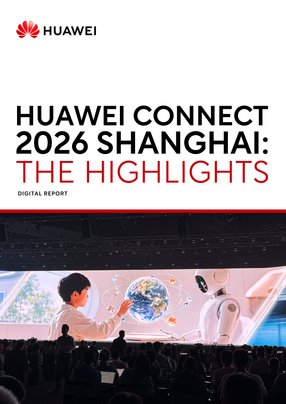
HUAWEI CONNECT 2026 Shanghai: Unlocking AI Transformation
If you want to go far, go together
September 2026’s HUAWEI event in Shanghai made it clear that while Huawei is most widely known as a smartphone manufacturer and telecoms infrastructure provider, it is also a force to be reckoned with in the rapidly evolving world of AI.
During the event, Huawei provided significant updates on its AI strategy, launched new AI infrastructure products and presented its blueprint for a future AI infrastructure buildout.
However, it was not just about Huawei. In today’s complex enterprise AI environment, no company can succeed in isolation and Huawei knows that the best way forward involves building wide-reaching ecosystems and developing strong partnerships.
For example, during the event, Huawei announced it is increasing support for partners assisting customers with their AI transformations and highlighted both its commitment to open-source and the sheer size of its Kunpeng ecosystem.
Additionally, Huawei and Canonical announced that they will work together to drive overseas adoption of the Ubuntu OS and the Kunpeng platform.
HUAWEI CONNECT was attended by nearly 20,000 visitors, featured more than 300 AI keynotes, summits and sessions, along with a 22,000m2 exhibition. The latter allowed visitors to experience the company’s new products and scenario-specific solutions, along with customer AI success stories.
In this report, AI Magazine, in association with Huawei, covers the major themes and announcements from the event, including the launch of the Atlas 960E SuperPoD, how it is tackling the long context memory problem and Huawei Cloud’s latest AI Cluster Service (AICS).
What is Huawei's New AI Infrastructure Strategy?
Huawei’s David Wang, Deputy Chairman of the Board and Rotating Chairman, highlighted its commitment to building powerful AI infrastructure
During the first day of the HUAWEI CONNECT 2026 event in Shanghai, the ICT vendor announced several new products, including the Atlas 960E SuperPoD, an upgraded TaiShan 950 SuperPoD, along with the OceanStor M900 memory context storage system and shed light on its plans to support the AI industry.
The event's opening keynote speech (Advancing the Agentic World, Building a Solid Silicon Foundation), which was given by David Wang, the Deputy Chairman of the Board and Rotating Chairman at Huawei, made many references to SuperPoDs.
This is a term for a computing system where multiple computing nodes are tightly coupled through high-speed interconnect. This enables them to share unified memory and function like a single computer.
Huawei's SuperPoD
Huawei's SuperPod design approach involves: connecting all cluster components under a single protocol with peer-to-peer interconnect, supporting cross-physical-server memory access and using short-reach copper alongside long-reach optics.
The company highlights that more than a thousand Atlas 900 A3 SuperPoDs have been deployed, while its Atlas 950 SuperPoD is seeing large-scale commercial use.
In addition, Huawei states that SuperPoD architecture cuts down on the need for intra-cluster communications, which eat up more than 40% of total training time when using traditional server architectures thereby heavily limiting Model FLOPs Utilisation (MFU).
According to simulation results from Huawei's Markov Lab, a 100k-NPU cluster built with 4k-NPU SuperPoDs can deliver a 2.75x increase in MFU compared to a 100k-NPU cluster composed of 8-NPU servers.
During his speech, David unveiled the Atlas 960E SuperPoD powered by UnifiedBus and Hi-ONE. Huawei says that this is the first SuperPoD to be based on near-packaged optics (NPO).
“SuperPoDs are designed to coordinate multiple NPUs through interconnect,” said David.
“We have developed a next-generation optical interconnect product based on NPO: the High-density Optical-interconnect-Node Engine (Hi-ONE).”
According to Huawei, the Hi-ONE features a transmission capacity of 7.2 Tbit/s per single engine, high bandwidth and reliability along with low latency and power consumption. These features, the company states, when combined with UnifiedBus, will make it far easier to scale up SuperPoD interconnect systems.
David also said that the Hi-ONE is “the industry’s first NPO product ready for mass production, delivering the largest transmission capacity. It is also the industry’s first NPO product with a built-in light source.”
Huawei recently submitted an implementation agreement (IA) on NPO to the Optical Internetworking Forum (OIF), a standards organisation, leading to widely positive feedback from industry partners. The vendor intends to continue working to refine the NPO industry ecosystem.

UnifiedBus is a high-speed bus that scales without limit to connect CPUs, NPUs, memory, SSDs, network interface cards (NICs), and switches.
It is the key interconnect technology that makes Huawei's Peerium Computing Architecture possible.
The Peerium Computing Architecture was announced on the day of David's speech.
According to Huawei, it allows 'processors at the million-scale to work as one computer', thereby helping to meet the demand for AI compute.
The Atlas 950 SuperPoD and SuperPoD-based SuperClusters are the first-generation of products to be built on the Peerium Computing Architecture.
SuperPoDs are designed to coordinate multiple NPUs through interconnect
In the press release announcing this news, Eric Xu, Huawei’s Rotating Chairman, said: “In the AI era, Huawei is drawing on the Peerium Computing Architecture we pioneered to continuously build the SuperPoDs and SuperPod-based SuperClusters that meet customer needs for training and inference, making computing power available everywhere and intelligence accessible to all.”
What performance gains does NPO unlock?
With that much-needed context out the way, let's get back to the Atlas 960E SuperPoD. Huawei says that it features an advanced orthogonal architecture and a fully liquid-cooled design.
With the unified memory address that UnifiedBus technology enables, a single SuperPoD can have up to 4,096 neural processing units (NPUs), making it capable of delivering 8 EFLOPS at FP8 precision and 16 EFLOPS at FP4 precision.
The use of 5,500 Hi-ONE units eliminates the need for the 48,000 800G optical modules that would normally connect the NPUs, cutting power consumption by more than 550kW.
Huawei also says that this doubles the system's fault-free running time and brings the system's availability up to 99.8%, while greatly accelerating 'innovation in training and inference for frontier models'.
With the UnifiedBus network or RDMA over Converged Ethernet (RoCE), multiple Atlas 960E SuperPoDs can be connected to build a larger SuperCluster.
With a two-tier, four-plane Clos architecture, Huawei states that the SuperCluster can interconnect up to 512,000 NPUs, rising to up to one million when combined with a multi-rail topology.
By applying the SuperPod architecture to general-purpose computing systems, Huawei has created products like the 'fully upgraded' TaiShan 950 SuperPoD. This uses UnifiedBus all-optical network, supports up to 4,096 nodes and has a unified memory pool of up to 256TB.
According to the vendor, this allows higher-density agent sandboxes, faster sandbox startup and improved agent vector search performance.
Unveiling the OceanStor M900
Huawei also launched OceanStor M900 – a UnifiedBus-powered context memory storage cluster that supports direct one-hop access and provides a petabyte-scale KV cache for the L3.5 layer.
It is designed for agentic inference with multi-tier KV caching for agent-heavy and longer-context workloads. It uses hybrid media and an optimised retention algorithm, which Huawei says extends SSD read/write lifespan by 16-fold.
The Shenzhen-based vendor adds that its Ascend chip series is the most vital component in its 11-chip UnifiedBus-powered portfolio for SuperPoDs and SuperClusters.
The Ascend 960DT will be available in Q1 2027, three quarters ahead of the company's original roadmap, while the Ascend 960PR will be ready in Q3 2027, one quarter ahead of schedule.
“We're evolving our Ascend chip series on a one-generation-a-year cycle,” said David.
“In 2028 and 2029, we will roll out the Ascend 970 and 980 chips, respectively. Thanks to the Tau (τ) Scaling Law, not only will their compute specifications continue to double, but you can also expect to see huge improvements across the board in terms of memory.”

“At Huawei, we are committed to building powerful AI infrastructure and going open source and open system to build out computing ecosystems,” David said.
“We will continue to support native training for mainstream foundation models on Ascend and actively embrace a wide range of models and applications. Together, let’s lead the charge into the intelligent world.”
Growing communities
On the topic of open source and open systems, Huawei says that the Kunpeng ecosystem to date has attracted more than 4.16 million developers and more than 7,200 global ecosystem partners, with the community supporting more than 560 open-source projects worldwide.
In a similar vein, the company's Compute Architecture for Neural Networks (CANN), which is the foundation of the Ascend chipset's ecosystem has embraced community-driven open-source development.
According to Huawei, external CANN developers now outnumber internal developers. The company adds that more than 40 models have been natively trained on Ascend and CANN, and that Ascend is the first official Chinese compute platform on PyTorch's website.
Charting its course
Much of Huawei's thinking is shaped by the speed at which AI is developing.
For example, the company notes that foundation model parameters are rapidly approaching the 10 trillion mark and are projected to exceed 100 trillion by 2030.
Huawei also expects that by 2030, AI agents will be able to work on tasks that will span months and that the number of inference tokens consumed each day in China will be measured in quintillions (1018), rather than the roughly 500 trillion seen today.
The company believes that these trends, combined with rapid advances in on-device AI mean that the underlying AI infrastructure of the future will be expected to deliver much more in terms of scale, performance and reliability.
As a result, it says that it is “laser-focused on building AI infrastructure” and that its strategy focuses on computing power, monetising hardware and working on its competitive edge through systems and architecture innovation. These efforts will be focused around its SuperPoDs and SuperClusters.
And we will continue to work together to drive shared success, growing together with our customers and partners around the world
Looking forward, Huawei intends to strengthen its AI capabilities in four main ways. It will:
- Combine Kirin and Ascend chips to drive self-reliance and autonomy in on-device compute.
- Bring together Pangu models and third-party models to make on-device intelligence better and easier to use.
- Completely redefine its HarmonyOS operating system from the ground-up to enable human-agent collaboration, turning it into an 'Agent OS for ubiquitous intelligence'
- Continue to cultivate a diverse AI ecosystem.
In addition, it is planning to build on-device computing platforms for AI phones, AI PCs, vehicles and homes.
The company envisages being able to provide distributed swarm intelligence, with intelligence services operating continuously in an integrated way across a person's mobile, office, vehicle and home.
Concluding his speech, David said that AI “may well be the final technological revolution in human history,” noting that its impact is deeper and broader and coming faster than anyone could have imagined.
“No single company,” he said, “can build an intelligent world alone.”
David added that Huawei will remain committed to building a solid silicon foundation to make computing power readily accessible to all, keep open-sourcing its software and continue to embrace a wide range of models and applications.
“And we will continue to work together to drive shared success, growing together with our customers and partners around the world,” David concluded.
"Let's work together to build a fully connected, intelligent world."
Canonical and Huawei’s Ubuntu/Kunpeng Collaboration
Ivan Ramos Garza, VP at Canonical says that Huawei and Canonical will work together to drive overseas adoption of the Ubuntu OS and the Kunpeng platform
At the recent Huawei Connect Kungpeng Summit in Shanghai, Ivan Ramos Garza, Vice President at Canonical announced a deep new open source strategic partnership between his company’s Ubuntu open-source operating system and Huawei’s Kunpeng open source computing platform.
Their aim is an ambitious one: to build a new ecosystem for the global computing industry through open-source and open innovation.
Canonical provides open source security, support and services, covering elements of the software stack from the kernel to containers, along with databases and AI. Its customer base encompasses top tech brands, start-ups, governments and home users.
Kunpeng is a computing platform and server processor brand from Huawei, which is based on ARM architecture. It includes TaiShan servers, which use Kunpeng processors, motherboards and development kits.
Canonical states that Ubuntu enables secure and efficient AI inference workloads on Huawei Kunpeng servers and that the integration of Canonical’s open source enterprise technologies with Huawei’s hardware portfolio enables organisations to build secure high-performance infrastructure without vendor lock-in.
According to Huawei, the Kunpeng ecosystem to date has attracted more than 4.16 million developers and more than 7,200 global ecosystem partners, with the community supporting more than 560 open-source projects worldwide.
The partnership’s three focuses
In a speech, Ivan explained that the partnership has three main activities: co-development, co-innovation and co-marketing.
Co-development: Using current and future generations of Kunpeng, Canonical will complete the full stack of its Ubuntu OS and upper-layer technologies.
Through doing so it will enable deep product adaptation and enablement for the Kunpeng platform. Huawei states that this will fully unleash the platform’s ‘performance, security and reliability advantages’.
”Through our collaboration with Huawei Kunpeng, we are empowering organisations to scale agentic AI development on an open source platform built for performance and security," said Ivan Ramos, VP Alliances at Canonical.
“Our partnership will deliver an optimised Ubuntu for Kunpeng compute, delivering the high-concurrency, precision, and high-throughput inference necessary for next-generation data centres,” he added.
“Together, we will keep shaping the future of ARM-architecture optimisation and performance.”
In addition, the two parties will create differentiated, scenario-based solutions.
Co-innovation: As part of their partnership, Canonical and Huawei intend to innovate together across fields such as ARM computing, Agentic AI integration, AI management and control, and multi-model elastic capabilities.
Co-Marketing: Canonical and Huawei will work to expand the geographic reach of Ubuntu and Kungpeng through their joint marketing developments in overseas regions, including Asia-Pacific, the Middle East, Africa, Latin America, and Europe. Together, they will explore market opportunities in key industries such as finance, government, and public services.
As this collaboration is taking place against a backdrop of rapidly growing use of the ARM architecture, Huawei and Canonical expect that their alliance will expand both Ubuntu’s and Kunpeng’s market share.
How is Huawei Addressing the Long Context Memory Problem?
Huawei's OceanStor M900 Context Memory Storage is aimed at solving a key cause of inefficiency when performing AI inference in hyperscale data centres
While compute for AI was a big focus at September’s HUAWEI CONNECT event in Shanghai, Huawei did not neglect advanced data storage, arguing that it should be seen as a key foundation in the AI era.
In the AI era, the value of data has undergone a qualitative leap, which means the role of storage must also change accordingly
According to Huawei, the rapidly increasing context window of cutting-edge reasoning AI models, triggered in part by the many rounds of dialogue involved in agentic AI, is driving explosive growth in the size of KV Cache – AI models’ working memory when performing inference.
AI inference efficiency
The industry believes that the traditional method of relying on GPU memory and system memory to store KV Cache is no longer sustainable in terms of computational efficiency, cost and capacity.
The AI industry’s typical storage hierarchy for inference (starting with the fastest and most expensive type with the smallest amount of storage) is:
- L1 (HBM)
- L2 (DRAM)
- L3 (local SSD)
- L4 (archived/shared storage)
When performing long-sequence inference, KV Cache bottlenecks can occur in high-concurrency scenarios due to insufficient capacity at the L3 layer and inadequate performance at the L4 layer.
While the ideal solution would be to store all KV Cache data in the high-speed L1 and L2 layers, this is too expensive to be practical.
Naturally, more people in the industry have come to realise that the solution involves creating a L3.5 layer to fill the gap between expensive GPU memory and slow traditional network storage.
Another issue Huawei highlighted is that with thousands or more compute tasks running simultaneously in ultra-large scale data centres, KV Cache needs to be shared across an entire cluster to eliminate the inefficiencies and waste created by some tasks having memory allocated to them that they aren’t using or the same data either being loaded into memory or searched for multiple times.
A shared memory space
Huawei’s answer to these problems is its new OceanStor M900 Context Memory Storage, which David Wang, Deputy Chairman of the Board and Rotating Chairman at Huawei, announced at HUAWEI CONNECT 2026.
Intended for AI inference in hyperscale data centres, it provides them with a fully shared memory space that offers PB-scale capacity and TB/s-level performance.
Global pooling and sharing with tiered storage is made possible by a high-speed UnifiedBus interconnect network and the solution boosts the available KV cache capacity per NPU from gigabytes to terabytes. The latter means that more context can be reused, shared and stored, significantly boosting the KV cache ratio.
Huawei states that the OceanStor M900 is the industry's first architecture to integrate the CPU, network controller unit, and NAND controller unit.
Through using native KV semantics to enable a one-hop connection between the SuperPoD’s NPU to SSDs, the company says that it has achieved a 90% reduction in access latency and that this architecture doubles the inference cluster's token throughput and halves the time to first token (TTFT) during typical AI programming scenarios.
Data is the foundation of AI, but so far, data has never been at the centre stage of AI. But people will pay more attention to data because the bottleneck has already emerged
In another industry-first, the OceanStor M900 uses KV-aware adaptive storage technology to extend SSD endurance by 16 times, by enabling up to 24 drive writes per day.
This reduces the need to replace media, cuts O&M costs and lowers the long-term costs of large-scale AI inference infrastructure, enabling faster AI adoption.
The economic and social benefits of data storage
During HUAWEI CONNECT's Data Storage Summit, Huawei and Ernst & Young (EY) released their jointly written Future-proof Data Storage Power white paper.
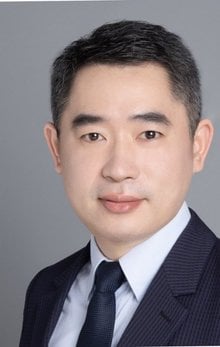
Dr Liang Ye, Strategy and Transaction Partner at Ernst & Young, highlighted while speaking at the event: “In the AI era, the value of data has undergone a qualitative leap, which means the role of storage must also change accordingly.
In the past, when we talked about storage, we cared most about whether capacity was sufficient, whether speed was fast, and whether data could be stored securely.
“Today, they are still important but not enough. What AI truly needs is for storage to continuously transform scattered data into high-quality data sets, further turn them into knowledge and memory, and make them readily callable at any time during training, inference, and agent operation.
"In other words, storage is moving from the capacity centre of the past toward the value release centre of the AI era.”
One of the white paper's goals is to encourage the AI industry to stop ‘emphasising computing power while neglecting storage capacity’. It also seeks to build a consensus on the development of computing and storage synergy.
It includes an analysis of the economic and social value of advanced data storage.
The report states that every dollar invested in advanced data storage capacity yields US$10 in direct GDP/industrial value, US$44 in industrial derivative value (economic value) and US$50 in social value, through enhancing public services, disaster avoidance and other social goods.
The white paper argues that in the modern era, enterprises need an advanced data storage foundation that is integrated into the overall AI ecosystem, rather than isolated storage devices.
The need to be data-ready
At the summit, Thomas Meyer, Senior Vice President, WW and EMEA Research, IDC, gave some wider context, noting that a lot of organisations are stuck in their pivot to AI.
He added that Western European organisations have “the least success in terms of getting a return from AI and overshooting budgets” when compared to those in the US and China.
He also said that the percentage of proof of concepts that deliver measurable outcomes had increased from 40% to 52% between 2024 and 2026.
Thomas described data-readiness as an underestimated challenge. In his conversations with CIOs, “In terms of AI, they just do not feel data-ready, whether that is tools that do not integrate or it is the lack of real-time data they are facing, agents that operate without shared governance.”
Thomas also echoed Huawei’s point about the impact of widening context windows.
“If you think about token length getting longer and longer and longer, you now need to start thinking about what you are doing about your external storage acceleration in terms of being able to maintain your inferencing level of quality.”
The end-user perspective
Also speaking at the summit were representatives from several end-user organisations.
Onur Vatandaş, IT Infrastructure Assistant Manager, Türkiye, at İşbank, Türkiye's first national bank, said that his company selects a data storage platform based on the “right balance of technical capability, resilience, and cost”.
He concluded by saying that "The future of data infrastructure is not about choosing one technology for us.
"It is about building a foundation that is resilient enough for critical core services, scalable enough for continued digital growth, flexible enough to support file and object data, and ready for the requirements that AI will bring."
Some of the other organisations that presented at Huawei’s Data Storage Summit were:
Auchan Retail: A major retailer that sells to consumers across 12 countries and 2,896 points of sale.
The Hong Kong Jockey Club: Established in 1884, it operates three racecourses: two in Hong Kong and one in Conghua, Guangzhou, China.
Huawei Cloud Announces Global AI Cluster Service Launch
Dr Peter Zhou, Director of the Board at Huawei and CEO of Huawei Cloud, gave an update on the business unit’s progress at the HUAWEI CONNECT 2026 event
Huawei Cloud, a Huawei business unit, has announced the global launch of its latest AI Cluster Service (AICS) as part of a strategy to strengthen its ‘cloud silicon bedrock and reinforce the foundation for agentic AI’.
AICS incorporates a five-level fast recovery mechanism with full-chain observability. Huawei Cloud states that it is capable of fault recovery within 10 minutes and supports stable training on cloud for more than 40 days.
Combined with coordinated optimisation across scheduling, cache and algorithms, Huawei Cloud says that AICS delivers 20% higher token throughput when compared against the previous generation of compute services.

The business unit also said that its Agentic Infra paradigm – which focuses on efficient tokens, enhanced memory, unified general and AI scheduling and secure autonomy – has served more than 3,500 customers to date. Huawei Cloud launched Agentic Infra back in June 2026.
“In the agentic era, infrastructure no longer simply exists to provide compute,” says Dr Peter Zhou, Director of the Board at Huawei and CEO of Huawei Cloud.
“Instead, its purpose has expanded to making every token more efficient, coordinating general and AI compute, enabling models to keep learning, and, more importantly, running agents securely and reliably within real production environments.”
Memory storage and model services
Huawei Cloud addresses the memory capacity and access efficiency requirements of long-horizon agent tasks, through its Context Memory Storage (CMS) solution, which features a petabyte-scale memory space.
According to Huawei Cloud, its CMS delivers twice the storage capacity of comparable industry products and supports high-speed terabyte-scale memory reads with 50% higher performance than industry peers.
The business unit also highlighted its Agentic Model as a Service (MaaS) offering, which allows developers to use state-of-the-art models from leading providers with a single click without the need to deploy them.
During the event, MiniMax demonstrated an advanced multimodal model that combines with Huawei Cloud to deliver open multimodal capabilities.
Based in Shanghai, China, MiniMax is a company that develops proprietary LLMs across various modalities.

Open-source agent development
Huawei Cloud is advancing its enterprise-grade agent offering both through commercial and open-source approaches.
It consists of AgentArts, an enterprise-grade agent platform with full harness engineering capabilities, and its open-source edition, openJiuwen.
The offering opens more than 5,000 general Model Context Protocol (MCP) assets and more than 1,000 industry-specific MCP assets to help enterprises develop, use and manage agents.
To date, the offering has served more than 100 customers, including China Southern Power Grid, Guangzhou Laboratory, KingSoft Office and KingMed Diagnostics.
At the HUAWEI CONNECT event, KingSoft Office discussed how it integrated Huawei Cloud’s agent platform with WPS 365 Document Center and WPS Comate to build vertical office agents for multiple industries, including the finance and government sectors.
Huawei Cloud plans to make AgentArts commercially available in markets outside China on December 30.
The openJiuwen open-source community has accumulated more than 50,000 stars and 3.29 million downloads.
Huawei Cloud has also launched partner commercial editions alongside Chinasoft International, iSoftStone Group and Beiming Software.
Expanding industry AI zones
Huawei Cloud’s Industry AI Foundry brings together industry scenarios, models, data, knowledge and agents to turn the learnings from isolated industry projects into reusable capabilities.
The foundry has accumulated more than 1,000 industry assets across more than 1,000 deployed projects.
The business unit has added two new industry-specific zones to the Foundry – The Smart Government Zone and the AI Hardware Zone – taking the number of zones to seven.
The Smart Government Zone features 24 founding partners and covers public services, urban governance and government office operations.
The AI Hardware Zone has onboarded 15 core partners covering more than 20 device types – including AI glasses and AI recording cards – alongside more than 10 scenario templates and more than 110 scenario skills.
The zones that have already been established by the business unit cover smart healthcare, embodied AI, AI for science, smart manufacturing and smart finance.
Huawei Boosts Partner Support to Assist Customer AI Adoption
Leo Chen, Huawei's SVP and President of Enterprise Sales, has discussed how it is helping its partners support their customers’ AI transformations
Huawei introduced its SCALE partner support system at the recent HUAWEI CONNECT event in Shanghai.
This framework equips partners with capabilities to transition their customers from individual pilot projects to large-scale AI integration.
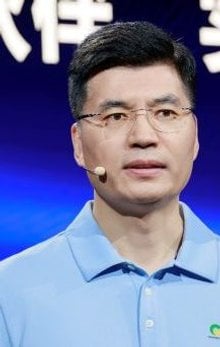
“The intelligent era is approaching fast,” said Leo Chen, Huawei's Senior Vice President and President of Enterprise Sales.
“Huawei works with partners to provide products and solutions that solve real business problems.
“We want to share our own capabilities with our partners. By empowering partners this way, they can bring their unique strengths to bear and help customers move from compute construction to intelligent application.
“Huawei is fully committed to helping our customer-centric 'Huawei + Partners' collaboration system thrive. We want to help partners solve customer issues more efficiently and help customers achieve large-scale AI adoption.”
Overcoming deployment challenges
Huawei’s SCALE initiative addresses five distinct challenges partners encounter when scaling intelligent industry projects.
These include solution development, integration verification, solution delivery, operations and maintenance, and system collaboration.
To address these issues, according to Huawei, the initiative provides five types of support: scenario-based solutions, co-innovation, aligned marketing, local services & consistent quality and efficient collaboration.
Starting with the first of these, Huawei supplies its partners with ‘open, easy-to-integrate’ AI foundation products that can be used to rapidly develop new AI solutions. These span compute, storage, networks, security and data protection.
Huawei has recently added to this line-up with the addition of SMECE and DCS AI (more on these two later).
Huawei’s partners have used its product range to develop more than 100 scenario-based solutions for the acceleration of AI adoption across eight industries.
In this upcoming era of true intelligence, scaling proven practices across industries will allow more companies to thrive
As part of Huawei’s approach to co-innovation, it has opened up its reference architectures for 48 high-value scenarios to help partners design solutions and set up test environments.
The company also provides unified interfaces along with development and verification tools through its cloud-based OpenLab environment.
On the aligned marketing front, Huawei is sharing its Market-to-Lead process capabilities and helps its partners bring their customer-facing solutions to market effectively.
It also helps them display their solutions at events, and has already worked with its partners to build more than 130 online and offline customer showcases globally.
Huawei’s two new AI solutions for its partners
During the event, Huawei released its new SMECE and DCS AI solutions. These are designed to help the company's partners convert their industry expertise into practical AI applications.
SMECE features open, easy-to-integrate elements across compute, storage, networks, security, and data protection tailored for specific market ecosystems.
DCS AI is an AI-ready version of Huawei's Datacenter Virtualization Solution (DCS).
It has been engineered to handle end-to-end AI workloads from data processing and model training to deployment.
It features full-stack software and hardware optimisation to aid AI model training and inference performance, and cut total ownership costs.
And that’s a wrap

The advancements showcased at HUAWEI CONNECT demonstrated Huawei’s commitment to driving the next wave of global technology transformation.
Moving forward, Huawei’s success will rely not only on its hardware and software, but on the strength of the developer and partner ecosystems it so heavily championed in Shanghai.






Executives

Dr Peter Zhou
Director of the Board at Huawei and CEO of Huawei Cloud
Dr. Liang Ye
Partner, Sector leader of Advanced manufacturing and mobility
Ivan Ramos Garza
Vice President, Alliances and Verticals
Leo Chen
Senior Vice President and President of Enterprise Sales

Onur Vatandaş
Assistant Manager at Türkiye İş Bankası

Thomas Meyer
SVP, IDC Research

Wang Tao (David Wang)
Deputy Chairman, Rotating Chairman at Huawei