
Visionary Leadership: How SERI is Scaling Global Eye Health
When the Singapore Eye Research Institute (SERI) was founded 1997, Singapore had one of the highest rates of myopia in the world. In the close-to 30 years since then, the institute has been paving the way for significant improvements in how eye diseases are treated and prevented – not just in Asia, but on a global scale.
This has largely been through its landmark research projects and focus on translational medicine – taking basic scientific discoveries into clinical applications to improve patient health.
“In the early days, SERI was really focused on research,” says Professor Jodhbir Mehta, Executive Director of SERI. “Even back then, myopia was a big risk factor for eye disease within the South Asian population – with over 80% of adult Singaporeans having myopia.”
Over the years this focus has evolved beyond research , says Jodhbir (or Jod to his friends and colleagues).
“I think that the translational side – or the link to clinical outcomes – has always been there,” he says. “But over the years, it has changed what we’ve been researching with the introduction of new trends and platforms.
“We now have a separate AI and digital health platform, and we’ve developed other platforms that we think are vital for translational research.”
SERI has a significant preclinical platform, as well as a clinical trials platform – allowing its team to follow the pathway from the laboratory bench to the deployment of clinical solutions.
“For our staff, it shows them a route where they can translate their research work,” Jod says. “I think that’s been one of the core functions for SERI over the more recent years.”
Improving patient outcomes
For Jod, one of the key advantages to the way SERI operates is the relationship it has built between prioritising clinical outcomes and championing research innovation.
“We see patients every single day from the Singapore National Eye Centre,” he says. “That really acts as a stimulus for all of us to improve outcomes for the individual.”
The goal in this work, Jod explains, is to “hopefully see the biopharmaceutical or technological device developed to go to patients, so you can try to improve outcomes for individuals – especially for the people with advanced visual loss.”
He suggests that promoting a culture of curiosity among employees is essential to best facilitate these positive outcomes for both individual patients and wider research innovations.
“There’s several things we do to encourage curiosity,” he says. “One of them is looking at a base level of research, to understand the outcomes and results of what we’re currently doing – or the status quo at that time period. That will then give teams ideas on how they think they can make things better.”
From a leadership standpoint, Jod says that the organisation is “always,” looking at how it can support clinician scientists and researchers to develop a career path “where they’re able to do research in a protected time” and aren’t “swamped” in clinical work.
“There’s several grant schemes available for clinicians to do just that,” he says. “This role is a very difficult one for most people, because it's balancing that time you have to do research against clinical practice – which requires not only a drive from the individual, but at institutional level as well.”
From there, SERI has worked to create an “ecosystem,” through administration and support that allows people to “translate the research,” taking it from initial experimentation all the way to preclinical work.
“It involves investment in the individuals who want to do this career path, but I think everybody in the wider clinical facility has to support this concept, hence must be driven by the leadership.”
Visionary innovation
Some of the key medical innovation SERI is taking on is centred around AI – which Jod says is “dominating everywhere”.
“We’ve been using some form of artificial intelligence for quite some time,” he says. “It’s just come a little bit more into the forefront.”
In the medical field, however, he says that people have been “a little slow,” to start using the technology – despite the fact that it can be used as a vital tool to combat what Jod describes as a “tsunami of diabetes”.
“Worldwide, there's a whole tsunami of diabetes,” Jod says.”And diabetic retinopathy is often one of the most severe complications of this as well.”
The percentage of adults globally with Diabetes stands at 14%, says the World Health Organisation – a significant increase from 7% in 1990.
One of the most significant areas SERI has been working across in regards to AI imaging is diabetic retinopathy screening. “One of the nice things about ophthalmology is that we are very heavy on imaging,” Jod explains. “You can image the eye in unbelievable detail, more than in almost any other part of the body. The detail is unparalleled.”
Unlike expensive and cumbersome MRIs or CT scans, these high-resolution ocular images are relatively cheap to take, providing the massive, high-quality data sets required to train sophisticated AI models.
By implementing automated screening for diabetic retinopathy, AI performs a first pass – identifying early-stage disease in fundus photographs before a human doctor even sees them.
This ‘first pass’ ensures that early signs of complications – which can be among the most severe results of systemic diabetes – are caught well before they become vision-threatening.
By using algorithms to act as a virtual primary care physician, this system is able to automatically triage individuals to the correct specialised areas – helping patients receive the right treatment at the right time.
Building collaboration and scaling research
In order to build and scale these research innovations into real outcomes, Jod says that the institution has to be “quite realistic,” about the fact that it often requires “an extensive amount of funding”.
“It can’t just come from academic grants,” Jod says. “That’s where you need to look at alternative partnerships – through licensing deals/spin-offs and working with industry – to see how a research model will actually work.”
Academics often “get stuck,” at later commercialisation stages, Jod explains – which is why SERI established a dedicated technology development and business office to better educate their researchers and help build collaboration between partners.
“Different members of the team will present, in almost a Shark Tank kind of forum, which lets them get feedback on how their product can go forward commercially,” Jod says.
This collaborative philosophy can also be seen in SERI’s long-standing partnership with the Ziemer Group.
“SERI’s translational research association with the Ziemer Group started around 14 years ago,” says Jod. “In that time, the partnership has really developed from us being a user of their laser technology to then helping to develop software with them through research.
“It’s unbelievable to see what we can now do with the same laser system – and working in collaboration with Ziemer, the researchers and clinicians from SERI have really allowed us to implement a lot of new things. We are using the laser now for a lot of our work in cornea and refractive surgery.”
He attributes the success of the collaboration between Ziemer and SERI to an alignment of values, such as a shared focus on innovation and a belief in the underlying technology. “If you don’t believe in the technology yourself, it’s very difficult to work with a company. The uniqueness of that laser system has allowed us to truly innovate within the field of cornea and refractive surgery.”
Proactive disease prevention
As significant developments and innovations such as these transform the field of healthcare, Jod is turning his focus to how SERI can make the shift from reactive treatment to the proactive prevention of disease – particularly in an aging society such as Singapore’s.
“In the last 10 to 15 years, there’s been such a shift in outcomes, and things are going to get even better,” Jod says. “I see new things that are coming into pipelines, and I see how that can be instigated into medical practice.”
Helping patients maintain vision is critical for improving overall quality of life, with Jod saying that the institute is focusing on “healthspan”.
“The population in Singapore is the second highest in the world with respect to aging,” Jod explains. “So there’s a lot more focus on healthspan – and maintaining healthy vision has a direct effect on other faculties, such as cognitive health and frailty for a lot of elderly people.”
By using AI software to predict conditions like myopia progression or screening for diabetic retinopathy while developing biopharmaceuticals and cell-based therapies to replace traditional procedures, the institution is improving its capacity for individualised care – targeting diseases at the earliest, most treatable stages.
To help realise this goal, Jod is leading the team at SERI to build a strong translational ecosystem.
“We’re working to maintain and also develop the ecosystem within SERI to support not only the clinician researchers, but also the scientists,” Jod says.
“That gets more challenging every year, but it’s vital to have that chain developed for our researchers to produce the high quality publications that we want from academia, while also working with the Translational Development and Commercialisation team (TD&C) to translate those outcomes from academic publications and citations into clinical practice.”
Having this ecosystem in place is crucial for SERI’s work to have a real impact on the people it serves.
“We’re producing a lot of academic papers.” Jod continues. “But without the translational work, our patients would never see the benefits of our research.”
Company portals

Executives
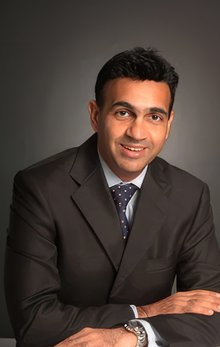
Professor Jodhbir Mehta
Executive Director of SERI