
AstraZeneca CEO: How AI Transforms Drug Development

Pascal Soriot, Chief Executive Officer at AstraZeneca, says artificial intelligence is helping pharmaceutical companies accelerate medicine development and improve research decision making.
"The value of AI in our industry is productivity improvement," Pascal says. "In the way you design a new medicine, a new drug, you can actually do it faster, do it smarter."
Pascal's comments come as investor concerns grow over whether large AI investments benefit the healthcare industry. He adds that AstraZeneca is already seeing applications across drug discovery and development, from identifying new targets to improving the design of potential medicines.
"You can come up with new targets, but also you can optimise your molecule [and] remove what you think are going to be potential side effects from the molecule, and AI helps you do this," Pascal says.

Improving clinical trial predictions
Pascal notes that AI is helping AstraZeneca make better decisions about which drugs to advance through the development process. Through its partnership with Tempus, the company is using AI models to analyse data with the goal of enhancing drug discovery and increasing the odds of success in late stage trials.
"We have developed an agent that takes all this data together – clinical data, laboratory data – and helps us predict the probability of success of a Phase 3 trial," Pascal says.
"We spend US$300m, US$400m, US$500m on a trial," he adds. "If you increase the probability of success, the productivity improvement is enormous."
According to the partnership terms, Tempus will receive US$200m in data licensing and model development fees. The company will contribute its large library of de-identified oncology data to help build the model.
Tempus partnership expands existing collaboration
Discussing the benefits of AI healthcare technologies in April, Tempus CEO Eric Lefkofsky said: "Generative AI and the emergence of large multimodal models is the final catalyst needed to usher in precision medicine in oncology at scale.
"Tempus has spent the last decade investing billions of dollars into collecting the necessary data needed for a foundation model of this kind to take shape."
The partnership builds on an existing relationship between Tempus and AstraZeneca. The two companies first worked together in 2021 and announced plans for an AI-driven oncology research and development alliance.
In 2023, they expanded the partnership with the deployment of Tempus' Next platform to support clinical decision-making.
Targeting faster development timelines
Pascal says implementing AI into AstraZeneca's operations is part of a strategy to halve chemistry, manufacturing and controls development time.
He adds that the system could enhance existing synthetic drug development by harnessing simulations, data and in-house expertise.
"AI is transforming our ways of working and is already embedded end-to-end across AstraZeneca, from discovery and development to commercial operations through to healthcare delivery," Pascal said in a May earnings call.
"This is not a future ambition," he added. "AI is delivering real, measurable impact today, right across our value chain."
The use of AI technology will be instrumental in AstraZeneca's goal of reaching US$80bn in revenue by 2030.
GSK explores similar applications
Mirroring Pascal's views, GSK CEO Luke Miels told journalists something similar on a call in April.
"We're using it to look at process, cost control and elements like that – but that is typically an off-the-shelf solution," he added. "The proprietary effort, and where we're putting our best AI people, is on the R&D component, particularly at the earliest stage – the translational part."
While GSK, like AstraZeneca, is exploring the use of AI in designing medicines, Luke also highlighted that the technology was being aligned with the company's mergers and acquisitions strategy of picking up potential rivals to established blockbusters.
Luke added: "The key thing is looking more broadly at where could that medicine be developed? Where could it be used that maybe the broader world may not have spotted?
"That becomes very important, not only with our own internal programmes, but even more important with business development, because that's a way that we could identify value that may not be fully reflected in that company or that product."
Company portals



Executives
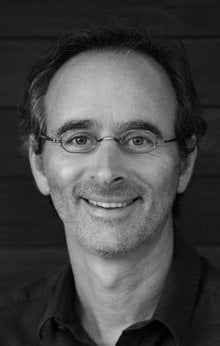
Eric Lefkofsky
CEO

Luke Miels
Chief Commercial Officer
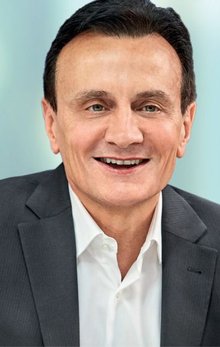
Pascal Soriot
CEO