
Augmented Reality can Transform Hospital Infection Training
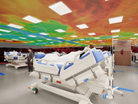
Healthcare-associated respiratory infections pose a threat in hospital settings, particularly during the colder months when seasonal illnesses peak.
Despite their prevalence, many healthcare professionals lack comprehensive knowledge about preventing these dangerous infections.
A collaborative training initiative between Dassault Systèmes and Saint-Louis Hospital AP-HP has been developed to address critical gaps in infection prevention understanding.
This programme could transform how hospitals approach seasonal preparedness and combat airborne disease transmission.

The hospital's infection prevention and control team, ESPRI, carried out an extensive study across the facility to examine hospital-acquired infections.
Their survey encompassed 300 healthcare professionals, ranging from doctors and nurses to administrative personnel.
The findings revealed that fewer than 20% of staff members could correctly answer questions regarding respiratory cross-transmission.
Respiratory infections represent a challenge within healthcare environments, particularly in open care spaces where airborne particles can circulate more freely.
According to ESPRI, this knowledge gap among professionals likely stems from insufficient regular and practical training opportunities specifically designed to address these risks.
Augmented reality training methods
The new training programme from Dassault Systèmes and Saint-Louis Hospital AP-HP enables healthcare professionals to learn through practical experience rather than conventional lecture-based approaches.
The methodology utilises Sense Computing and incorporates virtual twin powered augmented reality (AR) technology to generate digital replicas of hospital environments.
This system visualises airflow patterns throughout spaces, allowing doctors and nurses to fully comprehend the effects of airborne infections in open care areas.
Conventional training typically depends on passive learning through lectures, which may not adequately capture the complexities of real-world hospital settings.
Through AR technology, students and staff can engage with an immersive training experience that enhances their ability to perceive and reduce airborne transmission risks.
This innovative approach connects theoretical knowledge with practical application, empowering staff to make better-informed decisions concerning patient safety.
Dr Guillaume Mellon, Attending Physician, Head of Infection and Control Team at Saint-Louis Hospital AP-HP, says: "Augmented reality brings infection prevention training to life in a way that traditional methods can't.
"With an iPad in hand, professionals can move through their workspace, see how airborne particles travel and truly grasp the risks in real time.
"This hands-on experience makes training more engaging, memorable and impactful."
Virtual twin service capabilities
The partnership between Saint-Louis Hospital AP-HP and Dassault Systèmes has broadened through its Virtual Twin as a Service (VTaaS) approach.
This delivers advanced modelling and simulation capabilities to healthcare teams without requiring in-house technical expertise.
Leveraging Dassault Systèmes' extensive experience in virtual twin technology, VTaaS offers accurate insights within time and budget constraints to organisations.
The system can assist organisations in optimising ventilation systems and patient bed placement to reduce the risk of airborne respiratory illnesses.
Dassault Systèmes has created realistic simulations to estimate respiratory particle presence between patients.
Professor Benoit Plaud, Head of the Anaesthesia and Surgical Intensive Care Department at Saint-Louis Hospital AP-HP, says: "Before, we had very few tools to illustrate air contamination risks.
"The collaboration with Dassault Systèmes has allowed us to develop an innovative educational tool that uses augmented reality to give healthcare professionals a tangible understanding of how air contamination occurs, whether from patients or caregivers, by directly visualising airflow in open care spaces."
The simulations have demonstrated that respiratory particles can travel across rooms as far as 25 metres, indicating that infectious particles are not limited to the immediate vicinity around a patient.
This has reinforced the importance of well-designed ventilation and protective measures.
Company portals


Executives

Benoît Plaud
Président élu de la sous-section 48-01 anesthésiologie - réa, médecine péri-opératoire du CNU Santé

Dr Guillaume Mellon
Attending Physician - Head of Infection Disease Prevention Control Unit - Hôpital Saint Louis