BMS: Boosting AI Drug Discovery Capacity with NVIDIA Tech
Bristol Myers Squibb (BMS) is scaling its NVIDIA-powered AI infrastructure to create what the company describes as the “most powerful AI factory in life sciences.”
BMS already possesses one of the life science industry’s most powerful AI systems, also powered by advanced NVIDIA technology, to support its wide-ranging research and development programmes.
This second system will deliver up to ten times greater performance per megawatt than its predecessor.
The new system will deploy an NVIDIA DGX SuperPOD with DGX Vera Rubin NVL72 systems, creating the life sciences industry's most powerful and energy-efficient privately owned NVIDIA infrastructure.
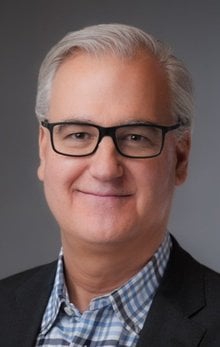
“BMS has made a deliberate bet on AI, and we are beginning to see it pay off in our pipeline and operations,” says Greg Meyers, Chief Digital and Technology Officer at Bristol Myers Squibb.
“We're committed to translating AI into real outcomes for patients, which requires infrastructure built to match that ambition. Expanding our compute capabilities with NVIDIA gives our researchers and teams across the business the scale they need to keep BMS at the leading edge of what AI can do for drug discovery and development.”
Accelerating drug discovery
AI-enabled drug discovery is one of the leading use cases for generative AI in the healthcare sector and BMS has been at the forefront of this movement since building its first NVIDIA-powered DGX SuperPOD three years ago.
AI agents that automate target identification and validation save researchers weeks of manual work, allowing them to focus on higher-value scientific decisions.
The company’s “Predict First” approach also uses AI to guide experimental design before laboratory testing, informing every small-molecule programme and most large-molecule programmes as part of an integrated, AI-powered drug development strategy.
“Drug discovery is a sequence of decisions made under uncertainty, and better decisions come from better evidence, faster,” says Robert Plenge, Executive Vice President and Chief Research Officer at Bristol Myers Squibb.
“This infrastructure lets us learn from every experiment and every clinical readout to sharpen the next hypothesis, allowing BMS scientists to spend less time on manual work and more time on the questions that require human judgment.
“The goal isn't speed for its own sake; it's raising the probability that each programme we advance is the right one.”
Improving research workflows
The expanded agreement supports the company’s research vision of “hybrid intelligence”, where AI co-scientists work alongside human researchers to improve workflows and research outcomes.
AI systems at BMS handle complex, data-intensive tasks, allowing scientists to focus on strategy, interpretation and decisions that require human expertise.
The new cluster will provide the computing power behind this approach, supporting foundation models trained on decades of proprietary data.
It will also facilitate AI-driven workflows that allow researchers to test hypotheses at a scale previously impossible.

“BMS has built decades of extraordinary scientific knowledge across some of the most complex areas of human disease,” explains Rory Kelleher, Senior Director of Business Development, Healthcare and Life Sciences at NVIDIA.
“With NVIDIA Vera Rubin and BioNeMo Agent Toolkit, BMS can transform that enterprise scientific data into proprietary intelligence and give agents domain-specific tooling that help scientists explore biology, design molecules and evaluate hypotheses at unprecedented scale – reinventing how medicines are discovered and developed.”
A growing AI ecosystem
BMS’s expanding AI infrastructure follows the company’s strategic partnership with Anthropic announced in May 2026, with the AI giant’s leading Claude agent set to be deployed across the company's research, clinical development, manufacturing, commercial and corporate functions.
Aiming to transition AI use from conversational tools to agentic capabilities built into day-to-day workflows, the BMS-Claude partnership aims to accelerate software engineering with Claude Code, embed agents into workflows that move drugs forward and connect Claude with the institutional knowledge embedded across BMS’s internal knowledge systems.
Anthropic also recently launched Claude Science, a dedicated product tailored to the demands of the life sciences industry.
Company portals


Executives

Greg Meyers
Member Board of Directors
Robert Plenge
Executive Vice President, Chief Research Officer, Head of Research