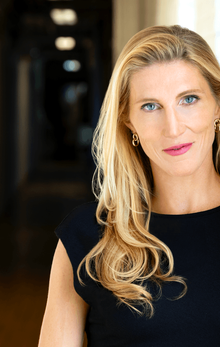
Dr Vanessa Kerry Named WHO Health Resilience Envoy
The World Health Organisation (WHO) has appointed Dr Vanessa Kerry as the WHO Director-General’s Special Envoy for Health Resilience, expanding her previous work on climate change and health into a broader agenda focused on strengthening health systems.
Vanessa, who became WHO’s first Director-General Special Envoy for Climate Change and Health in 2023, will engage with governments, development partners, multilateral institutions, civil society and the private sector to advocate for resilient, integrated and sustainably financed health systems.
Her appointment comes as countries face mounting pressures from climate change, disease outbreaks, conflict and funding constraints, with health systems expected to respond to both day-to-day needs and emerging threats.
- Founded: 1948 as the United Nations agency dedicated to global health.
- Membership: 194 Member States, governed through the World Health Assembly.
- Global reach: Works across six regions and in 150+ locations worldwide.
- Workforce: More than 8,000 professionals, including doctors, epidemiologists, scientists and managers.
- Headquarters: Geneva, Switzerland.
From climate change to health resilience
The role builds on Vanessa's work to elevate climate change as a critical health issue, while broadening the focus to the underlying systems and investments needed to withstand a range of pressures.
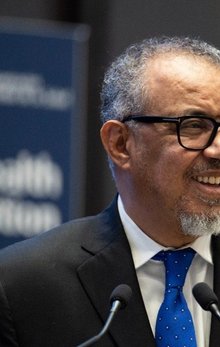
“This appointment reflects the natural evolution of Dr Kerry’s work with WHO,” said WHO Director-General Dr Tedros Adhanom Ghebreyesus.
“Her leadership in elevating climate change as a critical health issue has helped build momentum for stronger and more resilient health systems. As Special Envoy for Health Resilience, Dr Kerry will help advance WHO’s efforts to ensure countries have the financing, partnerships and integrated approaches needed to withstand current and future challenges,” he continues.
In a LinkedIn post following the announcement, Vanessa writes that the work she began in 2023 when she became Director-General Special Envoy for Climate Change and Health “isn’t over. It’s grown”, adding that the challenges facing global health in 2026 are “scaling”.
She points to a sharp decline in global health funding as governments reduce foreign assistance, alongside pressures from climate change, disease outbreaks, conflict and the return of preventable diseases.
The answer to the challenges, Vanessa writes, lies in “investing in resilient health systems able to deliver care day-to-day and hold when a shock hits.”
Investing in the fundamentals
As Special Envoy, Vanessa will advocate for greater investment in integrated health systems and sustainable financing for universal health coverage. This will include promoting domestic resource mobilisation, supporting resource mobilisation efforts and providing strategic advice to WHO leadership.
The role will also involve high-level advocacy with global, regional and national decision-makers, alongside efforts to strengthen coordination and alignment among global health partners and resources behind national priorities.
Vanessa said the appointment was not about creating a new programme or acronym, but about investing in the foundations that allow health systems to function.
“This isn't a new acronym, a new initiative or a new approach. It's investing in the fundamentals,” she wrote.

Those fundamentals include health workers, financing and infrastructure, as well as country-led approaches that can be sustained over time. The role will place particular emphasis on climate-resilient health systems, while supporting a transition away from fragmented approaches towards more coherent, integrated health systems.
“Resilience is not a singular programme – it's the foundation a health system needs to function every day, and to hold when the pressure comes, whether that's the slow strain of a changing climate or the sudden shock of a funding cut or a pandemic,” Vanessa says in the WHO announcement.
“You can't build that foundation crisis by crisis. It must be built over time – by investing in the necessary workforce, financing and infrastructure, owned and sustained by a country for itself.”
“Resilience is not a singular programme – it's the foundation a health system needs to function every day, and to hold when the pressure comes. ”
A country-led approach
Vanessa's appointment also reflects her wider work in strengthening global health systems. In her LinkedIn post, she connected the role to her almost 15 years as CEO of Seed Global Health, working alongside governments and partners to invest in the health workers who deliver frontline care.
She says the appointment “affirms the country-led approach we have long championed” and brings that vision to one of the world’s most important global health platforms.
The WHO said the role would support countries in building health systems that can deliver better health outcomes, advance universal health coverage and respond effectively to an increasingly complex risk landscape.
WHO's Health Resilience Envoy: key priorities
- Integrated health systems: Supporting more coherent, country-led approaches rather than fragmented programmes.
- Sustainable financing: Advocating for domestic resource mobilisation and stronger financing for universal health coverage.
- Climate resilience: Building on Vanessa's previous WHO role to champion investment in systems able to withstand climate-related pressures.
- Health workers: Promoting investment in the workforce and the infrastructure needed to deliver care.
- Global coordination: Aligning partners and resources behind national priorities and strengthening collaboration across the global health architecture.
WHO - key partners
World Bank
President: Ajay Banga | HQ: Washington, DC
The World Bank is an international development institution that works with WHO and national governments to strengthen health systems, expand access to care and improve health financing. Its support includes policy advice, technical expertise and development finance, helping countries build more resilient and sustainable healthcare infrastructure.
Gavi, the Vaccine Alliance
CEO: Dr Sania Nishtar | HQ: Geneva, Switzerland
Gavi is a public–private partnership that works with WHO, governments and other partners to expand access to vaccines in lower-income countries. It supports immunisation programmes, vaccine financing and outbreak response, helping countries build sustainable systems for delivering essential health interventions.
Company portals

Executives
Tedros Adhanom Ghebreyesus
Director General
Vanessa Kerry, MD MSc
Director, Global and Climate Policy, Department of Environmental Health