
Eli Lilly, UOB & Microsoft: This Week's Top Health Stories
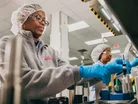

Eli Lilly and Company is a global leader in the pharmaceutical sector, employing more than 50,000 people around the world.
It is known for developing and producing medications in areas such as diabetes, obesity, oncology and immunology.
Eli Lilly has published its 2025 Year in Review, outlining its financial and sustainability progress throughout the year.
United Overseas Bank (UOB) operates through more than 500 offices spanning 19 countries and territories across the Association of Southeast Asian Nations (ASEAN) economic region, with presence in markets including Thailand, Malaysia, China, Indonesia and Vietnam. The bank's newly published 2025 Sustainability Report reveals the financial institution's approach to addressing climate challenges, expanding sustainable finance capabilities and diversifying into health-related lending across the region.
As Southeast Asia positions itself at a critical juncture in the global sustainability transition, UOB's latest disclosure offers insight into how one of the region's major banking players is navigating the complex intersection of economic growth and environmental responsibility. The report details the bank's efforts to balance commercial imperatives with climate commitments, while operating in a region that presents both significant transition risks and substantial green economy opportunities.
Regional institutions face mounting pressure to support decarbonisation efforts while maintaining economic development momentum across diverse ASEAN markets. UOB's sustainability framework centres on building the future of ASEAN through sustainable growth, customer-centric operations and enhanced corporate social responsibility. The bank has committed to strengthening the resilience of its lending and investment portfolio while supporting the region's shift towards a low carbon economy.

Manchester University NHS Foundation Trust (MFT) is implementing AI solutions designed to reduce administrative burdens and allow healthcare professionals to focus more extensively on direct patient interaction.
The Trust has collaborated with Microsoft over an 18-month period to embed AI technologies into everyday clinical workflows.
A key component of this transformation has been the deployment of Microsoft's Dragon Copilot, an ambient voice technology that has been rolled out to hundreds of clinicians with the aim of substantially decreasing documentation time.
The healthcare sector's growing reliance on digital infrastructure has brought water consumption into sharp focus, with data centres supporting medical AI, electronic health records and telemedicine services requiring vast quantities of water for cooling.
As healthcare organisations increasingly depend on cloud-based platforms and AI-driven diagnostics, understanding the water footprint of digital services has become a critical consideration for sustainability-focused health systems.
Approximately 90% of water withdrawal at Google's facilities is used to cool servers in data centres, driven by the rising demand for AI applications that healthcare providers increasingly rely upon for patient care, research and operational efficiency.

Direct-to-consumer drug sales are moving from experiment to strategy. Major pharmaceutical companies are increasingly bypassing traditional pharmacy channels to sell prescription medications directly to patients, motivated by a straightforward promise: fewer intermediaries, better pricing transparency, and a more controlled patient experience.
But this is not just a channel shift. It is a shift in responsibility, and especially in data accountability.
When manufacturers go direct, they inherit the full burden of managing the patient relationship end-to-end. That includes identity management, consent tracking, communication preferences, fulfillment and logistics, adherence monitoring, support interactions, and ongoing engagement. Retail pharmacies and major retailers spent decades building the systems and operational muscle to do this at scale. Most pharmaceutical companies did not.
Company portals





Executives
Darren Hardman
CEO, Microsoft UK & Ireland

David Ricks
Chair and CEO
Eric Lim
Chief Sustainability Officer
Kate Brandt
Member Board of Trustees
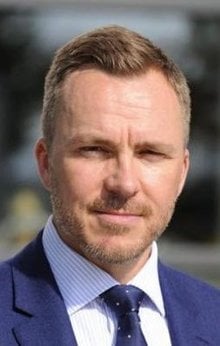
Mark Cubbon
National Director -Elective Care, Cancer and Diagnostics
Tara Varghese
Global Water Stewardship Lead
Wee Ee Cheong
Chief Executive Officer