
Fresenius & NHS Partner on UK-First Net-Zero Dialysis Centre

From summer 2027, the UK is expected to have an innovative first within its national health infrastructure: a net-zero emissions dialysis centre.
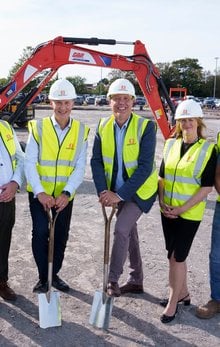
Construction has started on the purpose-built 27-station centre at Aintree University Hospital in Liverpool as Fresenius Medical Care and NHS University Hospitals of Liverpool Group collaborate to make the UK’s first net-zero dialysis facility a reality.
With capacity for 160 patients, the centre will replace the current Aintree clinic and Waterloo unit, increasing capacity by approximately 42%.
The initiative also addresses a pressing national challenge: modernising the UK’s medical facilities to ensure essential treatment can be delivered in an environmentally-friendly manner.
Dialysis is a regular medical treatment that filters waste, removes extra fluid and balances chemicals in the blood when the kidneys fail. As a highly resource- and energy-intensive treatment, dialysis provides an important testing ground for reducing the environmental impact of healthcare.

Commenting on the centre, Jonathon Lawrence, Managing Director UK & Ireland at Fresenius Medical Care, which is a global leader in renal care and dialysis technology, says: “Dialysis is essential. Reducing the environmental impact of the buildings that support it must be a priority too. This centre puts lower-carbon design at the heart of kidney care infrastructure.
“We are always striving to improve the care we provide to patients and, where possible, reduce our environmental impact. This centre is a great example of that in practice, and we hope it can show what is possible for renal care across the UK.”
“We are always striving to improve the care we provide to patients and, where possible, reduce our environmental impact. This centre is a great example of that in practice. ”
A state-of-the-art facility
The Liverpool centre aims to set a new benchmark for the buildings supporting dialysis care across the UK.
Its design incorporates enhanced insulation, air-source heat pumps, LED lighting, smart ventilation controls and around 75kW of rooftop solar capacity.
- 27 dialysis stations – increasing capacity from 19 stations across the existing Aintree and Waterloo units.
- 160 patients – the purpose-built centre will provide capacity for around 160 people.
- 75kW solar capacity – rooftop solar will form part of the centre’s lower-carbon energy strategy.
- Six home dialysis stations – dedicated facilities will support training and greater patient self-management.
- 2045 net-zero target – the centre supports the NHS ambition to reach net zero across emissions it can influence by 2045.
Patients have also been directly involved in developing the site’s plans, with the centre’s design focusing on maximising comfort, accessibility and convenience.
Commenting on why the facility was designed to align with specific patient needs, Jonathon explains: “This is a building people will be coming to several times a week, so we’ve had to think about more than just the clinical space.
"Things like natural light, comfort, access and how people move around the building all make a difference. It’s been good to partner on a project where those details have been taken seriously.”
The new centre will also expand dialysis capacity in Liverpool, increasing the number of stations from 19 to 27. It will include a dedicated six-station home dialysis training facility, as well as shared-care and self-care areas.
These facilities will give patients greater opportunities to understand and take an active role in their treatment, helping to build confidence in managing aspects of their care and, where appropriate, supporting a transition to home dialysis.
Dr Andy Nicolson, Group Chief Medical Officer at NHS University Hospitals of Liverpool Group, echoes Jonathon’s point on the space’s patient-first focus.
He says: “This is great news for our patients. People who rely on regular dialysis spend a lot of time in treatment, so the environment they receive care in really matters and I’m delighted that work has now started on a new centre that will improve the experience of dialysis for the communities we serve.”
NHS decarbonisation targets
Dialysis is an energy-intensive medical treatment, making the decarbonisation of renal services an important part of the NHS’ wider net-zero ambitions.
One dialysis cycle can have an electricity demand equivalent to the daily consumption of 3.5–4 people, while the annual electricity consumption associated with a dialysis centre has been estimated at around 2.5–3 times that of a household consuming 9 kWh per day.
The environmental footprint extends beyond the dialysis machines themselves. Water purification, heating, ventilation and other building systems can account for a substantial share of the energy required to deliver treatment, meaning that decarbonising dialysis requires action across the entire care environment.
The approach also aligns with the NHS’ broader net-zero strategy, which targets net zero by 2040 for emissions the health service controls directly and by 2045 for emissions it can influence.
Fresenius Medical Care - key partners
SAP
CEO: Christian Klein | HQ: Walldorf, Germany
Fresenius and SAP announced a strategic partnership in January 2026 to develop a sovereign, interoperable and AI-supported digital healthcare ecosystem. The collaboration combines Fresenius’ clinical and healthcare expertise with SAP technology, with a focus on secure data use, regulatory compliance and AI-enabled healthcare delivery. The companies subsequently invested together in hospital information-system developer Avelios Medical.
Uber Health
CEO (of the wider Uber enterprise): Dara Khosrowshahi | HQ: San Francisco, California
Fresenius Kidney Care expanded its partnership with Uber Health across the US in 2025, helping dialysis patients access non-emergency medical transportation when other options are unavailable. The partnership addresses a practical barrier to regular dialysis attendance, particularly for patients who may otherwise struggle to reach treatment.
Mayo Clinic
CEO: Gianrico Farrugia | HQ: Rochester, Minnesota
Fresenius Medical Care’s Renal Research Institute strengthened its collaboration with Mayo Clinic in 2025 as part of a wider network of academic and clinical partnerships. The institute works with leading institutions to advance research into kidney disease and dialysis outcomes, including through the MONDO International Network.
Company portals

Executives

Andy Nicolson
Chief Medical Officer at NHS University Hospitals of Liverpool
Jonathon Lawrence
Managing Director UK & Ireland at Fresenius