
GSK CEO says US is the Top Market for Pharma Investments

Dame Emma Walmsley, GSK's Chief Executive, says the United States is the most attractive market for pharmaceutical investment, as the company pledges more than US$30bn to American expansion by 2030.
Speaking to the BBC, Dame Walmsley outlined the reality facing Britain's life sciences sector, despite successive UK governments positioning the country as a global hub for the industry.
"I do think we have to be realistic that for all investments the UK is competing with many other countries in the world who see this industry as strategic," she told the BBC.
“I am extremely pleased with our commitment to invest more than US$30bn [in the US] over the next five years, but once again it’s more than half of GSK’s global turnover today and it’s still a leading market in the world in terms of the launch of new drugs and vaccines.”

Gaining this percentage of revenue from the US, she sees the country as essential for long-term growth.
“It’s probably, alongside China, and that’s definitely something to watch, the best market in the world to do business development.”
UK investment landscape under scrutiny
Dame Walmsley's comments arrive as questions intensify over Britain's ability to secure major life sciences funding.
Merck, operating as MSD in Europe, cancelled a £1bn (US$1.3bn) UK expansion, while AstraZeneca delayed a £200m (US$268m) research investment in Cambridge while directing billions into American operations.
While GSK maintains a presence in the UK, Dame Walmsley acknowledged the constraints of the domestic market.
"No one should be deluded that the UK is going to be a massive scale market," she told the BBC. "For GSK, 2% of our sales are here."
This figure contrasts with more than 50% generated in the US.
Yet she told the BBC the UK could thrive as "an exporter of innovation", focusing on advanced research and specialist manufacturing.
Tariff agreement provides modest support
A deal removing tariffs on UK-manufactured pharmaceuticals exported to the US received praise from Dame Walmsley as "a step in the right direction", though it requires increased NHS expenditure on medicines.
She told the BBC she views this as essential to foster innovation, after years during which the NHS allocated a declining proportion of its budget to novel treatments.
GSK's pipeline includes a twice-yearly asthma treatment that could reduce severe asthma hospital admissions by up to 70%, according to the company, with NHS approval anticipated.
Leadership change approaches for GSK
As GSK enters an era of AI-driven drug discovery, Dame Walmsley told the BBC the industry could be approaching a transformation.
"Ninety percent of the projects in our industry don't work," she said. "If instead of 10% working, 20% work, it will completely change the trajectory of innovation."
Dame Walmsley will step down on 1 January 2026, transferring leadership to Luke Miels, currently GSK's Chief Commercial Officer.
At the time of the announcement, describing 2026 as "a pivotal year for GSK to define its path for the decade ahead", she said she believes this represents the appropriate moment for new leadership".
Considering her time at the helm, she told the BBC: "As CEO, you hope to leave the company you love stronger than you found it.
"Today GSK is a biopharma innovator, with far stronger momentum and prospects than nine years ago."
Company portals

Executives
Emma Walmsley
CEO
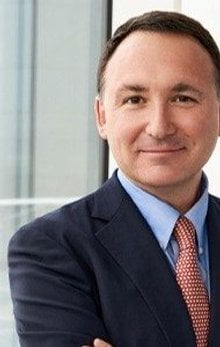
Luke Miels
Chief Commercial Officer
