How Dassault Systèmes is Closing a Critical Pharma Data Loop

Following its US$2bn acquisition of AI-native compliance platform ArisGlobal, international software giant Dassault Systèmes believes it can break down one of the pharmaceutical and life sciences industry's most persistent data silos.
ArisGlobal’s platform serves over 200 customers, including half of the top 50 global biopharma companies, processing more than 12 million patient safety reports annually.
Dassault’s existing healthcare-oriented software brands BIOVIA and Medidata Solutions, which can be accessed through its proprietary 3DEXPERIENCE platform, enable researchers to track product development progress through R&D and clinical trial stages.
However, Dassault – and much of the wider life sciences industry – previously lacked an integrated regulatory compliance platform connecting post-market safety operations with R&D and clinical development.
A defining moment for the life sciences industry?
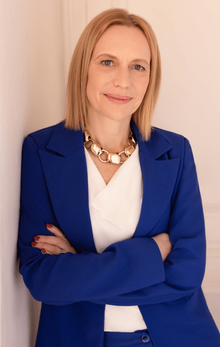
Florence Verzelen, Executive VP at Dassault, believes the acquisition marks a pivotal moment for the wider life sciences industry.
“For the industry as a whole, this is genuinely structural, not incremental. Life sciences has operated for decades with R&D, clinical and post-market compliance as three disconnected worlds, each running on its own data and its own timeline,” Florence writes on LinkedIn.
“Closing that loop means shorter discovery-to-approval cycles, safety signals detected and acted on faster and regulatory submissions grounded in the same data spine as the science itself.”
By reducing data silos and manual handoffs across clinical development and post-market operations, the platform has the potential to accelerate regulatory decision-making while improving patient safety through earlier detection of emerging safety signals.
“In an industry where AI and precision medicine are converging just as regulatory complexity is rising, this is the connective tissue the sector has been missing,” Florence adds.
Building a connected life sciences platform
The 3DEXPERIENCE platform brings together Dassault Systèmes' portfolio of 12 software brands, including SOLIDWORKS, CATIA, BIOVIA, Medidata, SIMULIA and ENOVIA, within a single collaborative environment spanning product design, simulation, manufacturing and life sciences.

In February 2026, Dassault signed a strategic partnership with NVIDIA to establish a shared industrial architecture for mission-critical artificial intelligence across industries.
Over the past decade, Dassault has steadily expanded the platform's life sciences capabilities through a series of strategic acquisitions and partnerships.
BIOVIA, formed following Dassault’s acquisition of Accelrys in 2014, enables researchers to model molecules at the atomic level before they exist physically, supporting capabilities such as molecular dynamics, protein-ligand docking and AI-driven molecular design through physics-based simulation.
Dassault expanded its digital life sciences ecosystem further with its US$5.8bn acquisition of Medidata Solutions in 2019, enabling life sciences organisations to digitally manage clinical trials from study design through data collection and analysis.
Combined, BIOVIA and Medidata gave Dassault visibility across scientific research and clinical development, but post-market safety and regulatory operations remained largely separate.
Removing friction from drug development
The acquisition of ArisGlobal enables 3DEXPERIENCE users from the life sciences sector to establish an end-to-end digital thread, connecting molecule modelling and clinical trials with real-world evidence from patients, creating a continuous feedback loop for research and development.
Pascal Daloz, Dassault’s CEO and Chairman of the Board, says the acquisition marks “a major milestone in” the company’s aims to alter the life sciences sector by linking “molecule, patient and real-world outcomes.”
“Life sciences is entering a new era of innovation – driven by artificial intelligence and the shift to precision medicine – while facing increasing operational complexity and regulatory scrutiny,” he says.
“By bringing together real-world evidence with our unique modelling and simulation expertise, this unified data and intelligence platform radically improves our ability to address persistent drug development challenges, allowing our customers to deliver safer, innovative therapies at a faster pace.”
Company portals



Executives
Florence Verzelen
Executive Vice President - EMEA - 3DS Executive Committee Member

Pascal Daloz
CEO