
How Ecolab and CDP's Index Helps Tackle Water Scarcity
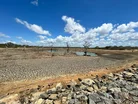
Global freshwater demand is predicted to overtake supply by 56% by 2030, according to Ecolab. This looming crisis presents significant challenges for the healthcare sector, where water is essential for everything from patient care and hygiene protocols to pharmaceutical manufacturing and medical device sterilisation.
To help address this issue, Ecolab has partnered with CDP to launch the Water Use Efficiency Index, which aims to help companies improve their operational water performance. While the project will start with a pilot in the beverage and brew segment, the implications for healthcare operations could be substantial as the initiative expands across industries.

Why water scarcity threatens healthcare
Up to 60% of global GDP depends on reliable access to water, meaning that water use efficiency is one of the most critical variables for water-stressed regions. For healthcare facilities, reliable water access is not merely an operational concern but a matter of patient safety and treatment efficacy.
Hospitals require vast quantities of water daily for patient hydration, surgical procedures, equipment sterilisation, laundry services and cooling systems. Pharmaceutical manufacturing is particularly water-intensive, with production processes for injectable medications, vaccines and biologics demanding ultra-pure water.
The rapid expansion of AI is also predicted to contribute to water scarcity – by 2030, it is projected that AI could require as much water as the annual drinking water supply of the US. This could mean healthcare organisations investing in AI diagnostics and digital health infrastructure may face competing demands for limited water resources.
Sherry Madera, CEO of CDP, says: "Water is a critical economic input. It is integral to growth and success across industries including AI, semiconductors and manufacturing.
"As water stress intensifies, companies that understand, manage and improve their water use will be better positioned to protect margins, secure supply chains and attract capital."
For healthcare organisations, this could mean that those implementing robust water management strategies may be better positioned to maintain continuous operations and avoid treatment disruptions.
Understanding the Water Use Efficiency Index
The Water Use Efficiency Index aims to target water scarcity, especially in water-stressed regions. It will provide a data-driven view of what ideal operational water use looks like for individual industries, including healthcare and pharmaceutical manufacturing.
Healthcare facilities can use the Index to compare their performance to their peers', using the data to improve their water efficiency. This benchmarking could be particularly valuable for hospital networks operating across multiple regions with varying water stress levels.
"Water is the foundation of life and business," says Christophe Beck, Chairman and CEO of Ecolab. "Every breakthrough depends on water and the private sector has an incredible opportunity to reimagine how we manage this vital resource.
"Our partnership with CDP aims to be the catalyst for industrial water use transformation."
All sustainability, net zero and sustainable supply chain leaders should attend:
- Sustainability LIVE: The Net Zero Summit - QEII Centre, London, March 4-5
- Sustainability LIVE: The US Summit - Navy Pier, Chicago, April 21-22
Co-located with Procurement & Supply Chain LIVE, these events brings together CSOs, ESG leaders and senior decision-makers at a moment when sustainability, supply chains and commercial performance are increasingly interconnected.
Tickets can be booked online today for The Net Zero Summit and The US Summit. Group discounts available.
Healthcare's opportunity for water circularity
The Index uses CDP's existing database of corporate water disclosures, with more than 10,000 companies reporting their water use. It also incorporates Ecolab's insights from customer locations across 40 industries and 170 countries globally, as well as data from trade organisations.
Emilio Tenuta, SVP and Chief Sustainability Officer at Ecolab, says: "By combining CDP's leading disclosure data with Ecolab's industry water use expertise, we are giving companies a clear view of where they stand operationally compared to industry norms and best-in-class performance."
The Index also highlights the importance of water circularity, which is essential for healthcare facilities with increasing demands from advanced medical technologies. Up to 75% of manufacturing energy is linked to moving, heating and treating water, meaning that better water performance in pharmaceutical and medical device production could lower operational costs while maintaining the stringent quality standards required for patient safety.
According to Ecolab, companies can reduce their freshwater footprint while building circular systems that strengthen operations and watershed health by improving their efficiency and scaling water reuse. For healthcare organisations, this could mean implementing water recycling systems for non-clinical applications, optimising sterilisation processes and ensuring long-term operational resilience in water-stressed regions.
Executives

Christophe Beck
Chairman and CEO

Emilio Tenuta
Senior Vice President and Chief Sustainability Officer at Ecolab

Sherry Madera
CEO