
Inside GE HealthCare’s Photon-Counting CT Technology
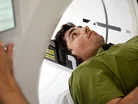
In its latest regulatory win, GE HealthCare has secured a CE Mark for Photonova Spectra, which indicates that a product meets high safety, health and environmental protection requirements for sale within the European Economic Area (EEA).
Photonova Spectra is the company’s photon-counting computed tomography (PCCT) system powered by proprietary Deep Silicon detector technology.
The regulatory milestone follows US FDA 510(k) clearance and Japanese regulatory approval earlier in 2026, paving the way for commercial activities and wider access to the technology across EEA markets.
Photonova Spectra is designed to combine ultra-high-definition anatomical imaging with spectral information, giving clinicians additional data from CT examinations.

Combining spatial and spectral information
For Chad Rowland, Executive Director of Global CT at GE HealthCare, the significance of the technology lies in the additional information it could provide when conventional CT images leave clinical questions unanswered.
“Today, clinicians can often see an abnormality on a CT image but may not have enough information to determine what they’re seeing,” Chad says. “In complex cases, it can be difficult to distinguish between materials or identify subtle tissue differences.
"PCCT is designed to address that challenge by capturing both high-resolution anatomical detail and spectral information in the same acquisition,” he explains.
The combination is intended to help clinicians both locate an abnormality and better understand its composition.
A key feature of Deep Silicon is its silicon-based semiconductor design, which enables precise measurement of the energy of individual X-ray photons.
This spectral information can help differentiate materials within the body, including iodine, calcium and fat, giving clinicians more granular, detailed information when characterising abnormalities.
“Put simply, the opportunity is to help clinicians answer two questions from the same CT exam: where is it, and what is it?” he adds. “That combination of spatial and spectral information is what makes PCCT potentially important for some of the most challenging imaging questions.”
The system's 80mm detector coverage and 0.23-second rotation speed are also designed to support fast, motion-free acquisitions across care areas.
“The key is bringing these capabilities together,” Chad says. “With Deep Silicon, Photonova Spectra is designed to provide detailed anatomical and spectral information in every scan, opening new possibilities for clinical imaging and research.”
“Put simply, the opportunity is to help clinicians answer two questions from the same CT exam: where is it, and what is it? ”
Potential applications across clinical specialties
GE HealthCare says the system has potential applications across a range of clinical areas, including neurology, oncology, musculoskeletal imaging, thoracic imaging and cardiology.
In neurology, the system is designed to provide detailed visualisation of small structures such as the inner ear, alongside differentiation between brain grey and white matter.
For oncology, spectral imaging and iodine mapping could support lesion characterisation and treatment monitoring, while in musculoskeletal imaging the system is designed to provide detailed visualisation of small fractures and bone marrow oedema.
In thoracic imaging, ultra-high definition imaging is intended to reveal fine anatomical detail, while the combination of wide coverage, spatial resolution and spectral imaging could support applications in cardiology including in-stent lumen assessment, plaque characterisation and myocardial imaging.
The technology is also designed around a single-scan approach, with spectral and ultra-high definition images available on demand. GE HealthCare says this could reduce the need for exam-specific protocols while helping streamline CT workflows.
- 3 regulatory milestones — US, Japan and EEA.
- 80mm – detector coverage for wide-area imaging.
- 0.23 seconds – rotation speed designed to support fast acquisitions.
- 50× – more data generated than conventional CT, according to GE HealthCare.
Turning more CT data into clinical information
PCCT generates substantially larger datasets than conventional CT. GE HealthCare says Photonova Spectra can generate up to 50 times more data, with NVIDIA's accelerated computing platform and CUDA-optimised reconstruction used to process the information into images.
That ability to extract clinically meaningful information from increasingly complex datasets is becoming an important part of the evolution of CT, according to Chad.
“As CT advances, I think we need to change how we define progress,” he explains. “The question is no longer simply how sharp we can make an image or how much data we can generate, but how much clinically meaningful information we can extract from every exam.”
This could have implications beyond routine diagnosis. GE HealthCare says Photonova Spectra's spectral data could support research into quantitative imaging, tissue characterisation and the identification of potential spectral biomarkers.
“We are still at the beginning of understanding that potential,” Chad says. “But I believe the next generation of CT will increasingly be defined not just by image quality, but by information quality.”
“I believe the next generation of CT will increasingly be defined not just by image quality, but by information quality. ”
Building the clinical evidence base
GE HealthCare is working with clinical partners to investigate how the technology could be applied across different areas of medicine.
At UZ Brussel – Vrije Universiteit Brussel in Belgium, the company is collaborating with clinicians to evaluate Photonova Spectra across areas including cardiology, oncology and spectral imaging. The work is intended to generate clinical evidence and help optimise imaging protocols for potential use in routine practice.
GE HealthCare is also collaborating with Rigshospitalet in Copenhagen to explore applications including low-dose imaging, tissue characterisation and the use of spectral data in complex cases spanning neurology, cardiology, oncology and musculoskeletal imaging.
These partnerships could help establish how the additional information generated by PCCT translates into practical clinical applications.
GE HealthCare – key partners
NVIDIA
CEO: Jensen Huang | HQ: Santa Clara, California
NVIDIA and GE HealthCare have a longstanding technology relationship spanning AI, imaging and accelerated computing. Their expanded collaboration includes autonomous X-ray and ultrasound development, using NVIDIA’s Isaac for Healthcare platform to simulate medical-device environments. NVIDIA technology is also integrated into GE HealthCare imaging systems, including Photonova Spectra, supporting advanced reconstruction and imaging workflows.
Amazon Web Services (AWS)
CEO: Matt Garman | HQ: Seattle, Washington
GE HealthCare and AWS have a strategic collaboration focused on cloud, AI and healthcare applications. Their relationship includes deploying GE HealthCare imaging solutions through AWS and developing healthcare foundation models and generative AI applications. In 2026, the companies expanded their collaboration to transform care delivery and support clinicians through cloud-based technologies and AI-enabled workflows.
Elekta
CEO: Jakob Just-Bomholt | HQ: Stockholm, Sweden
GE HealthCare and Elekta collaborate across imaging and precision radiation oncology, bringing GE HealthCare’s imaging and MIM Software capabilities together with Elekta’s radiation therapy technologies. Their global commercial collaboration is designed to provide hospitals with a more comprehensive offering spanning diagnosis, treatment planning and cancer care. The partnership was expanded following GE HealthCare’s acquisition of MIM Software.
Company portals

Executives
Chad Rowland
Executive Director, Global CT