
The Renewables Drive Helping Merck Smash its Climate Goals
Merck, the German life sciences and electronics giant, has signed a 20-year Power Purchase Agreement with SK Innovation E&S to supply 16 megawatts of renewable electricity capacity to its life science manufacturing sites in Daejeon and Songdo, South Korea.
The agreement represents the company's longest renewable energy commitment in the Asia-Pacific region and is scheduled to become operational in December 2027.
Once active, the PPA will deliver approximately 21,000 megawatt-hours of electricity annually, covering around 75% of the electricity demand for Merck's life science operations in South Korea.
German life sciences and electronics powerhouse Merck has entered into a two-decade Power Purchase Agreement with SK Innovation E&S that will provide 16 megawatts of clean electricity capacity for its life science production facilities located in Daejeon and Songdo, South Korea.
The deal marks the firm's most extended renewable energy contract in the Asia-Pacific area and is set to go live in December 2027.
When operational, the arrangement will provide roughly 21,000 megawatt-hours of power each year, meeting approximately 75% of the power requirements for Merck's South Korean life science activities.
- A Power Purchase Agreement (or PPA) is a long-term contract between an electricity generator and a buyer for the purchase of electricity. These agreements are often used to finance renewable energy projects, allowing businesses to buy power at a fixed price for a set period (often between 10 and 25 years) without having to build or operate their own power plants.
"This agreement reflects our long-term commitment to manufacturing sustainability," says Tim Jaeger, Chief Strategy and Transformation Officer for Merck's Life Science business.
"By adding renewable electricity to the grid for our operations in South Korea, we are taking further measures to reduce our environmental impact and enabling our customers do the same."
The arrangement is part of Merck's growing worldwide renewable energy collection, which features virtual PPAs spanning Europe and North America plus numerous onsite installations around the globe.
What are Merck's short-term climate goals?
The fresh South Korean deal will help Merck work towards its 2030 sustainability objective of obtaining 80% of bought electricity from renewable sources, a target the organisation now anticipates achieving considerably ahead of the deadline.
Merck initially launched its company-wide sustainability strategy in 2020 and synchronised all of its pledges with the United Nations' Sustainable Development Goals, securing validation of its targets from the SBTi during the process.
The strategy focuses on three primary commitments:
- Advancing human progress for more than one billion people through sustainable science and technology by 2030
- Fully integrating sustainability into value chains by 2030
- Achieving climate neutrality whilst reducing resource consumption by 2040
Crucially, Merck's pledge to climate neutrality covers Scope 1, 2 and 3 emissions, featuring intermediate goals of a 50% cut in Scope 1 and 2 emissions and a 30% cut in Scope 3 emissions by 2030, measured against a 2020 baseline.

Why Merck is performing so well
Data from 2024 reveals Merck recorded 182 metric kilotons of CO₂ equivalent in joint Scope 1 and 2 emissions, demonstrating a 43% decrease when compared to 2020 figures.
By contrast, Scope 3 emissions reached 1,538 metric kilotons of CO₂ equivalent in 2024, indicating just a 2% decrease from the 2020 baseline.
The contrast in advancement between Scope 1 and 2 emissions against Scope 3 emissions underscores the more substantial challenge organisations encounter when attempting to lower indirect emissions throughout their value chains in comparison to direct operational emissions.
Merck's wider sustainability architecture includes pledges to sustainable product development, targeting 10% of its range to be composed of 'Greener Alternative Products' by 2030.
The organisation utilises SHAPE, its design for sustainability framework, together with DOZN, a freely available online green chemistry evaluator tool, to evaluate and enhance the sustainability credentials of chemicals and products across their life cycle.
Supply chain sustainability at Merck
In addition to emissions reduction, Merck's sustainability strategy incorporates supply chain transparency and packaging enhancements.
By 2030, the organisation targets a 10% decrease in packaging weight per unit sales relative to baseline measurements, with all fresh packaging created following circularity principles and all fibre-based packaging obtained from deforestation-free materials.
The South Korea PPA introduces renewable capacity straight to the grid, a framework that contrasts with purely financial virtual PPAs by establishing new clean energy infrastructure that serves the wider electricity network.
This methodology corresponds with increasing focus on "additionality" in corporate renewable energy purchasing, where organisations emphasise deals that produce new renewable generation capacity instead of simply acquiring certificates from existing projects.
Merck recorded sales of €21.2bn (US$24.4bn) across 65 countries in 2024, with activities covering life science, healthcare and electronics sectors employing over 62,000 people globally.
Company portals


Executives
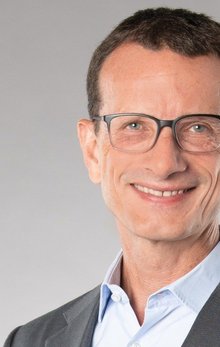
Tim M. Jaeger MD PhD MBA
Chief Strategy and Transformation Officer