
Merck Group Wins Award for Lower-Carbon Laboratory Solvents
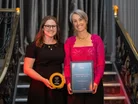
Merck Group has been recognised at the Global Sustainability Awards 2026, taking home the Transformation Project of the Year award for its work developing bio-based solvents for analytical applications.
The award recognises Merck Group’s’s efforts to reduce the environmental impact of laboratory testing by developing less carbon-intensive alternatives to conventional, fossil-derived solvents used across life sciences.
Laboratory consumables are an often-overlooked contributor to the environmental footprint of pharmaceutical research, diagnostics and other healthcare-related scientific activity.
Merck Group’s project demonstrates how changes to essential laboratory materials can support decarbonisation while maintaining the performance standards required for highly controlled analytical environments.

Recognising sustainable innovation
The Global Sustainability Awards 2026 brought together organisations from across the industrial spectrum to recognise projects addressing environmental challenges through practical changes to products, processes and operations.
Merck Group’s project was recognised in the Transformation Project of the Year category for applying its sustainability strategy to a fundamental component of laboratory workflows: chemical solvents.
Solvents are widely used throughout pharmaceutical development, quality control and analytical testing. While efforts to improve laboratory sustainability have increasingly focused on energy use, waste and equipment, the materials required to carry out scientific processes can also contribute significantly to an organisation’s environmental footprint.
Merck Group’s approach focuses on reducing those impacts at the source, developing bio-based alternatives that can be incorporated into existing analytical processes.
View the full list of winners here.
- 25.9% — Average reduction in CO₂e from Merck Group’s bio-based HPLC solvents versus conventional fossil-fuel-based alternatives.
- 29% — Reduction in CO₂e achieved by Merck Group’s bio-based methanol compared with its conventional equivalent.
- 28% — Lower CO₂e impact reported for Merck Group’s bio-based acetonitrile.
- 3 solvents — The portfolio initially includes bio-based alternatives to acetonitrile, methanol and ethanol for HPLC and LC-MS applications.
Developing lower-carbon laboratory solvents
The award-winning portfolio includes bio-based solvents developed for high-performance liquid chromatography (HPLC) and liquid chromatography-mass spectrometry (LC-MS).
Both techniques play an important role across healthcare and life sciences. They are used in areas including pharmaceutical research and development, quality control, clinical analysis and the characterisation of complex biological and chemical compounds.
Conventional chromatography relies heavily on solvents such as acetonitrile, methanol and ethanol, many of which are traditionally produced using fossil-based feedstocks.
Merck Group’s portfolio uses renewable raw materials and manufacturing processes designed to provide alternatives to these conventional products while retaining the characteristics required for analytical testing.
According to the company, its bio-based solvents deliver an average 25.9% reduction in product carbon footprint, measured in carbon dioxide equivalents, compared with their conventional counterparts.
The reductions vary between products, with Merck Group reporting a 28% lower product-related carbon footprint for its bio-based acetonitrile and 29% for its bio-based methanol.
Importantly for laboratories, the products have been developed as drop-in alternatives, meaning they are designed to provide the performance required for established analytical workflows.
Maintaining characteristics such as chromatographic resolution, baseline stability and reproducibility is critical in pharmaceutical and healthcare laboratories, where analytical results can inform decisions around drug development, manufacturing quality and research.
The ability to introduce lower-carbon materials without fundamentally changing established laboratory methods could also help organisations incorporate sustainability into existing operations rather than treating environmental improvements as separate projects.
Supporting a more sustainable life sciences industry
Merck Group’s recognition highlights the role that laboratory science can play in the wider sustainability agenda across healthcare and life sciences.
Pharmaceutical companies, research organisations and healthcare laboratories are increasingly examining emissions beyond their own facilities, including those associated with purchased goods and services.

For organisations using large volumes of laboratory chemicals, changing the materials used in routine testing could therefore contribute to efforts to address supply-chain emissions.
The project also reflects a broader shift towards applying green chemistry principles to the infrastructure supporting healthcare innovation.
As demand grows for pharmaceutical research, diagnostics and quality testing, laboratories will need to balance increasingly sophisticated scientific requirements with pressure to reduce their environmental impact.
By developing renewable alternatives for widely used analytical processes, Merck Group is seeking to demonstrate that sustainability can be built into laboratory workflows while maintaining the reliability and precision on which healthcare science depends.
Register your interest for the 2027 Global Sustainability Awards here.
Winner’s interview
After picking up the award at the ceremony, Healthcare Digital’s sister publication Sustainability Magazine spoke to the winners from Merck Group.
Perrine Froger, Head of Sustainability Strategy & Enablement and Sarah Heidenreich, Global Manager, Strategic Positioning & Enablement, collected the award.
Tell us a little bit about the project.
Sarah: We’ve been on a mission to transform our bio-based solvent portfolio into having a lower environmental impact compared to traditional petroleum-based solvents. With this project, we specifically highlighted our recent launch of bio-based HPLC solvents, which are an industry first. This is very exciting for our colleagues in the labs, especially to offer the same solvents with lower environmental impact, but no change to their workflow or processes.
Why is sustainability and sustainable innovation important in healthcare and life sciences?
Perrine: Our industry is really committed to providing life-saving therapies and to advance science, but it's also heavy in terms of emissions because we are using a lot of single-use plastic for good reasons, and a lot of solvents as well for good reasons. So that's really key that we are supporting our customers to meet their sustainability goals. So we are delighted to do that with our new range of products.
What does the future look like for your project?
Perrine: There's more to come. I know our teams are heavily committed and we hope to be back next year.
Company portals

Executives

Perrine Froger
Senior Director - Head of Strategy & Enablement - Sustainability & Social Business Innovation

Sarah Heidenreich
Global Manager, Strategic Positioning & Enablement