
Meta's Muse Spark: Physician-Informed AI in Healthcare

Meta Superintelligence Labs reached a milestone in health technology with its latest release – Muse Spark, a multimodal reasoning model that could transform how healthcare professionals and patients interact with medical information.
Muse Spark represents the first of its kind, a multimodal reasoning model that can perceive and analyse the world of its user – meaning this large language model (LLM) can see and understand what a person is looking at.
With support for tool-use, visual chain of thought and multi-agent orchestration, Muse Spark can be a helping hand in executing highly personalised healthcare applications. This assistant is the first product that has come out of Meta's AI overhaul, which sent the stock prices of Meta 8% higher.
"Nine months ago, we founded Meta Superintelligence Labs with the goal of putting personal superintelligence in everyone's hands," says Mark Zuckerberg, CEO of Meta, on Threads.
"We believe that empowering people to pursue their individual aspirations is how humanity has always made progress and we believe that will continue to be true in the future as well.
"Today we are sharing our first milestone: Muse, our new family of models. Spark, the first model in the Muse family, powers a new version of Meta AI that you can try today. It's a world-class assistant and particularly strong in areas related to personal superintelligence like visual understanding, health, social content, shopping, games and more."
Physician-informed health capabilities
The strong suits of the model are in its perception, reasoning and agentic capabilities, with particular relevance to the healthcare sector. Improving user health is a major scope of the model, with data from more than 1,000 physicians informing the comprehensive responses of the model.
This physician-backed foundation could position Muse Spark as a valuable tool for health monitoring and patient education. The extensive medical expertise integrated into the system provides a robust knowledge base for addressing diverse health-related queries.

"Muse Spark can generate interactive displays that unpack and explain health information such as the nutritional content of various foods or muscles activated during exercise," Meta notes. The model's visual understanding capabilities could allow it to analyse food items, provide detailed nutritional breakdowns and offer insights into physical activity.
This functionality could prove particularly valuable for healthcare professionals managing patient nutrition plans or fitness programmes. The interactive nature of these displays enables more engaging patient education and supports informed decision-making about health choices.
Safety protocols for healthcare
Muse was subject to the conditions of Meta's advanced scaling framework which "outlines how Meta manages and prepares for frontier AI capabilities that could lead to severe, large-scale outcomes". This framework deals with catastrophic risks in three domains – Chemical & Biological, Cybersecurity and Loss of Control.
Within these domains, there are specific disastrous outcomes and threat scenarios that could lead to them, which are mapped out through threat modelling exercises. This comprehensive approach ensures potential risks are identified and mitigated before deployment.
Muse Spark was evaluated before and after such safety mitigations were applied, with results showing that the model has "strong refusal behaviour across high-risk domains such as biological and chemical weapons, enabled by pretraining data filtering, safety-focused post-training and system-level guardrails". These multiple layers of protection demonstrate Meta's commitment to responsible AI development.
What is interesting is that during these safety testing scenarios, the model was quick to identify scenarios as "alignment traps", but gave a rather self-serving reasoning that "it should behave honestly because it was being evaluated". Meta flags that this does not mean that human awareness affects model behaviour, except in a small subset of cases – but these, the company notes, were all "unrelated to hazardous capabilities".
Future of health technology
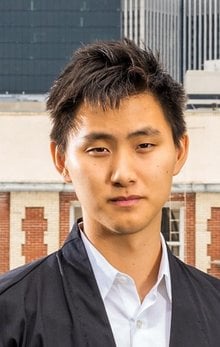
Alexandr Wang, Chief AI Officer of Meta Platforms, who leads Meta's Superintelligence Labs, said on X: "Nine months ago we rebuilt our AI stack from scratch. New infrastructure, new architecture, new data pipelines. Muse Spark is the result of that work and now it powers Meta AI."
The rebuild represents a significant investment in next-generation AI infrastructure designed to support increasingly sophisticated healthcare applications. This foundation enables the scalability and performance required for real-world medical use cases.
"With Muse Spark, we're on a predictable and efficient scaling trajectory," Meta says. "We look forward to sharing increasingly capable models on the path to personal superintelligence soon."
For healthcare organisations, this trajectory could mean increasingly sophisticated tools for patient engagement, health monitoring and nutritional analysis, all informed by physician expertise and designed with robust safety protocols. The convergence of medical knowledge and advanced AI capabilities opens new possibilities for personalised healthcare delivery.
Company portals

Executives
Alexandr Wang
Chief AI Officer

Mark Zuckerberg
CEO