
NHS England, Patchwork and the Push to Cut Staffing Spend

The NHS has cut billions off its workforce bill in recent years by reducing its reliance on agency workers, but temporary staffing remains a significant expenditure for the health service.
NHS England's 2024/25 annual report shows that £2.07bn (US$2.79bn) was spent on agency staffing. In 2023/24, this figure was £3.02bn (US$4bn) and £3.46bn (US$4.67bn) in 2022/23.
As the NHS starts to turn the tide on high agency staffing costs, digital workforce platform Patchwork Health says its technology has helped NHS organisations save around £250m (US$338m) in workforce costs over ten years.
Patchwork says it has saved the NHS the equivalent of almost 6,500 first year resident doctors' annual salaries in England, based on the current pay scale.
Commenting on the reported savings, Saira Shah, Chief People Officer at West Hertfordshire Teaching Hospitals NHS Trust, says: “Reducing workforce costs and cutting down on the use of third-party agencies is central to putting our health service on a more stable footing, and it’s great to see Trusts up and down the country taking an innovative approach to tackling challenges.
“These savings are a testament to what can be achieved when Trusts, clinicians and innovators work together to design and implement solutions that work for everyone.”
Strong presence across the health service
Patchwork now works with more than 200 healthcare organisations across the UK, including nearly 60% of NHS Trusts and Health Boards, while its technology supports more than 120,000 healthcare workers.
The company was founded in 2016 by NHS doctors Dr Anas Nader and Dr Jing Ouyang, with its workforce technology designed to provide healthcare organisations greater control over temporary staffing while giving clinicians more flexibility over when and where they work.
Discussing ongoing staffing challenges in the NHS, Dr Anas Nader, CEO and Co-Founder at Patchwork Health, says, "there is no simple fix to the current NHS workforce crisis. But all of the symptoms connect to a central problem: the inflexibility of existing staffing systems.
“Rigid rostering, based on largely analogue systems, makes it harder to plug staffing gaps and exacerbates clinician burnout, perpetuating a cycle of understaffing and attrition. This in turn drives up agency reliance and staffing costs.”
“There is no simple fix to the current NHS workforce crisis. But all of the symptoms connect to a central problem: the inflexibility of existing staffing systems. ”
Flexibility and autonomy
Digital workforce management is increasingly being positioned as a way to tackle both the financial and operational pressures associated with temporary staffing.
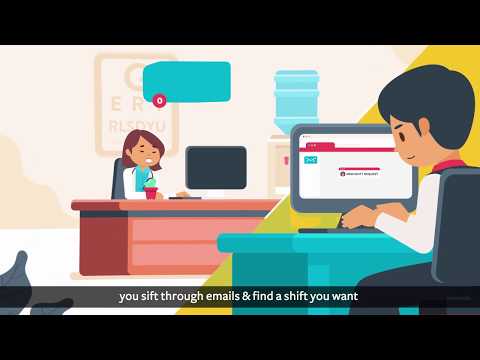
Patchwork's platform allows NHS organisations to manage staff banks digitally, match available clinicians with vacant shifts and provide workforce teams with greater visibility of staffing demand.
Anas says the technology can also help shift the NHS away from rigid workforce models: "With the right, data-led tools, we can enable workforce teams to deploy staff more flexibly in line with demand while giving clinicians greater autonomy and work-life balance.
"For this to work, it must be supported by a system-wide shift in approach, one that prioritises more collaborative, clinician-centred staffing, balancing individual clinicians' preferences with service demand. Get this right and the result will be greater staff retention, more sustainable planning, and fewer workforce gaps for agency staff to fill."
NHS workforce cost savings
The reported £250m (US$338m) saving combines several forms of financial benefit rather than representing a single reduction in agency expenditure.
- More than £230m (US$311m) in directly avoided agency spending.
- Savings from staff time and workforce resources.
- Reduced administrative costs.
- Avoided technology outsourcing.
- Savings accumulated over approximately 10 years.
Patchwork's existing NHS case studies demonstrate how these savings can be generated at the individual trust level.
At Chelsea and Westminster Hospital NHS Foundation Trust, for example, the organisation reported a 62% reduction in agency spend during the first six months of using its temporary staffing solution. The trust also saved an estimated £1.2m (US$1.6m) annually from reduced agency spend.
Government strategy
Patchwork's savings figures come as the government prepares to publish its 10 Year Workforce Plan for the NHS on 26 September 2026, which is expected to set out how the health service will recruit, retain and develop the workforce needed to deliver its wider 10 Year Health Plan.
The strategy is also likely to focus on improving staff experience, supporting flexible working and making better use of existing NHS talent.
The workforce strategy will sit alongside the government's broader ambition to shift the NHS from hospital to community, analogue to digital and sickness to prevention.
NHS - key workforce partners
NHS Professionals
CEO: Hoa Ngo | HQ: Hemel Hempstead, UK
NHS Professionals is a major provider of flexible workforce services to the NHS, supporting more than 140,000 registered flexible workers across healthcare roles. The organisation works with NHS Trusts to provide bank staffing and workforce solutions, helping reduce reliance on external agencies.
Bank Partners
Managing Director: Paul Fensome | HQ: London, UK
Bank Partners, part of Acacium Group, provides managed staff bank and outsourced workforce solutions to NHS organisations. Its services aim to increase bank fill rates, reduce agency reliance and improve workforce efficiency, with more than 30 years' experience in healthcare staffing.
Company portals



Executives

Dr Anas Nader
Board Trustee

Saira Shah
Chief People Officer