
How Danone Supports Consumer Protein Intake
Danone’s annual results hint at a turning point for the dairy market.
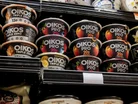
While its broader yogurt portfolio remains a “work in progress,” the company’s high-protein lines – Oikos, GetPRO and HiPRO – continued to post double-digit growth throughout 2025.
CEO Antoine de Saint-Affrique noted that nearly all of Danone’s North American expansion was supported by the “winning momentum” of its high-protein products, which helped offset weaker performance in other dairy segments.
The GLP-1 effect
A new consumer dynamic is taking shape as GLP-1 medications begin to alter eating habits in unexpected ways. About 14% of US adults have used GLP-1 drugs to lose weight or manage diabetes, prompting concern across the food industry over diminished appetite and lower consumption levels.
Danone, however, appears to have turned this disruption into growth. Its low-sugar, protein-rich lines have capitalised on the shift, with targeted marketing now aimed directly at GLP-1 users.
Shane Grant, former Deputy CEO of Danone Americas, said: “75% of (US consumers) want more protein in their diet, and GLP-1s are only accelerating this demand. We see the explosive growth across lots of demographics and occasions.”
Company data from Circana shows that Oikos retail sales soared 40% in 2024, while Too Good & Co and Light & Fit also recorded notable gains among consumers using GLP-1 medications.
Tackling capacity constraints
Sustaining this rapid growth required a move away from traditional bulk dairy operations toward what Danone calls an Agile Nutrition model. The most visible sign of this shift is a £110m (US$138m) upgrade to its Minster, Ohio facility – an essential step in resolving production bottlenecks for high-concentration products.
Producing items with 20 grams or more of protein per serving depends on ultra-filtration technology that removes water and lactose while concentrating casein and whey proteins. These new production lines are custom-built to handle such high-viscosity formulations.

With 90% of ingredients and packaging sourced within the United States, Danone North America follows a “regional for regional” supply model, designed to buffer against the global shipping disruptions seen in 2024 and 2025. The upgraded site now also features a semi-automated logistics centre, enabling faster throughput for high-velocity SKUs that move more quickly than conventional yogurt lines.
Redefining relationships with farmers
To meet a projected 60% increase in milk demand, Danone has rethought its approach to sourcing. Instead of simply buying more milk, the company has launched the Milk Academy – a global training initiative anchored by a Centre of Excellence in Ohio – to support farmers in adopting regenerative agriculture practices.
This goes beyond environmental stewardship. Healthier soils can make feed costs more predictable, helping stabilise Danone’s raw material expenses. In parallel, the company’s Triple A climate programme includes partnerships to cut methane emissions by 30%, a target that’s becoming increasingly relevant to major Western retailers.
Looking forward, new regulatory requirements will test the transparency of global supply chains. From 2026, rules such as the EU Deforestation Regulation and Green Claims Directive will compel Danone to verify that every litre of milk and tonne of soy it sources is deforestation-free.
At the same time, 20 grams of protein has become a new global consumer benchmark, tightening competition for premium whey and plant proteins and fuelling protein-centric M&A activity across the sector.
Ultimately, Danone’s decision to market directly to GLP-1 users represents more than a marketing pivot – it’s a demand-shaping strategy. By aligning production around its most profitable product lines, the company is positioning its factories, farmers, and supply chains for long-term resilience in an evolving global market.
Company portals
Executives

Antoine de Saint-Affrique
CEO

Shane Grant
Deputy CEO of Danone Americas