
Sanofi Q&A: The Importance of Collaboration in Healthcare
Healthcare supply chains around the world have undergone significant transformation in recent years, driven by increasing demand and ongoing volatility.
Because of this, healthcare leaders are working on new technologies and collaborations to remain resilient and operational in uncertain times.
At Sanofi, a resilient supply chain is vital to ensuring patient health. As an AI-powered biopharma company, it is driven to integrate innovation and strive for strong solutions across healthcare.
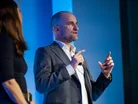
Dr Andrea Michael Meyer, Head Global Supply Chain Strategy and Excellence has worked at Sanofi for more than 13 years, leading across the global supply chain.
Dr Meyer shares his insights with Healthcare Digital.
You’ve advised organisations across a range of industries; in your view, what differentiates a strategic supply chain from one that’s merely operational?
The distinction is one of orientation. An operational supply chain executes. It fulfils orders, manages inventory and measures itself by efficiency metrics. A truly strategic supply chain creates competitive advantage. It asks different questions: How do we reach patients faster than competitors? How do we respond to disruption before it becomes a crisis?
In pharma, this means building the value chain around patient outcomes, integrating deeply with R&D and commercial functions, as well as anticipating demand rather than reacting to it.

What emerging trends do you believe will transform supply chain management over the next decade?
Several forces are converging simultaneously. AI and machine learning are moving from pilots to core infrastructure, demand forecasting and inventory optimisation will increasingly be autonomous. End-to-end digitalisation is enabling real-time visibility and decision simulation through digital twins.
Sustainability has shifted from CSR talking point to regulatory requirement. Geopolitical fragmentation is forcing a fundamental rethinking of global sourcing as resilience is now a legitimate competitive investment. And in our sector, personalised medicine is reshaping supply chains from high-volume standardisation toward flexible, small-batch models. Each trend alone is significant; together, they are transformative.
What’s your advice to executives trying to close the gap between data visibility and decision-making?
Most organisations assume this is a data problem and invest heavily in platforms and dashboards – then are surprised when decision-making doesn't improve. The real gap is about decision architecture: who is empowered to act on what signal, within what timeframe, with what authority.
My advice: start with the decision, not the data. Map your most critical supply chain decisions, then ask what information the decision-maker needs, in what format, at what frequency. Build your data infrastructure around that answer. Equally important is building data literacy across the organisation. Dashboards are only as powerful as the people interpreting them.
How can companies rethink leadership pipelines to attract and retain the best minds?
We are partly responsible for this challenge by historically positioning supply chain as a back-office discipline. Instead, it sits at the intersection of technology, geopolitics, sustainability and patient impact.
The best supply chain leaders I've worked with often came from finance, engineering or commercial backgrounds. Diverse cognitive profiles make teams more adaptive. We should recruit for curiosity and systems thinking, not just functional expertise. And retention requires visible career pathways into senior leadership including C-suite roles.
You’ve written extensively on innovation ecosystems; how can supply chain teams better connect innovation with execution?
The pilot graveyard is a very crowded place. Supply chain teams generate creative ideas but struggle to move from proof of concept to scaled reality. In my experience, the root cause is almost always governance, not creativity. Organisations are structured to optimise existing operations, not absorb change. The solution is to design for execution from the very beginning, involving operational teams in solution design, defining business-meaningful success metrics and establishing a clear pathway for the pilot.
The most impactful innovations I've seen emerged from structured collaboration between companies, technology providers and academic institutions – not from working in isolation.

What role do partnerships and cross-industry collaborations play in building supply chain resilience?
They are indispensable – and significantly underutilised. The most resilient supply chains are embedded in rich, diverse networks of relationships. When disruption hits, organisations that recover fastest are those that can call on trusted partners and access alternative capacity quickly. Cross-industry collaboration is particularly powerful because it surfaces solutions that sector-specific thinking would never generate.
At Sanofi, we take a deliberate approach to partnership across suppliers, peers, regulators and technology partners. In healthcare, collaboration is not just strategically smart, it is an ethical imperative.
How can supply chain leaders align their strategies with broader corporate goals like growth, sustainability and risk management?
Alignment starts with language. Supply chain leaders speak in operational terms; the boardroom speaks in growth, margin, risk and purpose. Bridging that translation gap is as important as any technical competency.
My advice: map every major supply chain initiative explicitly to a corporate strategic priority, yet not as post-hoc justification, but as a genuine design principle. If you can not articulate how an investment accelerates time-to-market or reduces carbon footprint, question whether it is the right investment.
Supply chain is where sustainability commitments are either realised or exposed as aspirational. Leaders who position their function as the engine of the company's sustainability agenda will find themselves with significantly more strategic influence.
What’s one misconception you often hear about supply chain transformation that you’d like to correct?
That supply chain transformation is primarily a technology problem. Organisations invest enormously in ERP upgrades, AI tools and digital twins and then watch transformations stall because technology was treated as the solution rather than the enabler.
Transformation is fundamentally a human and organisational challenge. It requires changing how teams collaborate and how decisions are made. Technology can accelerate all of these things, but it cannot substitute for them.
The organisations that achieve lasting transformation invest as heavily in change management and capability building as they do in technology, understanding that transformation is a continuous capability to sense, adapt and evolve.
On a personal level, what drew you to this field and continues to inspire your research today?
I came to supply chain through an unconventional path, drawn initially by the intersection of technology, business, engineering and geopolitics.
What keeps me engaged is the human impact. In pharmaceuticals, supply chain decisions have direct consequences for patients. When a medicine is unavailable due to a supply disruption, it is not an abstract operational failure, it is a human one. That reality gives the work a sense of purpose I find deeply motivating.
I'm also inspired by the next generation entering this field, as they bring digital fluency, global perspective and genuine commitment to sustainability.
If you could give one piece of advice to rising supply chain leaders entering the sector now, what would it be?
Invest relentlessly in your ability to think across boundaries. The supply chain challenges of the next decade will not be solved within the supply chain function. They will require collaboration with finance, technology, commercial, regulatory and sustainability teams and the ability to translate between operational and strategic language.
Read widely, seek cross-functional assignments, build relationships outside your organisation. Stay on top of the technological developments especially around AI. Technical expertise will always matter, yet in a world of increasing complexity, the leaders who create the most value will be those who connect dots that others do not even see as related. Cultivate that capability early.
Company portals

Executives

Andrea Michael Meyer
Head Global Supply Chain Strategy and Excellence, Vice President