Stanford AI Creates Synthetic Viruses in Research First
Researchers at Stanford University in the US have used AI to generate viruses that do not exist in nature. The work could reshape drug discovery and antimicrobial treatments but also presents biosecurity risks.
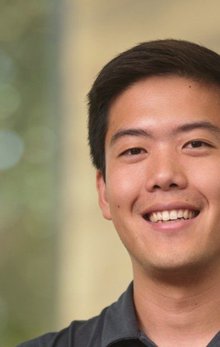
Chemical engineer Brian Hie and bioengineering graduate student Samuel King applied a gen AI model called Evo 2 to create new DNA sequences. Evo 2 is a generative AI model that addresses biological challenges by proposing novel genetic code.
The researchers focused on bacteriophages, which are viruses that kill bacteria. Engineered phages could function as new antibiotics.

AI-generated viral genomes
The team used Evo 2 to suggest new DNA sequences based on a starting point of bacteriophage ΦX174, according to the Stanford Report, which is an official publication of the university. The model produced thousands of options.
The researchers synthesised and tested nearly 300 phages for effectiveness against E. coli. Phages are viruses that infect, replicate inside and kill bacteria.
They narrowed the list to 16 exceptionally effective E. coli-killing phages. "In this case, we wanted the model to generate the entire genome end-to-end in a single left-to-right pass. We didn't add anything," Brian explains of the process to the Stanford Report.
"In lab tests, a few of Evo's suggestions had higher fitness than the native ΦX174."
Biosecurity concerns from new technology
According to BBC News, Dr Thomas Inglesby and Dr Moritz Hanke from the Center for Health Security at Johns Hopkins University write that the findings raise "urgent biosafety and biosecurity questions". They said it was no longer a question of "whether generative viral genome design will exist" but whether it can be used without "enabling serious harm".
New viruses with the potential to cause disease "should not be pursued", BBC News reports. Leaders in AI have made clear the possible risks that could emanate from biologically capable AI models.
Dario Amodei, who is Chief Executive of Anthropic, writes on his blog in June that AI models have gone from barely being able to write a coherent line of code to writing most of the code at major AI companies. Dario noted that similar gains have been made in biology, physics, math, finance, law, translation and many other fields.
He said the cyber risks that Mythos-class models present will not be the last that we must face. "I believe that biological risks may soon follow and that serious AI autonomy risks may not be far behind."
In a warning about biological threats, Dario writes that it is clear to Anthropic that AI might in the future be capable of producing biological weapons that could threaten millions. "It was clear to Anthropic that AI might in the future be capable of producing biological weapons that could threaten millions, or autonomous misbehavior that in extreme cases could even threaten humanity itself."
Implications for drug discovery
The researchers at Stanford do not have plans right now to commercialise this work. They have made Evo 2 openly and freely available.
Adrian Woolfson, who is Chief Executive of the DNA synthesis company Genyro and a genomics expert, told the Financial Times that the importance of the work could not be overstated. "The importance of Brian Hie's landmark paper cannot be overstated," Adrian told the Financial Times.
"It is biology's Wright Brothers moment, where we stop looking over our shoulder at the entities that evolution has created . . . and are confronted with the vast expanses of future biological possibility."
According to the World Economic Forum, AI could help make some of the most difficult steps in drug discovery faster and smarter. This includes identifying disease targets, generating new compounds and predicting safety.
The development offers implications across pharmaceutical and medical sectors. The speed at which drug discovery and novel solutions to complex problems are advancing could be unprecedented.
Company portals



Executives
Brian Hie
Assistant Professor

Dario Amodei
CEO and Co-Founder
Demis Hassabis
Founder & CEO