
The Olympic Committee & UN: Sport for Sustainable Cities
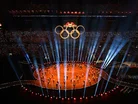
Physical activity could support public health outcomes in urban areas according to a new declaration from United Nations Member States. The political statement links sport infrastructure to wider goals for city planning and environmental action.
The declaration was adopted during the High-level Political Forum in New York. It positions sport as a tool for businesses and policymakers working on long-term sustainability strategies.

Sport in urban policy frameworks
The declaration recognises sport as a contributor to inclusive economies under the New Urban Agenda. This is the UN's 20-year framework for cities.
Member States committed to expanding access to sport alongside education and employment. The statement also promotes safe and green public spaces.
The International Olympic Committee participated in the consultation stage as a UN Observer. The organisation emphasised how sport can contribute to urban development.
"Sport has emerged as a proven, low-cost high-impact tool that can accelerate progress across social, economic and environmental dimensions," says Laura Chinchilla, IOC Member, President of the World Leadership Alliance and former President of Costa Rica, at the World Urban Forum in May 2026.
"When embedded into urban policy and planning, sport supports health and wellbeing for all, enables safe and inclusive access to public spaces and aids community cohesion."
Health outcomes and infrastructure investment
Laura added that sport helps local businesses and youth engagement. It also boosts local economic participation.
The IOC presented evidence from Olympic Games legacies to the UN. The organisation also shared data from its partnership with UN-Habitat.
According to the IOC, investment in sport can create more resilient communities. It could also encourage active transport and expand access to green public spaces.
Out of 36 nations presenting Voluntary National Reviews at the HLPF, 19 highlighted sport as a contributor to health. Countries also linked sport to education, tourism, social inclusion and more sustainable cities.
Saudi Arabia's Vision 2030 includes the Sports Boulevard project in Riyadh. This is a 135-kilometre network of green corridors designed for walking, cycling and physical activity.
The project combines urban greening with healthier lifestyles. It also includes lower-emission transport options.
Bahrain highlighted investments in community sports infrastructure and school sport. The country also referenced women's participation and Paralympic programmes.
Major sporting events were linked to tourism and economic development according to Bahrain's review. Italy and Senegal demonstrated how sport supports regional sustainability strategies through greener public spaces and community regeneration.
The combination of environmental improvements and increased physical activity could reduce emissions. It could also improve urban liveability and contribute to better public health outcomes.
Event management and certification standards
The IOC says sustainability extends beyond sports facilities to how sporting organisations operate. The organisation achieved re-certification to the ISO 20121:2024 standard.
"We are proud to have achieved re-certification to the ISO 20121:2024 standard," says Panos Tzivanidis, IOC Corporate Events and Services Director, earlier this year.
"It recognises the progress we have made in reducing emissions linked to our events, strengthening the way we work with suppliers and giving greater attention to social responsibility in event delivery."
Panos added that the standard provides a framework for continual improvement. It helps ensure sustainability considerations are integrated into procurement, operations, stakeholder engagement and event delivery.
Progress can be monitored over time according to Panos. The renewed certification demonstrates the IOC's ambition to embed sustainability across its operations.
The organisation supports governments and cities in delivering long-term environmental and social value through sport. IOC President Kirsty Coventry praised the contribution of European Olympic organisations to advancing sustainability across the Olympic Movement.
"You are consistently strengthening your part of our Movement," she said during the European Olympic Committee General Assembly.
"You are doing that in record pace in different areas, athlete representation, safeguarding, gender equality, sustainability, good governance; you are leading the way in so many of these areas for our Olympic Movement."
Kirsty added that she hopes to create more platforms to showcase the work Europe is doing. She said it does not go unnoticed.
Cities continue to balance climate action with population growth and economic pressures. Sport is being recognised as a tool for creating healthier people, stronger communities and more sustainable urban environments.
Company portals


Executives

Kirsty Coventry
President
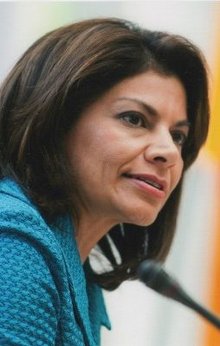
Laura Chinchilla
IOC Member and President of the World Leadership Alliance
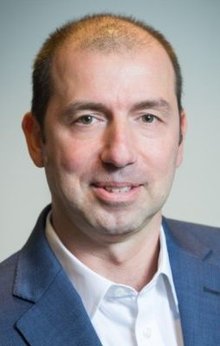
Panos Tzivanidis
Director, Corporate Events & Services