
UK Defence Medical Research: Infection, Care & Mental Health
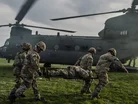
Healthcare has become a strategic capability within modern defence, extending far beyond treating battlefield injuries.
The Defence Medical Research Strategy 2026–31 sets out how healthcare research will aim to strengthen operational readiness by improving physical health, protecting mental wellbeing, advancing casualty care and preparing military medicine for emerging biological and environmental threats.
Developed following 115 stakeholder submissions containing 482 proposed research priorities, which were refined into 46 research topics across six core themes, the strategy provides the roadmap for military healthcare research over the next five years.

Healthcare and operational performance
The report identifies maintaining a healthy, deployable workforce as the foundation of operational success.
Musculoskeletal injuries (MSKIs) remain the single biggest medical challenge facing the Armed Forces.
Internal Defence data from 2024 found that almost half of all medically downgraded personnel were affected by MSKIs, representing more than one in ten Regular UK Armed Forces personnel.
These injuries are also one of the leading causes of delayed training completion and medical discharge, directly affecting recruitment, retention and operational capability.
To tackle these challenges, the strategy promotes preventative healthcare, personalised medicine and digital rehabilitation.
Research priorities include improving women's health, reducing obesity, harnessing genomics to personalise treatment and developing scalable rehabilitation programmes that enable injured personnel to recover outside specialist rehabilitation centres.
The strategy also highlights the growing importance of workforce wellbeing, recognising that burnout, occupational stress and chronic health conditions can reduce readiness just as significantly as physical injuries.
“Continuous, targeted research and development efforts help us remain at the leading edge,” says Air Marshal Clare Walton CB CStJ KHP, Chief of Defence Medical.
“To tackle the challenges with which we are faced and continue to preserve the moral component of warfighting, we must conduct research activity that ensures the fitness of the fighting force and positions us to save the lives of personnel injured in combat.
“UK Armed Forces personnel must be fit to operate and their mental health must be protected.
"We must be ready to operate at environmental extremes and manage a high burden of evolving infection.
“We must innovate to save lives on a contested battlefield whilst remaining a step ahead of complex and emerging threats.”
By investing in preventative healthcare rather than simply treating illness, Defence Medical aims to maximise deployability while improving long-term health outcomes for service personnel.
Mental health and casualty care
The Defence Medical Research Strategy places mental health alongside physical health as a critical operational capability.
It notes that the vast majority of mental health-related medical downgrades result in personnel becoming non-deployable, creating a substantial impact on operational readiness.
Defence data shows that almost half of personnel downgraded for mental ill health leave military service within two years, while a Defence Centre for Mental Health evaluation found that only 44% of referred personnel had returned to service at the time of assessment.
Research is therefore focused on predicting psychiatric casualty rates during large-scale combat operations, enabling earlier intervention and improving recovery.
The strategy highlights growing concerns around moral injury, military sexual trauma and traumatic brain injury, while recognising that future conflicts may require mental health support to be delivered much closer to the frontline and, in some cases, by non-specialist healthcare providers.
Alongside psychological care, casualty management remains a major healthcare priority.
The report warns that 100 severely injured casualties could require around 1,000 units of blood, approximately 25% of the UK's daily blood donations, demonstrating the scale of pressure that future military operations could place on both Defence and civilian healthcare systems.
This has driven research into improved blood products, prolonged casualty care, mass casualty management and faster life-saving interventions in contested environments.
Infection control and emerging healthcare threats
Infectious disease remains one of the most significant healthcare risks during military operations.
The strategy highlights antimicrobial resistance, diarrhoeal disease, vector-borne infections, skin and soft tissue infections and syndromic disease surveillance as key research priorities.
Combat wounds sustained in future conflicts are expected to be larger, more contaminated and subject to delayed evacuation, increasing the risk of infection and prolonged recovery.
The report identifies multidrug-resistant organisms, including Klebsiella pneumoniae, Pseudomonas and Acinetobacter species, as growing clinical challenges that demand improved diagnostics, antimicrobial stewardship and innovative treatments such as bacteriophage therapy.
Beyond infectious disease, the strategy prepares healthcare services for increasingly complex operational threats, including chemical, biological, radiological and nuclear (CBRN) hazards, engineered pathogens, climate-related environmental exposures and the medical implications of artificial intelligence and synthetic biology.
“Climate change, anti-microbial resistance, novel weapons and the erosion of humanitarian law magnify the challenges that we face,” says Clare.
“As well as providing a huge opportunity, AI and synthetic biology put sophisticated threat capability in the hands of groups willing to use them against us.”
It also recognises the impact of heat illness, cold injury, altitude, occupational exposures and novel weapons on long-term health.
Together, these priorities show a shift toward healthcare systems that treat illness and injury, prevent disease, strengthen resilience and maintain operational effectiveness in some of the world's most demanding environments.