
UN Warns Healthcare Progress is at Risk as SDGs Stall
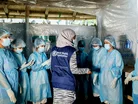
The United Nations (UN) has published its Sustainable Development Goals Report 2026, warning that strong healthcare gains achieved over the past decade risk stalling following declining international funding and external pressures.
According to the UN, only 36% of the 139 measurable targets are on track or making moderate progress with just four years to go until the 2030 deadline is reached.
A further 49% are advancing too slowly and 15% have regressed since 2015.
Governments around the world have cut back on international funding due to sluggish economic growth, high debt burdens and political indifference.
Most notably, the United States under the Donald Trump administration has cut USAID contracts, closed global health programmes and withdrawn from the World Health Organisation.
António Guterres, Secretary-General at the United Nations, says that "the direction we choose now will determine whether the progress of the past decade holds or unravels," as declining international funding threatens to reverse gains in global health, disease prevention and maternal care.
Healthcare progress and continued challenges
The report shows significant global health progress in some areas.
New HIV infections and AIDS-related deaths have each fallen by more than 30% since 2015. Tuberculosis deaths are also declining following a pandemic-related increase.
According to the UN, 780 million fewer people now require treatment for neglected tropical diseases, while 59 countries have eliminated at least one neglected tropical disease.
Maternal mortality has fallen from 228 deaths per 100,000 live births in 2015 to 197 in 2023. The proportion of births attended by a skilled health professional increased from 80% to 87% between 2015 and 2025.

However, approximately 260,000 women died from pregnancy-related causes in 2023, meaning maternal mortality remains more than two and a half times higher than the SDG target.
Fragile, conflict-affected countries accounted for 61% of global maternal deaths. The report warns that official development assistance for health has fallen back to 2015 levels, with further declines expected.
Funding cuts threaten health systems
Li Junhua, Under-Secretary-General for Economic and Social Affairs at the United Nations, writes in the report that "with just four years until the SDGs target date, the gap between ambition and achievement has never been more stark – or more consequential."
Li adds that "the SDGs remain our most effective blueprint for peace, prosperity and sustainability. We must urgently return them to the centre of global decision-making."
Official development assistance fell by 23.1% in 2025 – the largest annual decline on record, according to the report.
Funding cuts could reduce resources for healthcare systems, disease prevention programmes and vulnerable populations, with the UN stating that investment in primary healthcare, immunisation and international cooperation must be strengthened.
Food insecurity continues
In 2024, 673 million people experienced chronic hunger. A further 2.3 billion people faced moderate or severe food insecurity.
According to the UN, 683 million more people experienced food insecurity in 2024 compared to 2015, an increase which could affect nutrition-related health outcomes and child development.
The war in the Middle East has "disrupted maritime traffic, choking off energy, fertiliser and food corridors and driving up inflation," the report states. Disruptions around the Strait of Hormuz have affected shipments of fertilisers, sulphur, natural gas and fuels.
Data systems for health monitoring
The UN positions artificial intelligence as both an opportunity and a governance challenge for health data systems. AI is already supporting data collection, quality assurance and analysis.
For example, the global SDG database has expanded from approximately 330,000 records in 2016 to 3.2 million in 2026.
This expansion could provide health organisations with a stronger evidence base for disease surveillance, outbreak monitoring and resource allocation decisions.
However, funding for national statistical systems is declining as demand for reliable health data continues to grow.
Company portals
Executives
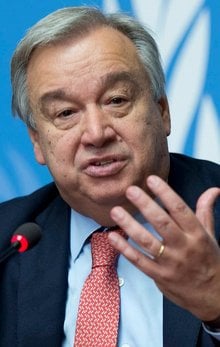
António Guterres
Secretary General
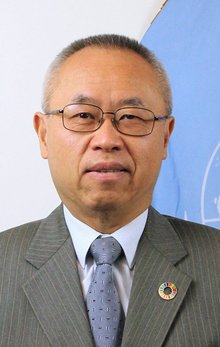
Li Junhua
United Nations Under-Secretary-General for Economic and Social Affairs