The Strait of Hormuz Closure's Impact on Healthcare
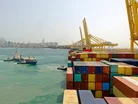
The escalation of military conflict involving the United States, Israel and Iran has sparked a sudden global supply chain crisis, as the effective closure of the Strait of Hormuz causes severe disruption to maritime trade, air freight and critical industries worldwide.
The Islamic Revolutionary Guard Corps has issued radio directives banning vessel passage through the strait, reportedly trapping almost 170 container ships and stopping the movement of 20% of global seaborne oil supplies.
"The speed and scope of escalation in the Middle East will have taken many businesses by surprise and has highlighted just how unstable the region can become in as little as 48 hours," says Simon Geale, EVP at Proxima.
"What will concern companies is that we may just be at the start of a prolonged conflict and there may be much more to come in terms of the impact on global supply chains."
Impact on the healthcare industry
The healthcare sector now faces a critical shortage of generics and Active Pharmaceutical Ingredients sourced from India.
Air freight costs have soared by 400% within 48 hours, affecting most Indian pharmaceutical exports that rely on shipping routes passing through the affected region.
Major manufacturers have warned of imminent inventory shortages as emergency air routes struggle to meet capacity demands.
Maritime traffic paralysis
Analysis by Pole Star Global of 3,878 vessel zone events in the Persian Gulf during the seven days surrounding the February 28 strikes shows major shifts in activity.
Traffic surged 162% on the day of operations, peaking at 05:00 UTC with 138 vessel zone events — a sevenfold jump over baseline levels. Iranian-flagged vessels fell sharply, from 940 events before the strikes to just 41 in the six hours following them — a drop of 95.6%.
International Maritime Organization Secretary-General Arsenio Dominguez condemned the situation, stating: "No attack on innocent seafarers or civilian shipping is ever justified. These crews are simply doing their jobs and must be protected from the effects of wider geopolitical tensions."
The IMO urged shipping companies to exercise maximum caution and avoid the area until conditions stabilise.
Major shipping lines responded quickly.
Maersk suspended all vessel crossings through the Strait of Hormuz, noting that ports across the Arabian Gulf will see delays, rerouting, or adjusted schedules. The company confirmed it is diverting its ME11 and MECL services around the Cape of Good Hope.
Hapag-Lloyd also suspended operations through the Strait, citing official closure orders and stressing that “this measure is therefore not discretionary but a necessary response to the current conditions and regulatory restrictions.”
MSC redirected all vessels in the Gulf to designated safe zones, stating that crew safety is its top priority. These diversions add approximately 3,500 nautical miles — an additional US$1m in fuel cost per voyage, which is expected to be passed on to consumers.
Operations at Jebel Ali Port, the Middle East’s largest container hub, were temporarily halted after debris from an aerial interception caused a fire in the port area. Operator DP World said the shutdown was a precaution.

Dubai Civil Defence quickly contained the fire and operations resumed following safety inspections, but the event highlights the growing spillover of the conflict into key commercial infrastructure.
Linerlytica estimates around 450,000 TEU of containers remain stranded within the Gulf.
The impacts on air cargo
Air freight capacity has also plunged. Data from Netherlands-based consultancy Rotate shows global air cargo capacity down 18% from the previous week.
Emirates SkyCargo, the world’s fourth-largest cargo airline, suspended flights until 15:00 UAE time on March 2 and temporarily stopped accepting new bookings for 24 hours. The carrier operates nearly a dozen Boeing 777 freighters and leases several 747-400s from external operators.
FedEx suspended flights to and from Bahrain, Iran, Iraq, Israel, Jordan, Kuwait, Lebanon, Oman, Qatar, the UAE and Saudi Arabia — with pick-up and delivery services in several of these nations paused. “The safety and well-being of our team members is our highest priority,” the company said.
Qatar Airways, operating 29 Boeing 777 freighters providing more than 3,000 tonnes of daily capacity, has paused operations amid the closure of Qatari airspace.
Cathay Group halted all Middle East operations, including passenger flights to Dubai and Riyadh and freight routes to Al Maktoum International Airport.
Etihad Airlines suspended all flights through Abu Dhabi until Monday 2 a.m., while Oman Air restricted shipments of perishable cargo.
Other industries brace for fallout
Technology: The just-in-time delivery model for microchips and consumer tech is breaking down. EV batteries and semiconductor shipments for 2026 production remain stuck in the Gulf. Microsoft Azure and AWS are investigating latency spikes in Middle Eastern data nodes following missile strikes on Dubai and Doha hubs.
Agriculture: The blocked Strait of Hormuz threatens nitrogen fertiliser exports ahead of spring planting in the Northern Hemisphere. Extended disruption could cause shortages in South Asia and Latin America, lowering yields later in 2026 and raising food prices globally.
Energy: Qatar’s halted LNG and food tanker departures are critical as internal storage nears capacity, forcing production shutdowns. The Middle East, which imports 85% of its food, faces mounting security concerns as military and medical cargo take priority over perishables.
Construction: The Jebel Ali Port fire has delayed delivery of Chinese structural steel for NEOM’s The Line and new Riyadh skyscrapers. Specialised materials like heat-reflective glass cannot be airlifted, freezing construction timelines.
Several firms have invoked force majeure clauses, halting work for months.
DP World COO Tiemen Meester stressed: "The Middle East is a vital trade route... our focus is on providing superior infrastructure and security to ensure the global supply chain can thrive even in a volatile environment."





Executives
Arsenio Dominguez
Secretary General
Simon Geale
Tiemen Meester
Group COO Ports & Terminals