
WEF: Why are Global Supply Chains & Healthcare Under Strain?
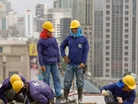
“Global supply chains were built for cost, speed and scale, but not for resilience when health systems are under strain,” says the World Economic Forum (WEF).
From pandemics to climate-related disruptions and regional instability, these pressures are highlighting how closely workforce health is tied to economic continuity.
At the same time, access to healthcare and social protection has expanded more slowly than global trade and production systems.
As a result, workforce health is emerging as a structural risk embedded within global supply chains.
In a session at WEF’s Annual Meeting in Davos, leaders described “deep health protection gaps” across supply chains.

Gaps in health access and rising employer exposure
According to the World Health Organization, an estimated 4.6 billion people lack access to essential health services, while 2.1 billion face financial hardship when seeking care.
These gaps are reflected in workforce instability, rising absenteeism and growing concern among employers about the cost and availability of healthcare.
Marsh’s People Risk research highlights that increased health and benefit costs and labour shortages are among the top risks facing organisations, with many employers reporting more frequent sickness-related absences and concerns over long-term financial strain on employees.
“Less than half of weather-related losses worldwide are insured,” says Amy Barnes, Head of Climate & Sustainability Strategy at Marsh Risk.
“This gap isn’t just a statistic; it’s a risk to communities and economies that we must urgently address.”
As health risks extend beyond direct employees into suppliers and contractors, responsibility can become fragmented, limiting preparedness and increasing the likelihood of reactive and costly responses.
Climate pressure and system-wide vulnerability
Climate change can amplifying these underlying vulnerabilities by directly affecting working conditions and health outcomes.
The International Labour Organization estimates that nearly 70% of the global workforce is exposed to climate-related hazards, while less than 6% of adaptation finance is directed toward health systems.
Extreme heat can reduce safe working capacity, flooding can disrupt access to care and transport and disease outbreaks can increase absenteeism.
These effects can then cascade beyond individual firms, weakening local health systems, reducing productivity and destabilising community economies that underpin supply chains.
“Health and safety should not be a desk exercise in the executive bureau,” says Atle Høie, General Secretary of IndustriALL Global Union.
Treating workforce health as infrastructure
According to WEF, workforce health is being reframed as critical infrastructure rather than a peripheral welfare issue.
Research from WEF highlights that health system strength and community capacity directly influence how quickly supply chains recover from disruption.
Antonia Wanner, Chief Sustainability Officer at Nestlé, observed at Davos that “this is something we need to work on”.
This has led to growing interest in coordinated investment across employers, insurers and governments, including financing tools such as parametric insurance, pooled healthcare models and employer-supported primary care initiatives.
As risks converge, the central challenge is whether workforce health continues to be managed reactively or recognised as a core system-level investment required for economic resilience.
Company portals


Executives
Amy Barnes
Managing Director
Antonia Wanner
Chief Sustainability Officer

Atle Høie
General Secretary