
OpenAI: How AI Can Transform Clinical Workflows
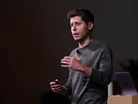
Sam Altman, CEO of OpenAI maintains a leadership style defined by urgency, competitive paranoia and long-term conviction, a strategy that could show how OpenAI transitioned from a research laboratory into a primary force in consumer AI and a growing enterprise participant.
The CEO operates with the belief that scale is vital in early stages and that products, rather than models alone, establish a lasting advantage. This philosophy suggests that success requires continuous reinvention even when a company holds a leading market position. This approach is visible in the OpenAI for Healthcare initiative, announced on 8 January, which provides a perspective on how Altman views the upcoming growth phase for the organisation.
The introduction of this initiative indicates a strategic shift toward regulated and high-impact sectors while supporting the mission of OpenAI to ensure technology serves the public good. By launching secure products like ChatGPT for Healthcare and increasing the use of Health Insurance Portability and Accountability Act (HIPAA)-compliant APIs within hospital networks, OpenAI is expanding its reach beyond consumer applications.
According to the company, this allows for diversification without moving away from its fundamental platform strategy. This shift highlights a focus on integrating advanced intelligence into the most sensitive areas of public infrastructure.
Strategic expansion into healthcare
The healthcare sector appears to be a deliberate choice rather than a random selection. This industry faces significant pressure and contains vast amounts of data while remaining restricted by complex regulations. These circumstances could mean that technical leadership, trust and operational depth are highly valued.
By collaborating with early partners such as Boston Children's Hospital, Cedars-Sinai, Stanford Medicine Children's Health and Memorial Sloan Kettering, OpenAI seems to be prioritising institutional credibility alongside scale. This network of partners allows for the testing of AI models in high-stakes environments where accuracy is paramount.
The emphasis on evidence-based reasoning, transparent citations and strict data governance reflects an attempt to match commercial growth with value for society. This direction relates to the OpenAI Charter, which focuses on broadly distributed benefits and long-term safety.
Specifically, it highlights a commitment to preventing the concentration of power and ensuring that technology deployment leads to better real-world results. By focusing on these core values, the organisation aims to build a sustainable model for AI in the public sector.

Developing models and products
The views held by Altman regarding competition and growth were detailed during an interview on the Big Technology podcast on 12 December 2025. When discussing how the organisation reacts to competitors, "It's good to be paranoid and act quickly when a potential competitive threat emerges," explains Altman on the Big Technology podcast, noting that internal "code red" situations are meant to identify weaknesses and speed up execution.
Regarding the primary strategy of the firm, "The strategy is: make the best models, build the best product around it and have enough infrastructure to serve it at scale," explains Altman on the Big Technology podcast. This framework could explain why OpenAI focused on consumer adoption via ChatGPT before moving into enterprise markets.
Altman suggests that familiarity with consumer-facing tools could reduce resistance when organisations decide to implement OpenAI systems in a professional capacity. This familiarity acts as a bridge between casual use and professional integration.
However, Altman argues that the performance of a model might not be the only factor in determining long-term success. As models across the sector improve, he believes that differentiation could come from product design, reliability and the ability to personalise experiences. According to Altman, personalisation is a particularly durable feature because users value systems that learn and adapt to their specific requirements over time.

Integration into clinical workflows
The OpenAI for Healthcare project demonstrates a product-focused philosophy. Instead of presenting AI as an additional tool, the organisation is integrating models into administrative and clinical workflows. This includes the automation of documentation and the synthesis of evidence while ensuring outputs remain consistent with institutional policies.
This approach follows the view held by Altman that systems designed natively for AI could outperform those that simply add technology to existing legacy processes. By redesigning these workflows, the company aims to reduce the administrative burden on healthcare professionals.
This expansion is supported by a significant investment in infrastructure. Altman has often described computing power as a fundamental requirement for the future of OpenAI, stating that the demand for intelligence might continue to exceed the available supply.
The OpenAI Charter establishes limits on how this power is utilised, noting that the primary fiduciary duty of the company is to humanity. The strategy led by Altman does not appear to be a choice between ambition and responsibility. Instead, it involves scaling at pace and treating safety and societal impact as factors that could provide a competitive edge.