WHO: Inside Global Vaccine Manufacturing & Supply Chains
Just 10 manufacturers are responsible for 78% of all vaccine doses produced worldwide, according to the World Health Organization (WHO).
This finding forms part of the WHO's 2025 'Global Market Landscape of Vaccine Manufacturing and Procurement' report, which challenges the notion of vaccine self-sufficiency.
The landscape analysis reveals that no single country can meet its immunisation requirements using only vaccines produced within its own borders or even its own region, suggesting that global public health is very much dependent on cross-border collaboration.
Across all WHO regions, countries purchase vaccines that involve production stages located in multiple territories.

Traditional and innovative production methods
Most vaccine producers continue to rely on traditional technology platforms for vaccine production. These include live attenuated or inactivated virus, polysaccharide and toxoid approaches.
However, innovative platforms such as messenger RNA (mRNA) or viral vectors remain concentrated primarily in the US and Europe.
According to the WHO, manufacturers in other regions face significant barriers including intellectual property complexity, high upfront research and development costs and a lack of regulatory readiness.
The report highlights that lyophilisation, or freeze-drying, is often used to enhance vaccine stability and prolong shelf life, but this technology can create bottlenecks at the finishing stage.
Producers in the Western Pacific region lyophilise more doses than producers in other regions, including the Americas and the Eastern Mediterranean.
Manufacturing capabilities and infrastructure gaps
While vials remain the main container used for vaccines, fewer than half as many producers possess the capability to fill into pre-filled syringes. This creates a niche for technologically advanced facilities.
The WHO's analysis indicates that supply security will require investments in Drug Substance (DS) production, not just fill-finish capacity.
All WHO regions demonstrate interdependence with other regions for vaccine supply.
The report notes that vaccine production often occurs within the same region from end to end, with many, or sometimes all, stages of production in a single, integrated location.
The WHO European Region and the WHO Region of the Americas are exceptions to this pattern, as vaccines manufactured in these areas are more likely to involve production steps across both regions.
According to the report, domestic manufacturing capacity can strengthen a country's supply security and regional manufacturing can serve as an important source of supply for countries in the region.
However, having vaccine production capacity in a country does not guarantee supply security in emergencies.
Ensuring the availability of raw materials and capacity for all stages of manufacturing is needed to secure supply during health emergencies.
Addressing Africa's supply dependency
Africa relies on vaccines from other WHO regions for 99% of its supply.
The Platform for Harmonised African Health Products Manufacturing (PHAHM) aims to reduce this reliance to 40% by 2040.
In June 2024, vaccine alliance Gavi launched the African Vaccine Manufacturing Accelerator (AVMA), a financing instrument originally designed in consultation with the African Union and Africa Centres for Disease Control and Prevention (Africa CDC).
AVMA uses a 'pull financing' model by providing downstream incentives to manufacturers to help offset initial costs of development and production.
The initiative aims to strengthen and expand Africa's vaccine manufacturing capability with up to US$1.2bn committed over 10 years.
More than US$9bn has been committed to Gavi by a variety of organisations in 2025, including the European Commission and the Gates Foundation.
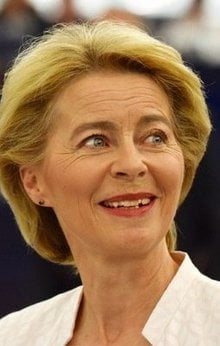
Ursula von der Leyen, President of the European Commission, says: "Investing in health is investing in our shared future. Our work with Gavi saves lives. Millions still need this vital protection."
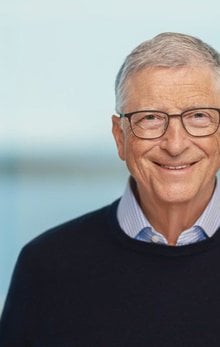
Elsewhere, Bill Gates, Chair of the Gates Foundation, says: "In a constrained budget environment, it's even more important to focus aid funding on the investments that really work. And Gavi is exactly that.
"I don't know of anything with a higher impact per dollar in terms of saving and improving lives."
Company portals
Executives
Bill Gates
Chair
Ursula von der Leyen
President