Top 10: Healthcare Systems Integrators

Healthcare organisations are under growing pressure to modernise ageing technology infrastructure, connect fragmented clinical systems and make better use of increasingly complex patient data.
As electronic health records (EHRs), cloud computing and AI become central to healthcare delivery, systems integrators are playing an increasingly important role in turning digital ambitions into operational reality.
From large-scale NHS transformation programmes to AI-powered hospital workflows and interoperable data platforms, these technology providers are helping healthcare organisations navigate an increasingly complex digital landscape.
Here, Healthcare Digital looks at 10 of the world's largest technology and IT services companies supporting healthcare systems integration, ranked by their total annual corporate revenue.
10: HCLTech
HQ: Noida, Uttar Pradesh, India
CEO: C Vijayakumar (CVK)
Revenue: US$14.8bn
HCLTech provides healthcare systems integration and digital transformation services to hospitals, health insurers and life sciences organisations, spanning EHR implementation, cloud migration, data interoperability and AI-enabled solutions.
Its expertise includes integrating major platforms such as Oracle Health, alongside connecting disparate clinical, claims and patient data systems.
The Indian technology company also supports healthcare providers with infrastructure modernisation, cybersecurity and application management, helping organisations improve operational efficiency and create more connected care environments.
9. Kyndryl
HQ: New York
CEO: Martin Schroeter
Revenue: US$15.09bn

Kyndryl specialises in managing and modernising the complex IT infrastructure underpinning healthcare organisations, helping hospitals improve the resilience, security and connectivity of mission-critical systems.
Its work includes migrating EHRs to cloud environments, consolidating disparate clinical platforms and strengthening cybersecurity and disaster recovery.
The company, which spun off from IBM in 2021, is expanding its healthcare capabilities through AI integration, application management and strategic acquisitions, including enterprise IT services provider Healthcare IT Leaders in September 2026.
8. Infosys
HQ: Bengaluru, Karnataka, India
CEO: Salil Parekh (Ashiss Kumar Dash will take over on 1 April 2027)
Revenue: US$20.1bn
Infosys is strengthening its position in healthcare systems integration, helping hospitals, health insurers and life sciences companies modernise legacy technology, connect fragmented data and introduce AI-enabled services.
Its capabilities span EHR integration, cloud infrastructure, claims management and clinical workflow optimisation.
A significant development came in May 2026, when Infosys completed its US$465m acquisition of Optimum Healthcare IT, expanding its provider-side expertise in EHR advisory, implementation and support.
The deal also brings together Optimum's healthcare specialism with Infosys' Topaz AI and Cobalt cloud platforms.
7. Cognizant
HQ: Teaneck, New Jersey
CEO: Ravi Kumar Singisetti
Revenue: US$21.1bn
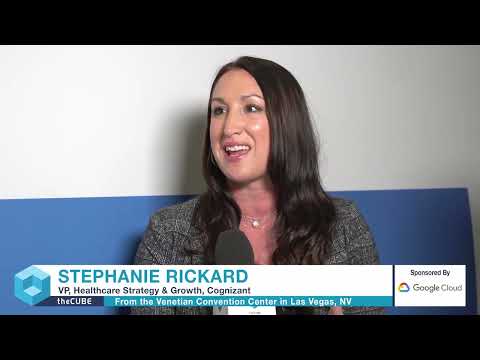
Cognizant is one of the most healthcare-focused technology services companies in this ranking, supporting hospitals, health insurers and life sciences organisations with systems integration, digital transformation and IT modernisation.
Its TriZetto platforms are particularly significant, connecting payer and provider operations across claims management, care administration and patient access.
In 2026, Cognizant expanded its AI ambitions through its partnerships with Google Cloud, as well as Palantir to embed AI into TriZetto, while opening the platform to AI agents to automate processes such as electronic prior authorisation.
Its work increasingly centres on connecting healthcare data and workflows while reducing administrative complexity.
6. Fujitsu
HQ: Kanagawa, Japan
CEO: Takahito Tokita
Revenue: US$22.1bn

Fujitsu has built a substantial healthcare technology business around integrating medical information systems, modernising hospital infrastructure and making clinical data more accessible.
With more than 50 years of experience working with healthcare providers, the Japanese technology group supports EHRs, cloud migration, data interoperability and AI-driven hospital management.
In 2026, it strengthened its focus on connected healthcare infrastructure through a collaboration with IBM Japan to develop a sovereign cloud platform supporting shared EHR systems and secure medical data exchange.
It also advanced AI applications in hospital management and clinical trial recruitment, demonstrating how integrated data platforms can improve operational efficiency and support clinical research.
5. Capgemini
HQ: Paris, France
CEO: Aiman Ezzat
Revenue: US$24.5bn
Capgemini works with healthcare providers, insurers and life sciences companies to integrate complex technology environments and accelerate digital transformation.
Its services span electronic patient record (EPR) implementation, cloud migration, data interoperability, cybersecurity and AI-enabled clinical and administrative workflows.
In the UK, it is also working with the Healthcare Innovation Consortium's EPR Network to promote interoperability, share implementation expertise and help NHS organisations realise greater value from digital health investments, while it has also previously worked with Barts Health NHS Trust to deploy Microsoft Azure public cloud infrastructure.
4. NTT DATA
HQ: Tokyo, Japan
CEO: Kazuhiko Nakayama
Revenue: ~US$30b

NTT DATA, part of Japan's NTT Group, is a major healthcare technology and systems integration provider, helping hospitals, health systems and insurers modernise infrastructure, connect clinical data and introduce AI-enabled services.
Its capabilities include EHR integration, cloud migration, interoperability, healthcare analytics and managed IT services.
In 2026, it expanded its AI ambitions through collaborations with Google Cloud and AWS, while partnering with Taiwan's TwHealth Nexus to explore AI-powered medical imaging and health data integration.
In Europe, its work with Spain's Galician Health Service has also demonstrated how AI, cloud and blockchain can improve clinical research, with up to 80% of processes digitalised.
3. Tata Consultancy Services
HQ: Mumbai, Maharashtra, India
CEO: K Krithivasan
Revenue: US$30bn
Tata Consultancy Services (TCS) is a major healthcare technology partner, helping hospitals, health insurers and life sciences companies modernise legacy systems, integrate clinical data and introduce AI-enabled services.
Its capabilities span EHR integration, cloud infrastructure, claims management, healthcare analytics and digital patient services.
In 2026, TCS highlighted its role in India's Ayushman Bharat health insurance programme and National Health Claims Exchange, connecting hospital management systems with payer platforms to improve claims processing and data interoperability.
TCS is also undertaking a five-year partnership to modernise NHS Supply Chain's core IT systems, introducing cloud and AI-enabled solutions to improve operational efficiency, resilience and the delivery of medical products to healthcare providers.
2. IBM
HQ: Armonk, New York
CEO: Arvind Krishna
Revenue: US$70bn
IBM remains a major force in healthcare systems integration, combining its consulting expertise with hybrid cloud, data management and AI to help providers modernise complex technology environments.
Its work spans EHR integration, clinical data interoperability, hospital infrastructure and AI-enabled workflows, with its watsonx portfolio helping organisations embed AI into clinical and administrative processes.
In the UK, IBM has supported NHS England in enhancing the NHS App, which has more than 40 million registered accounts and processes more than 27 million messages per month.
IBM partnered with University Hospitals Coventry and Warwickshire NHS Trust and technology provider SCC to develop People Assist, an AI-powered virtual assistant that uses IBM watsonx to answer employee HR queries and automate routine administrative tasks.
Since launching, the platform has handled more than 550 conversations and is estimated to save approximately 2,080 working days annually across HR and workforce operations.
1. Accenture
HQ: Dublin, Ireland
CEO: Julie Sweet
Revenue: US$74.2bn
Accenture is one of the world's largest technology and consulting providers, helping healthcare organisations integrate complex IT environments, modernise clinical systems and accelerate digital transformation.
Its work spans EHRs, cloud infrastructure, data interoperability, AI-enabled clinical workflows and healthcare operations, with established partnerships across Epic, Oracle Health, Microsoft and AWS.
In 2026, Accenture strengthened its digital health capabilities by agreeing to acquire Italian healthcare technology specialist Alfahealth, adding approximately 1,200 professionals.
It also partnered with UMass Memorial Health and Microsoft to develop a unified cloud-based data platform, bringing clinical, operational and research information together while introducing agentic AI to automate complex workflows.
Company portals







Executives
Aiman Ezzat
CEO, Capgemini Group

Arvind Krishna
CEO
Julie Sweet
CEO
K Krithivasan
Chief Executive Officer & Managing Director

Kazuhiko Nakayama
CEO
Martin Schroeter
Chairman and CEO
Ravi Kumar S
Chief Executive Officer
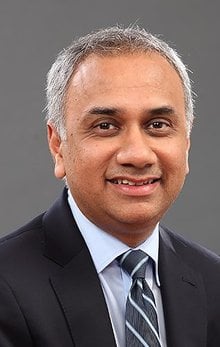
Salil Parekh
Chief Executive Officer and Managing Director

Takahito Tokita
CEO
Vijayakumar C
Chief Executive Officer