

Predictive maintenance is a data-driven strategy that uses Internet of Things (IoT) sensors and machine learning to monitor equipment in real time.
It can be used in the healthcare industry to monitor medical equipment and forecast failures before they happen, ensuring that critical devices are serviced in a timely way, minimising unplanned downtime and protecting patient safety.
Healthcare Digital explores 10 of the top predictive maintenance tools in the healthcare sector and the companies behind them.
10. Amazon Lookout for Equipment
Company: Amazon Web Services (AWS)
CEO: Matt Garman
HQ: Seattle, Washington, US

Amazon Lookout for Equipment automatically analyses sensor data to detect abnormal machine behaviour.
This allows healthcare professionals to detect equipment anomalies, quickly diagnose issues and act quickly to avoid unplanned downtime.
It can monitor sensor data on flow rates, temperature, pressure and oxygen levels, giving alerts to prevent shutdowns.
9. Cisco Spaces
Company: Cisco Systems
CEO: Chuck Robbins
HQ: San Jose, California, US

Cisco Spaces uses IoT devices such as asset tags to ensure that vital medical equipment is always accessible, especially in emergency situations.
It tracks and maps the movement of high value medical assets to prevent loss and maximise utilisation.
It has been used in the NHS, using trackable tags on all critical medical equipment, which allowed hospital teams to reduce operational costs and improve patient care.
8. OpenBlue Services for Healthcare
Company: Johnson Controls
CEO: Joakim Weidemanis
HQ: Cork, Ireland
Johnson Controls' OpenBlue services aim to cut operating room energy costs without disrupting clinical workflow.
It works by automatically optimising operating room HVAC systems when rooms are not in use, which improves efficiency, compliance and savings across the hospital.
The system is fully automated and cloud-connected, restoring compliance-ready conditions based on intelligent occupancy and scheduling data.
7. Honeywell Forge Performance+
Company: Honeywell
CEO: Vimal Kapur
HQ: North Carolina, US

Honeywell's solutions aim to run smarter hospitals with connected workflows and asset management. It helps hospitals improve visibility, reduce downtime and improve reliability.
It allows professionals to identify operational inefficiencies as they occur, providing remote monitoring, testing and reporting to help better manage facilities.
It can also connect safety systems to help manage infrastructure, comply with regulations and tackle infection control.
6. EcoStruxure for Healthcare
Company: Schneider Electric
CEO: Olivier Blum
HQ: Paris, France
Schneider Electric's EcoStruxture technology helps healthcare professionals by continuously monitoring assets to prevent failures, extend asset life and keep operations running smoothly.
It makes real-time, data-driven decisions to optimise asset availability and performance by using predictive analytics and proactive maintenance for productive operations.
It is designed to deliver improved safety, patient satisfaction and operational efficiency.
5. IBM Maximo Application Suite
Company: IBM
CEO: Arvind Krishna
HQ: New York, US
IBM Maximo Application Suite is a unified asset and facilities management solution, combining maintenance, inspections and reliability for customers.
It uses AI to help improve asset uptime, performance and value.
For example, it has been used by Royal Melbourne Hospital, which digitised its facilities management to better coordinate its services.
It created more standardised workflows, mobile task management and stronger operational visibility.
4. InnerVision Plus
Company: Canon Medical Systems (Canon Inc.)
CEO: Fujio Mitarai
HQ: Tokyo, Japan
InnerVision Plus is a remote diagnostic system that allows a team of Canon Medical Systems engineers and application specialists to remotely analyse and troubleshoot diagnostic medical imaging devices.
It offers remote screen viewing, secure file transfer, automatic collection of system health information, system log analysis, automatic notification for system alerts and other troubleshooting services.
This allows medical professionals to predict when issues may arise with equipment.
3. Philips Remote Services Platform
Company: Philips
CEO: Roy Jakobs
HQ: Amsterdam, Netherlands

Philips' proactive and predictive remote monitoring capabilities help pre-empt issues, preventing them from reoccurring and resolving them quickly, in order to enhance clinical availability.
It also offers remote technical, clinical and educational services to help maintain and improve equipment's peak operating performance.
Its monitoring detects anomalies in systems, safeguarding against downtime and unexpected costs by pre-emptively addressing issues.
This means that systems can be diagnosed remotely without impacting workflow.
2. Smart Remote Services
Company: Siemens Healthineers
CEO: Dr. Bernd Montag
HQ: Forchheim, Germany

Smart Remote Services (SRS) is a data link that connects medical equipment to service experts.
It offers a wide range of proactive and interactive services, including fast error identification, remote repair and software updates, preventative maintenance and technical and clinical collaboration services.
These services can help improve diagnostic and clinical outcomes, enhance performance and functionalities and increase system uptime.
1. OnWatch Predict
Company: GE Healthcare
CEO: Peter J. Arduini
HQ: Chicago, Illinois, US

OnWatch Predict helps prevent unplanned downtime and reduce disruptions, with 24/7 remote monitoring and predictive analytics software.
It uses IoT technology and AI learning applied to real-time equipment data.
The solution can be used for PET/CT scans, Image Guiding Solutions (IGS) and MRIs, allowing healthcare professionals to monitor critical components indicators and performance trends.
It compares machine data against a digital twin to create a unique virtual model, which is used to predict the estimated remaining life of monitored components.
Company portals






Executives

Arvind Krishna
CEO
Bernd Montag
Chief Executive Officer
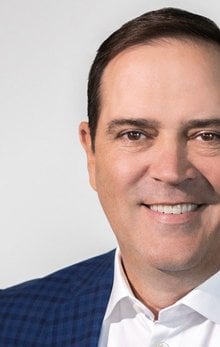
Chuck Robbins
Chair and CEO
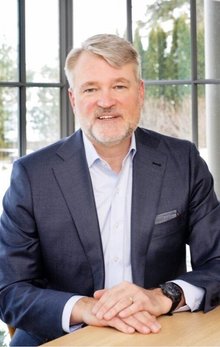
Joakim Weidemanis
Chief Executive Officer
Matt Garman
Chief Executive Officer

Olivier Blum
Chief Executive Officer
Peter J Arduini
President & CEO
Roy Jakobs
CEO
Vimal Kapur
Chairman and Chief Executive Officer