Top 10: Sustainable Healthcare Manufacturers
Sustainable healthcare manufacturers prioritise environmental stewardship within pharmaceutical and medtech production.
The industry is shifting toward carbon neutrality through green chemistry, renewable energy and circular waste management.
These efforts are critical as the sector seeks to reduce its significant global carbon footprint.
As global standards tighten in 2026, their transition to net zero is vital for a resilient and truly healthy future.
Healthcare Digital explores 10 of the most sustainable manufacturers in the healthcare industry.
10. Merck & Co.
Founded: 1891
CEO: Rob Davis
HQ: Rahway, New Jersey, US
Merck & Co. is accelerating its transition to a low-carbon future, targeting net zero emissions across its entire value chain by 2045.
The company is working toward a 46% reduction in operational emissions and a 30% reduction in Scope 3 emissions by 2030.
Central to its manufacturing is the SMART PMI tool, which uses green chemistry to optimise resource efficiency.
By prioritising renewable energy and water stewardship, Merck ensures that its global production remains resilient and environmentally responsible.
9. Biogen
Founded: 1978
CEO: Chris Viehbacher
HQ: Cambridge, Massachusetts, US

Biogen leads through its Healthy Climate, Healthy Lives initiative, a US$250m commitment to become fossil-fuel-free by 2040.
Carbon neutral since 2014, the company powers its global operations with 100% renewable electricity.
Its green-by-design approach integrates sustainability into therapy development, targeting 90% green chemistry compliance by 2030.
Manufacturing sites, such as Solothurn, prioritize Zero Waste to Landfill, while the company aims for a 100% electric fleet by 2025 and the elimination of fossil-fuel-derived plastics in all secondary packaging by 2040.
8. AstraZeneca
Founded: 1999
CEO: Pascal Soriot
HQ: Cambridge, UK

AstraZeneca’s Ambition Zero Carbon strategy targets a 98% reduction in operational emissions by 2026 and net-zero by 2045.
The company has surpassed its 2025 goals, achieving a 23% water reduction and 13% waste reduction.
Manufacturing facilities increasingly use 100% renewable electricity and pioneering biomethane for clean heat.
Innovations include transitioning respiratory inhalers to near-zero global warming potential propellants and ensuring 100% compliance with safe API discharge concentrations, fostering a circular, nature-positive manufacturing footprint.
7. Illumina
Founded: 1998
CEO: Jacob Thaysen
HQ: San Diego, California, US

Illumina is driving sustainable genomics through its framework, targeting net zero emissions by 2050.
The company has achieved 100% renewable electricity across its global operations and aims for a 46% reduction in Scope 1, 2 and 3 emissions by 2030.
Manufacturing innovations, such as the NovaSeq X, have reduced packaging by 90% and plastic by 50%, while room-temperature reagent shipping minimises cold-chain energy.
Additionally, Illumina targets 90% landfill waste diversion and enhanced water stewardship.
6. Novartis
Founded: 1996
CEO: Vas Narasimhan
HQ: Basel, Switzerland
Novartis integrates environmental stewardship into production through Sustainability by Design, using green chemistry to recover solvents and catalysts.
The company aims for carbon neutrality in its operations and a 90% reduction in Scope 1 and 2 emissions by 2030, targeting full value chain net zero by 2040.
Significant efforts focus on water stewardship – aiming for zero quality impact from manufacturing effluents – and a 30% reduction in disposal waste by 2030.
These initiatives ensure a circular, low-carbon manufacturing footprint for global health.
5. Sanofi
Founded: 1973
CEO: Belén Garijo
HQ: Paris, France

Sanofi is advancing its Planet Care roadmap, aiming for net-zero emissions by 2045 and carbon neutrality across all scopes by 2030.
A cornerstone of their strategy is the EVolutive Facility (EVF) – modular, fully digitalised manufacturing sites in France and Singapore designed to be carbon neutral and highly flexible.
Sanofi targets 100% renewable electricity by 2030 and has already reduced water withdrawals by 22%.
It aims for all manufacturing sites to be landfill-free and all new products to be eco-designed.
4. Novo Nordisk
Founded: 1923
CEO: Maziar Mike Doustdar
HQ: Bagsværd, Denmark
Novo Nordisk leads sustainable manufacturing through its Circular for Zero strategy, aiming for zero environmental impact.
Having achieved 100% renewable electricity across global production, the company targets zero CO2 emissions from operations and transport by 2030.
Key initiatives include the Suppliers for Zero programme and a focus on circularity – minimising waste, recycling water and reducing plastic use.
By 2026, infrastructure like Kalundborg’s cooling ring will further enhance efficiency.
Novo Nordisk aspires to reach its net-zero emissions by 2045.
3. Eisai
Founded: 1941
CEO: Haruo Naito
HQ: Tokyo, Japan
Eisai prioritises sustainability through its commitment to 100% renewable electricity by 2030 and carbon neutrality by 2040.
Its manufacturing facilities, like the award-winning Kawashima Plant, focus on energy efficiency, water conservation and waste recycling.
By integrating green chemistry and sustainable procurement, Eisai minimises environmental impact while enhancing global healthcare benefits.
Haruo Naito, CEO of Eisai, says: "The Eisai Group's corporate concept is 'to give first thought to patients and the people in the daily living domain and to increase the benefits that health care provides to them'.
"Under this concept, we aim to effectively achieve social good in the form of relieving anxiety over health and reducing health disparities."
2. DexCom
Founded: 1999
CEO: Jake Leach
HQ: San Diego, California, US

Dexcom manufactures glucose monitors that help people take control of their health through biosensing technology.
Its technology has worked to transform how people manage diabetes and track their glucose.
The products focus on sustainability throughout the entire product lifecycle, by using recycled packaging content and minimising the use of hazardous chemicals and substances of concern.
In 2022, it began sending plastic applicators discarded from its manufacturing operations to a processing plant, where they are recycled into reusable plastics.
Since the programme was launched, 1.8 million pounds of discarded applicators have been repurposed.
1. Novonesis
Founded: 2000
CEO: Ester Baiget
HQ: Copenhagen, Denmark

Novonesis operates with the aim of transforming food systems, mitigating climate impact, enable healthier living and protect nature and biodiversity.
It manufactures dietary supplements, early life nutrition products and precision proteins.
It works in multiple health areas, including gastrointestinal health, immune health, mental health, women and children's health and oral health.
In its operations, 99.6% of all of its waste, including biomass and non-biomass, is circularly managed.
Novonesis' portfolio is manufactured at scale in-house and includes prebiotics, probiotics, enzymes, vitamins and proteins to meet health needs.
Its solutions work to maintain the health of the planet as well as people, with its biosolutions helping to reduce energy, chemical and water usage across a range of industries.









Executives
Belén Garijo
CEO
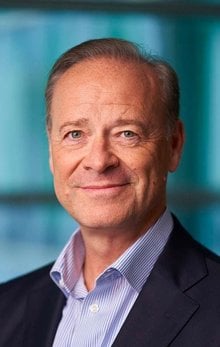
Chris Viehbacher
CEO
Ester Baiget
President and CEO
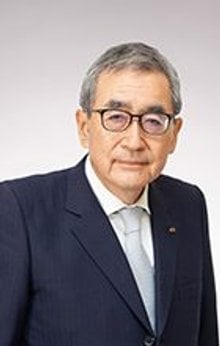
Haruo Naito
CEO
Jacob Thaysen
Chief Executive Officer

Jake Leach
President and CEO
Maziar Mike Doustdar
President and CEO
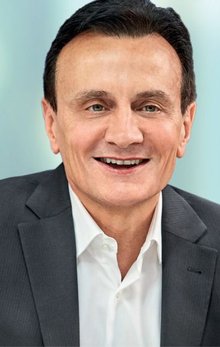
Pascal Soriot
CEO
Rob Davis
Chairman and Chief Executive Officer

Vas Narasimhan
CEO