
How Remote Patient Monitoring is Transforming Healthcare
IoT devices have become an established fixture in healthcare environments.
The technology has a vast array of potential uses across the healthcare value chain, including – but not limited to – hospital asset and equipment tracking, supply chain monitoring, surgical system connection, diagnostics and pharma manufacturing oversight.
Alongside these myriad uses, one use case in particular is facilitating a paradigm shift in care delivery: remote patient monitoring (RPM).
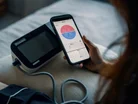
RPM is enabling care to shift from hospital-centric to home-centric modes, with sensors and wearables continuously transmitting physiological data remotely, including blood oxygen, heart rhythm, blood pressure and glucose back into clinical settings.
“Care is longitudinal – it doesn’t begin or end at the hospital door. When data is connected across environments, clinicians can see a more continuous patient trajectory rather than disconnected snapshots. ”
RPM adoption benefits are twofold: it reduces gaps in care access for rural and underserved areas and frees up hospital beds for the critically ill.
Illustrating the rapid increase in RPM utilisation, services billed to US Medicare related to RPM services increased by more than 3,300% between 2019 and 2023, rising from around 161,000 to more than 5.5 million.
Its clinical use cases are vast too, including remote monitoring of patients suffering from cardiovascular disease, diabetes, respiratory disease, hypertension, as well as pregnancy and post-operation recovery checks.
From chronic care to hospitals-at-home
Initially, RPM implementation was focused largely on helping clinicians manage chronic conditions between appointments.
However, its role has expanded as increasingly sophisticated networks of connected devices make it possible to monitor patients with more acute needs outside bricks-and-mortar clinical settings.
Hospital-at-home programmes and virtual wards can use IoT-enabled devices to track vital signs remotely, allowing clinicians to identify deterioration and intervene when necessary.
The result is a shift from RPM as a tool for long-term disease management towards a connected extension of the hospital itself.

- Cardiovascular disease
- Diabetes
- Respiratory disease
- Hypertension
- Post-operation recovery checks
Broad corporate buy-in
The biggest names in the medical device industry, including Philips, Medtronic, GE HealthCare, Abbott and Masimo, offer flagship RPM products that connect monitors, wearables and implantable devices to software platforms that can transmit physiological data to clinicians.
Medtronic, for example, has long used connected cardiac devices for remote monitoring, including through its MyCareLink Heart app, while GE HealthCare’s Portrait Mobile platform combines wearable monitoring with cloud-based connectivity.
Philips is also integrating wearable biosensors into its patient-monitoring ecosystem.
The significance is that RPM is no longer simply about a blood-pressure cuff sending a reading to a smartphone. Increasingly, it is about interoperable ecosystems in which data from multiple devices can be brought together, analysed and incorporated into clinical workflows.
RPM’s challenges
The growth of RPM also brings two significant challenges: cybersecurity and capacity.
On the security front, moving monitoring into the home creates a much larger, distributed potential attack surface, with devices, cloud platforms, networks and patient smartphones all potentially forming part of the clinical infrastructure.
The National Institute of Standards and Technology, a federal agency within the US Department of Commerce, warns that inadequate security could allow sensitive patient data to be exposed or disrupt monitoring services.
- A 2025 meta-analysis found a 19% reduction in mortality associated with remote patient monitoring.
- 25% – reduction in mortality risk associated with use of Abbott’s CardioMEMS device.
- 79%: Medtronic’s CareLink cut the time from actionable cardiac even to clinical decisions by 79%.
There is also a risk of simply overwhelming clinicians with data. A 2023 systematic review of healthcare professionals' experiences found that increased workload, driven in part by the volume of RPM data requiring review, was one of the technology's key challenges.
Wearables and sensors can generate continuous streams of heart rate, ECG, blood pressure, oxygen saturation and other physiological measurements, creating a volume of information that clinicians cannot realistically review manually.
With this volume of data, AI processing tools may be needed to identify anomalies, detect deterioration and prioritise patients who require attention, potentially shifting RPM from passive observation towards predictive monitoring.
Phillips
Philips is positioning remote patient monitoring as part of a broader shift towards connected, longitudinal care, linking hospital-based monitoring with virtual and hospital-at-home pathways.
Summarising Philips’ approach to RPM, Julia Strandberg, Chief Business Leader Connected Care at Philips, says:
“Care is longitudinal – it doesn’t begin or end at the hospital door. When data is connected across environments, clinicians can see a more continuous patient trajectory rather than disconnected snapshots. That broader context helps reduce noise, improve situational awareness, and allow care teams to focus their time on what matters most: earlier intervention and better patient outcomes.”
Its patient-monitoring ecosystem combines connected medical devices, central monitoring and software, with Philips increasingly integrating third-party wearable biosensors rather than relying solely on its own hardware.
In August 2026, the company announced collaborations with Blue Spark Technologies, Cuviva, LifeSignals, Respiree and smartQare to expand monitoring beyond the bedside.
The strategy is particularly relevant to hospital-at-home. In May 2026, a Philips-led consortium was selected by Region Stockholm to support a hospital-at-home programme capable of serving up to 15,000 patients annually, with near-real-time physiological data available to healthcare professionals across hospital and primary-care settings.
Medtronic
Medtronic's RPM portfolio centres on connecting its implantable and wearable devices to cloud-based clinician networks, primarily across cardiac and diabetes care.
In cardiology, its CareLink Network – built around automatic CareAlert notifications – has been shown in clinical trials to cut the time from a clinically actionable event to a clinical decision by 79%.
The LINQ II insertable cardiac monitor, paired with the MyCareLink Heart app, streams heart-rhythm data via Bluetooth directly to clinics, while CareLink Express lets hospital staff capture device data via tablet during acute care.
In diabetes, Medtronic's connected CGM/insulin-pump ecosystem is its fastest-moving IoT front. In April 2025, the FDA approved the Simplera Sync sensor for the MiniMed 780G system, expanding sensor options alongside the existing Guardian 4 sensor.
Medtronic has also submitted FDA applications for an interoperable MiniMed 780G pump designed to work with Abbott's CGM platform, signaling a shift toward open, multi-vendor connected systems. All these devices feed data into CareLink Personal software for clinicians to assess.
Medtronic pairs long-running cardiac telemetry infrastructure with an expanding, increasingly interoperable diabetes-tech ecosystem.
Abbott
Abbott has built a significant connected-care portfolio around RPM, particularly in cardiovascular disease and glucose monitoring.
Its flagship CardioMEMS System is perhaps its most distinctive RPM technology: a paperclip-sized sensor implanted in the pulmonary artery measures pressure and wirelessly transmits readings to a patient's clinical team.
The data from the CardioMEMS System can provide an early indication that heart failure is worsening, allowing clinicians to adjust treatment before symptoms become more severe.
Highlighting how connected technologies are shifting heart failure management beyond the hospital, Finn Gustafsson, Chief Medical Officer and Divisional Vice President of Abbott's Heart Failure business, says CardioMEMS enables patients to “proactively manage their condition outside of the doctor’s office”.
“People can work with their doctors to proactively manage their condition outside of the doctor’s office even more efficiently – increasing convenience and the patient experience. ”
Abbott says the technology has been shown to reduce hospitalisations, while a meta-analysis of three randomised controlled trials involving 1,350 patients found remote pressure monitoring was associated with a 25% reduction in mortality risk over two years.
The company's RPM strategy extends beyond cardiology. Abbott's FreeStyle Libre continuous glucose monitoring ecosystem allows patients to collect glucose data and, in selected markets, share it with healthcare professionals through LibreView.
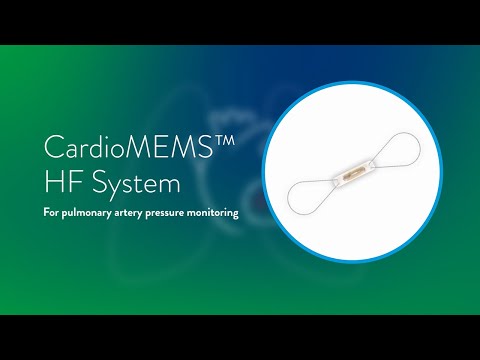
- 1. Philips: The Philips Biosensor BX100 is a wireless, disposable wearable patch that received FDA clearance to help monitor patient vitals and detect early deterioration.
- 2. Medtronic: Medtronic offers app-based and hardware RPM solutions, such as those under the MyCareLink brand, which remotely track data from implanted cardiac devices.
- 3. Abbott: The FreeStyle Libre is a continuous glucose monitoring system that uses a wearable sensor patch to transmit real-time glucose readings, while CardioMEMS is Abbott’s flagship cardiac product.
- 4. GE Healthcare: Portrait Mobile is a platform built using cloud-native technology, pairing wearable wireless sensors with a smartphone-sized monitor to continuously track respiration rate, oxygen saturation, and pulse rate.
- 5. BIOTRONIK: BIOTRONIK’s Home Monitoring platform is a remote cardiac monitoring service that enables automatic, daily transmission of data from implanted cardiac devices straight to the care team.
- 6. Masimo: Masimo Patient SafetyNet is an RPM solution built around a wearable pulse oximetry sensor that tracks a patient's oxygen saturation, pulse rate, and respiration rate.
- 7. Health Recovery Solutions: PatientConnect is HRS's core telehealth and RPM platform that pairs Bluetooth biometric peripherals with disease-specific care plans, education, and medication reminders.
- 8. AMC Health: CareConsole is AMC Health's FDA Class II–cleared RPM platform, which pairs wireless Bluetooth devices and mobile apps to capture real-time biometric and behavioral data for chronic condition management
- 9. Tenovi: The Tenovi Cellular Gateway is a proprietary hub connecting over 40 FDA-cleared Bluetooth remote monitoring devices for vital signs, medication adherence, and activity tracking.
- 10. Teladoc: The Livongo connected glucose meter is a blood glucose meter that automatically uploads readings, forming the core of Teladoc's chronic-condition RPM programs.
Did you know?
Company portals







Executives

Finn Gustafsson
Chief Medical Officer & Divisional Vice President, Heart Failure
Geoff Martha
CEO and Chairman Of The Board Of Directors

Julia Strandberg
Director Board of Directors - Digital Health Tech