GSK’s Positive Cancer Trial Results Reveal Oncology Momentum
GSK’s oncology division is riding strong tailwinds after publishing a series of impressive clinical trial results throughout October 2026.
In the build-up to the ESMO 2026 (European Society of Medical Oncology) conference in Madrid, Spain, the British pharmaceutical giant revealed it would present more than 20 data abstracts from its solid tumour portfolio – up from 11 at ESMO 2025.
Chief among these were positive, late-stage clinical trial results for Mo-Rez for platinum-resistant ovarian cancer, Jemperli for advanced rectal cancer and Ris-Rez for bone cancer.
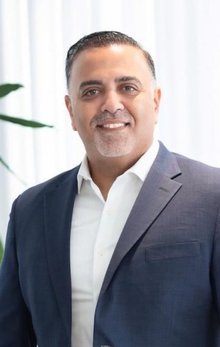
Hesham Abdullah, Global Head of Oncology, Research & Development at GSK, believes cancer care is entering its next stage of development, driven by treatments such as those being investigated in GSK’s clinical oncology pipeline.
“Advances in cancer biology, technology and drug development are creating opportunities that simply weren't possible a decade ago,” he says in a LinkedIn post discussing the company’s oncological progress.
“The challenge now is translating those advances into medicines that can potentially improve outcomes for the patients who need them most.”
“Advances in cancer biology, technology and drug development are creating opportunities that simply weren't possible a decade ago. ”
A slew of oncology successes
Among the standout results were those for Ris-Rez, which reduced the risk of disease progression or death by 67% compared with chemotherapy in patients with relapsed osteosarcoma in China.
Discussing the results, Hesham says: “For patients with relapsed osteosarcoma, where treatment options are extremely limited, these findings are particularly important. The results will help inform GSK's global development programme, including our ongoing phase II trial in advanced osteosarcoma and soft tissue sarcoma."
- £2bn (US$2.6bn): Oncology revenue in 2025, up from £731m (US$974m) in 2023.
- 67%: Reduced risk of disease progression or death with Ris-Rez versus chemotherapy in relapsed osteosarcoma patients in China.
- 62%: Confirmed response rate for Mo-Rez in platinum-resistant ovarian cancer at the selected phase III dose.
- 76%: Complete response rate among evaluable patients receiving Jemperli for locally advanced rectal cancer in the AZUR-1 trial.
- US$10.6bn: Value of GSK’s acquisition of Nuvalent, expanding its targeted oncology portfolio in lung cancer.
Mo-Rez also delivered promising results in platinum-resistant ovarian cancer, with a 62% confirmed response rate among patients treated at the selected phase III dose. GSK is advancing both investigational antibody-drug conjugates (ADCs) through further clinical trials, expanding its reach across solid tumours.
The results highlight GSK's growing investment in ADCs, which are designed to target tumour cells directly. By targeting proteins expressed on cancer cells, these treatments aim to combine the precision of antibody-based therapies with the potency of cytotoxic medicines.
Meanwhile, Jemperli received US approval for locally advanced rectal cancer in patients whose tumours are mismatch repair deficient or microsatellite instability-high.
Results from the phase II AZUR-1 trial showed that 76% of evaluable patients achieved a complete response, highlighting the potential for immunotherapy to help some patients avoid conventional treatments such as surgery, radiotherapy and chemotherapy.

A renewed focus
According to Wall Street Journal reports, GSK is looking to double the number of cancer medicines in clinical trials next year.
It marks a dramatic turnaround in the company’s strategy.
Last year, oncology drug revenue was around £2bn (US$2.7bn), accounting for around 6% of the company’s wider turnover. In 2023, this figure was just £731m (US$973m) – approximately 2.4% of group revenue.
GSK’s recent clinical successes and planned expansion of its oncology pipeline could drive further revenue growth in the years ahead as the company strengthens its cancer drug portfolio.
The firm’s US$10.6bn acquisition of Nuvalent in July 2026 was a clear indicator of GSK’s oncology ambitions. The deal brought two late-stage targeted treatments for non-small-cell lung cancer into GSK's portfolio: Jideytro (zidesamtinib), targeting ROS1-positive disease, and neladalkib, targeting ALK-positive disease. It also added an earlier-stage HER2 inhibitor.
In September 2026, GSK also acquired a potential next-generation trispecific T-cell engager from Chimagen Biosciences for multiple myeloma.
The deal is worth up to US$750m, including potential milestone payments. The experimental treatment is designed to engage T cells while targeting two tumour-associated antigens, with the aim of improving efficacy and tolerability compared with existing approaches.
GSK - key partners
LTZ Therapeutics
CEO: Robert Li | HQ: Redwood City, California, with operations in Shenzhen, China
GSK and LTZ Therapeutics announced a research collaboration in November 2025 to develop up to four potential first-in-class myeloid cell engager therapies for blood cancers and solid tumours. The partnership combines GSK's oncology expertise with LTZ's immune-engager platform, which aims to harness immune cells to attack cancer while potentially offering a safety profile suitable for treatment in community settings.
Oxford BioTherapeutics
CEO: Christian Rohlff | HQ: Oxford, UK
GSK and Oxford BioTherapeutics entered a multi-year collaboration in December 2025 to discover potential first-in-class antibody-based cancer treatments. The partnership uses Oxford BioTherapeutics' OGAP-Verify platform to identify and validate promising oncology targets, with GSK responsible for subsequent research, development and commercialisation. The agreement strengthens GSK's ability to identify new targets and broaden its pipeline of experimental cancer medicines.
Company portals
Executives
Hesham A. Abdullah, MD, MSc
Senior Vice President, Global Head of Oncology, Research & Development