
GSK Acquires Nuvalent To Maximise Cancer Treatments
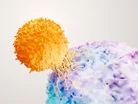
GSK has announced that it has entered an agreement to acquire Nuvalent, a Boston-based clinical-stage biopharmaceutical company.
Nuvalent focuses on precision targeting for oncology therapies and is being acquired for US$10.6bn.
GSK is acquiring Nuvalent due to it having validated targets, meaningful address efficacy and tolerability limitations of existing standard-of-care therapies.

Lung cancer therapies
GSK’s acquisition includes three lung cancer products under a single transaction.
Zidesamtinib (NVL-520) and neladalkib (NVL-655) are two late-stage, potential best-in-class, next-generation, highly selective ROS1 and ALK inhibitors for treatment of Non-Small Cell Lung Cancer (NSCLC).
To date, both treatments have received FDA Breakthrough Therapy and Orphan Drug Designations and are in review with target dates.
Current target dates include 18 September 2026 for Zidesamtinib and 27 November for neladalkib.
If approved by the FDA, both treatments are expected to launch in 2026 and have multi-blockbuster potential.
“Today’s acquisition is a multi-product deal, consistent with our approach to acquire assets that have clinically proven targets and meaningfully address an efficacy and/or tolerability gap,” says Luke Miels, Chief Executive Officer, GSK.
“The two lead products are potential best-in-class assets that could launch this year if approved by the FDA and offer significant new treatment options to patients with two forms of non-small cell lung cancer.
“The acquisition provides GSK with immediate new sales growth opportunities, improving profit contributions from 2027 and a platform in lung cancer for rapid expansion with Ris-Rez, our B7-H3 targeted ADC in phase III clinical development.”
The third asset, NVL-330, is a potential best-in-class HER2 inhibitor that is currently in phase I trials for HER2-altered NSCLC.
The acquisition also includes Nuvalent’s preclinical portfolio of multiple programmes, built from its proven precision medicine capabilities and clinical insights from industry-leading physician-scientists.
Longer effective treatment and durability
Data from the IASLC 2025 World Conference on Lung Cancer and the 2026 ASCO Annual Meeting show that both zidesamtinib and neladalkib provide best-in-class profiles.
Both treatments aim to provide longer effective treatment with a better quality of life due to their:
- High target-selectivity
- Durable treatment response
- Improves tolerability
- Enhances blood-brain barrier penetration for tumour spread
- Broader coverage of ALK and ROS1 mutations.
All of these factors may address limitations in efficacy and/or tolerability of existing therapies.
Experiments show that ROS1 and ALK-altered NSCLC treatments primarily affected non-smoking adults who were aged between 40 and 50 years old.
“Since our founding, we have leveraged our deep expertise in chemistry and structure-based drug design to develop a portfolio of novel, potentially best-in-class kinase inhibitors,” says James Porter, Chief Executive Officer, Nuvalent.
“Our close collaboration with leading physician-scientists and patient advocates has driven remarkable enrollment, accelerating development and building confidence in the clinical profile of these drugs.
“We’re excited that GSK has recognised the significant value these programmes can offer patients and shares our vision for practice-changing innovation.
“GSK’s proven track record, infrastructure and expertise will support the successful commercialisation of zidesamtinib and neladalkib, as well as accelerate advancement of our broader discovery pipeline.”
Oncology at GSK
According to GSK, cancer remains one of the world's most significant health challenges, with one in five people diagnosed during their lifetime and global survival rates across all cancers remaining at approximately 69%.
The company’s oncology strategy is focused on advancing innovative, precision medicine-based approaches that improve outcomes, quality of life and long-term survival for patients.
By leveraging expertise in human genetics, immunology and biomarker-driven research, it is developing a diverse oncology pipeline that includes antibody-drug conjugates (ADCs), next-generation small molecules and T-cell engagers.
GSK’s research spans both blood cancers, such as multiple myeloma and myelofibrosis and gynaecologic cancers, including endometrial and ovarian cancer, where significant unmet medical needs remain.
Through continued investment in immuno-oncology, strategic partnerships and cutting-edge technologies, GSK aims to deliver more targeted treatments, intervene earlier in disease progression and redefine standards of care for patients living with cancer.


Executives

James Porter
Chief Executive Officer
Luke Miels
Chief Commercial Officer