
California Targets PFAS In Products & Sets Water Goals
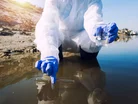
California is implementing new measures to protect public health by establishing stringent goals for “forever chemicals” in drinking water and legislating a phase-out of their use in many consumer products.
The state’s Office of Environmental Health Hazard Assessment (OEHHA) is leading the initiative that sets science-based limits for perfluoroalkyl and polyfluoroalkyl substances (PFAS), a class of chemicals known for their persistence in the environment.
These synthetic chemicals are valued for their resistance to hot water and oil, but this durability means they do not break down easily.
Once in the environment, they can accumulate in water, soil and living organisms. According to some studies 45% of tap water in the US contains PFAS and 98% of Americans have detectable levels of the chemicals in their blood.
Exposure has been linked through health studies to serious health issues, including cancer, hormonal disruption, liver damage, reduced immunity and developmental problems.

Establishing new public health goals for water
The OEHHA has set new public health goals (PHGs) for two of the most prevalent PFAS compounds, perfluorooctanoic acid (PFOA) and perfluorooctane sulfonic acid (PFOS).
These non-enforceable targets are 0.007 parts per trillion (ppt) for PFOA and 1 ppt for PFOS, representing levels considered safe for lifetime exposure without a significant health risk. The goals are the result of a five-year scientific review and public consultation process.
Darrin Polhemus, Deputy Director for the State Water Board’s Division of Drinking Water, explains: “OEHHA’s adoption of these public health goals for PFOA and PFOS is an important step toward addressing the long-term effects of forever chemicals. The PHG values will enable us to develop standards that water systems will have to achieve to help minimise these chemicals in our drinking water.”
Phasing out PFAS from consumer products
Complementing the water safety goals is Senate Bill 682 that targets PFAS contamination at the source.
The legislation provides the Department of Toxic Substances Control (DTSC) with enhanced enforcement authority, allowing for product testing, compliance certification and the application of administrative penalties.
The bill supports a move toward an "essential use" model where PFAS are permitted only when crucial for health or safety.
“We know PFOA and PFOS can be harmful at low levels and California is leading by adopting these scientifically rigorous and health protective goals to inform how water suppliers treat these chemicals in drinking water,” says Lauren Zeisse, former OEHHA Director.
The health and economic burden of contamination
The widespread use of PFAS has created a major environmental challenge with contamination common in groundwater near industrial sites, landfills and firefighting training areas. This poses a long-term threat to clean water access and public health.
Public health organisations like the Environmental Working Group and the Natural Resources Defense Council have voiced their support for the ban.
Some industry representatives have raised concerns regarding the feasibility and cost of reformulation.
They argue that certain fluoropolymers used in products like non-stick cookware are stable and have been approved by the US Food and Drug Administration.

Regulators, however, contend that managing PFAS as a single chemical class is necessary to prevent the substitution of one harmful chemical with another.
The cost of cleaning up existing PFAS contamination in California already surpasses US$500m with over US$1bn in projects planned, highlighting the financial argument for preventative action.
By combining scientific goals with phased legislation, the state intends to lower public exposure and protect its ecosystems from further harm.