
Ecolab: Smart Water Strategies Reshaping Sustainability
Sustainability is no longer an optional extra for businesses.
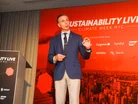
What once sat on the periphery of strategy now moves directly into the boardroom. For Emilio Tenuta, Chief Sustainability Officer at Ecolab, this transformation is more than theoretical.
With four decades of experience and 16 years in sustainability leadership, he sees a clear shift: companies that embed sustainability into their core operations unlock real value – especially through smarter water management.
Ecolab, which provides water, hygiene and infection prevention services across 171 countries and over 40 industries, has long focused on resource efficiency.
And with global water demand rising and supply under pressure, Emilio stresses the importance of businesses making water conservation a central part of their sustainability efforts.
"The biggest shift I've seen is that sustainability has moved from the side lines to the centre of the business strategy," Emilio says.
- Ecolab’s 2024 Growth & Impact Report demonstrates how the company’s sustainability expertise has produced outstanding results for partners across industries and continents
- In 2024, it helped its customers conserve 226 billion gallons of water
- Its hygiene and food safety programmes protected 1.7 billion people from foodborne illnesses and infections
- The company’s climate-driven solutions enabled customers to avoid 4.6 million tons of greenhouse gas emissions
- Since 2019, the report says Ecolab’s science-based and digital solutions have delivered US$9.1bn in cumulative value through efficiency, risk reduction and sustainable growth
Water management means business value
Ecolab's approach links environmental action with measurable business performance. Its 2024 Growth & Impact Report outlines several key outcomes.
In one year alone, its solutions help customers conserve 226 billion gallons of water, prevent 4.6 million tons of greenhouse gas emissions and protect 1.7 billion people through hygiene and food safety programmes.
Since 2019, Ecolab's data-backed solutions have delivered US$9.1bn in value to customers. These outcomes come through efficiency, reduced risk and support for sustainable growth.
"Value creation is the primary aim of every business, and value drives growth," Emilio explains.
That value goes beyond saving water. Ecolab’s digital tools allow customers to track returns around water use, energy efficiency, food safety and public health outcomes.
This turns environmental responsibility into a business growth strategy.
"Smart water resource management drives business growth and a broader impact in the world," Emilio adds.

Technology plays a central role. Ecolab's 3D TRASAR Technology, for example, supports data centre cooling with direct-to-chip liquid systems.
It uses real-time monitoring and AI to reduce environmental impact and enhance performance.
The company is now piloting an AI-powered water solution with Digital Realty – a global data centre provider – to further enhance water efficiency and operational resilience.
“It's incredibly rewarding to see how smart water resource management drives business growth and a broader impact in the world.”
Water scarcity is now a boardroom issue
Water scarcity is no longer a future concern. A 56% global freshwater deficit is projected by 2030. Emilio does not mince words:
"Water is the number one physical risk that companies will face in the changing climate."
All industries depend on water – from manufacturing and agriculture to health and hospitality. Reducing water use not only cuts costs and environmental footprint, but also enhances business resilience. Using less water also saves energy, since water systems often require heating, cooling or pumping.
"The biggest shift I've seen is that sustainability has moved from the side lines to the centre of the business strategy"
“We help them do more with less. If you use less water, you're less vulnerable to climate change. But at the same time, if you use less water, you also use less energy.”
To support this, Ecolab develops digital tools like the Smart Water Navigator. This online platform helps businesses assess risk, set water goals and take action. An AI version launches in 2026.
But Emilio is clear that technology alone is not enough. Collaboration is essential.
Ecolab supports major collective water initiatives. It co-founded the Water Resilience Coalition in 2020, focusing on water-stressed regions with support from the United Nations. It also leads the California Water Resilience Initiative, encouraging cross-sector action to secure the state's water future.
In 2024, the company joins global firms including Microsoft, Starbucks and Gap Inc. in supporting WaterEquity's Water & Climate Resilience Fund. Together, they commit over $100m to improve water access for 15 million people.
“We see the effects of climate change impacting areas around the world and it is imperative to continue to innovate and to use the technology already on the shelf.”
Closing the loop on water use
Traditional water strategies follow a “flush and forget” model. Emilio says this needs to shift to a circular approach – rethinking the water cycle so wastewater is reused rather than discarded.
"We need to rethink the water cycle and view water as a strategic asset, not as a liability.”
This involves major changes to how organisations operate. Circular strategies require redesigning systems to capture, treat and reuse water. Though challenging, this approach reduces operational costs and regulatory pressure, while boosting resilience to climate risks.
AI and smart systems are crucial in moving from reactive responses to proactive optimisation. They allow businesses to monitor, adapt and improve water usage in real time.
For these efforts to succeed, Emilio insists that sustainability programmes must align with business objectives and show measurable returns.
“Resource efficiency improvements, risk mitigation benefits and innovation opportunities provide concrete evidence of programme effectiveness.”
Metrics help make the case for ongoing investment. They also give sustainability leaders the data they need to influence decisions at the board level.
Ecolab’s track record reflects this alignment. Its sustainability solutions address real customer problems while delivering environmental and commercial benefits. Its digital tools offer clear visibility into value creation.
“I love getting up every morning knowing that we are driving business growth and community resilience while making a real impact on the planet at the same time.”
Water management is no longer just a technical issue. It is a strategic, commercial and environmental imperative – and Emilio Tenuta makes it clear that the tools to act already exist. The challenge is to use them.