Novo & Anthropic: Partnering on Claude AI Drug Discovery
The Danish drugmaker Novo, which recently changed its name from Novo Nordisk, has formed a partnership with US AI lab Anthropic to use the Claude model for drug discovery work.
According to Anthropic, the AI lab presented findings in August from an investigation into Claude's performance on a protein design campaign. The findings showed the model can design protein binders against a variety of targets as well as or better than leading human experts.
The AI lab also demonstrated how Claude Opus 5 performed on an analytical chemistry task. This showed how general-access models can support routine and time-intensive aspects of research.
Novo identifies drug discovery challenges
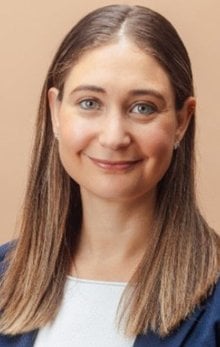
Daniela Amodei, President of Anthropic, wrote in a post on LinkedIn: "Today, Anthropic and Novo Nordisk announced a new collaboration to use Claude to accelerate the discovery and development of new medicines.
"Novo's experts have pinpointed challenges in the drug discovery process that Claude is particularly capable of addressing, and we'll work together to improve outcomes at every step of the process.
"Excited to work with Novo on this, part of our wider effort to put Claude to work to help us live healthier lives."
According to Novo, the companies will jointly address key drug discovery challenges identified by scientists and computational teams at Novo. They will develop targeted solutions for specific problems and workflows to support biological reasoning and help accelerate the discovery and development of new medicines.
Testing Claude for R&D workflows
Novo will test Claude Science for specific workflows in research and development as an initial aim. The company will address problems where the joint capabilities of Novo and Anthropic are expected to have the greatest impact.
Dario Amodei, Co-Founder and CEO of Anthropic, says: "AI's increasing capability brings with it the potential to compress a century's worth of biological and medical breakthroughs into a decade.
"By giving leading researchers access to safe, capable and trusted frontier models, we can shorten research timelines, improve outcomes and discover medicines and treatments that significantly improve human life. That is exactly what our collaboration with Novo is built to achieve."
Novo also outlined that it will use Anthropic's frontier models to strengthen AI-driven software development.
Novo partnership history with AI
Mike Doustdar, President and CEO of Novo, writes on LinkedIn: "I’m excited to share today’s news of Novo’s partnership with Anthropic – one that will supercharge our R&D organisation and help us to discover and develop new medicines faster.
"As part of this, Novo will use Anthropic models and Claude Science to advance AI-driven software development and scientific reasoning for R&D and tackle key drug discovery challenges, identified by Novo’s scientists and computational teams.
"Our work with Anthropic has been designed with robust data governance and human oversight, helping ensure AI is applied responsibly and in line with Novo's ethical and compliance standards. Novo’s ambition is to become the world’s most AI-driven healthcare company because that will help us on our mission to bring new, transformative health solutions to the people we serve.
"Our work with Anthropic, building on our current AI initiatives with other technology partners, is part of how we will get there."
This is not the first partnership Novo has formed with an AI lab. In April, the firm announced a partnership with OpenAI aimed at applying AI capabilities to analyse complex datasets, identify drug candidates and reduce the time required to move from research to patient.

According to a report by Wonbeak Yoo in Nature called Precision oncology in the age of AI: lessons from AI-driven drug discovery and clinical translation, AI has been positioned as a methodological approach applied in pharmaceutical research and development. This includes oncology, transitioning from a supportive analytical tool to a computational strategy used to assist therapeutic discovery.
Wonbeak outlined that AI-enabled approaches have demonstrated the following translational advantages:
- Acceleration of early-stage timelines.
- Reduction in candidate attrition.
- Enhancement of late-phase development.
In November 2020, Google DeepMind's AlphaFold was recognised as a solution to the 50-year protein-folding problem. AlphaFold emerged from AlphaGo, an AI system to win the ancient Chinese board game Go.
- Anthropic and Novo partnered to advance AI drug discovery
- Novo will test Claude Science in R&D workflows
- Claude designed protein binders matching human expert performance
- Novo previously formed an AI partnership with OpenAI
- Nobel laureate John Jumper joined Anthropic from DeepMind.
According to Google DeepMind, proteins are made from long chains of amino acids, each with a unique, complex 3D structure. Figuring out just one of these could take several years and hundreds of thousands of dollars.
AlphaFold solved this problem with the ability to predict protein structures in minutes, to a degree of accuracy. It won the Nobel Prize for Demis Hassabis, former Google DeepMind CEO and current Alphabet Chief Scientist, and John Jumper.
John moved from Google DeepMind to Anthropic earlier this year and joined its AI for Science team.
Anthropic's key partners
- AWS: Anthropic's primary cloud provider and training partner, with AWS also a major investor and co-developer of the Project Rainier compute cluster.
- Google Cloud: Supplies TPU compute capacity to Anthropic under an expanded, multi-gigawatt partnership announced alongside Broadcom in 2026.
- Salesforce: Partnered with Anthropic on "Claudeforce," embedding Claude as a reasoning model across Salesforce's platform and bringing Salesforce data into Claude via a dedicated plugin.
- Accenture: Formed the Accenture Anthropic Business Group, training around 30,000 Accenture staff on Claude to help enterprise clients move AI projects from pilot to production.
Company portals



Executives
Daniela Amodei
President and co-founder
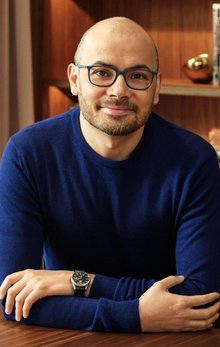
Demis Hassabis
Founder & CEO
John Jumper
To be Disclosed
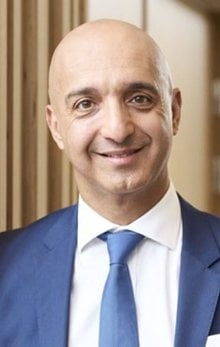
Maziar Mike Doustdar
President and CEO