
Sanofi and Regeneron Confirm US$8bn Partnership Renewal
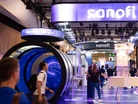
Sanofi and Regeneron’s partnership is well-established and highly productive, having delivered one of the pharmaceutical industry’s biggest success stories in Dupixent.
The blockbuster anti-inflammatory drug used by millions across the globe is used to treat a range of conditions, including eczema, asthma and chronic obstructive pulmonary disease (COPD). Now, the companies are renewing their long-standing collaboration, with hopes of building on their track record in immunology.
The renewal involves US$1bn in upfront payments to Regeneron, alongside up to US$7bn in milestone-related payments.
Regeneron is a US biotechnology company developing medicines across immunology, oncology, cardiovascular disease, infectious diseases and genetic medicine.
Commenting on the partnership on LinkedIn, Sanofi CEO Belén Garijo says, “What started 20 years ago as a bold bet has become one of the most productive partnerships in our industry. Together, we have transformed how we treat diseases driven by type 2 inflammation and built a world-leading immunology business in the process.
“What excites me most is that we are not resting on that achievement. We are doubling down to deliver therapies that will matter deeply to patients living with immune-mediated diseases and to build a pipeline that will define our future.”
“We are doubling down to deliver therapies that will matter deeply to patients living with immune-mediated diseases. ”
Regeneron takes the R&D lead
Sanofi and Regeneron will co-develop and co-commercialise four new long-acting antibodies targeting pathways involved in inflammatory diseases. These include antibodies targeting interleukin-13 (IL-13), IL-4, IL-4 receptor alpha (IL-4Rα), and an IL-4/IL-13 bispecific antibody.
Regeneron’s IL-13 antibody, REGN20423, is already being evaluated in a Phase 1 trial for atopic dermatitis, while the other three candidates are expected to enter clinical studies in 2027.
Regeneron will also have the option to add Sanofi’s investigational bispecific therapy lunsekimig, which targets TSLP and IL-13, following completion of its Phase 3 trials in COPD.
The costs and future profits generated from these drugs will be split evenly between the pair.
- US$8bn — total potential value of the renewed Sanofi-Regeneron partnership.
- US$1bn — upfront payment Sanofi will make to Regeneron.
- US$7bn — potential milestone payments under the expanded agreement.
- 4 — new long-acting antibody candidates to be co-developed and co-commercialised.
- 1.5m+ — active patients worldwide receiving Dupixent.
Highlighting the longevity and success of the partnership, George Yancopoulos, President and Chief Scientific Officer at Regeneron and a principal inventor of Dupixent, points to the partnership’s long track record of developing medicines for patients with type 2 inflammatory diseases.
“The companies’ clinical and commercial alliance dates to 2003 and has resulted in multiple approved medicines to date, including Dupixent, which has redefined the standard of care for people with type 2 inflammatory diseases and is now one of the most widely used antibodies for any disease, with over 1.5 million active patients worldwide," he says.
“By combining Regeneron’s world-class scientific discovery and antibody development expertise with Sanofi’s global capabilities and reach, we hope to once again deliver the next wave of innovation in immunology.”
Discovering the next Dupixent?
Chief among the hopes for the renewed partnership is that the next major immunology medicine can be discovered through the collaboration.
The R&D focus will be on discovering and developing next-generation, long-acting antibodies designed to target key pathways involved in type 2 inflammation.
With REGN20423 already in clinical development and three further candidates expected to enter trials in 2027, the companies are looking to establish a pipeline that can extend their position in immunology beyond Dupixent.

Dupixent has become one of the world's leading biologic medicines, with more than 1.5 million active patients globally, but its US composition-of-matter patent is expected to expire in 2031.
Sanofi and Regeneron are therefore investing in a new generation of therapies as they prepare for the eventual loss of exclusivity of their flagship medicine.
Alongside the pipeline expansion, the agreement resolves a period of disagreement between the companies, with Sanofi and Regeneron confirming that they have “settled their prior collaboration-related litigation”.
For a partnership that has already produced one of the industry's biggest immunology successes, the renewed agreement represents an attempt to turn two decades of collaboration into the next generation of medicines – and ensure that its scientific and commercial momentum continues beyond Dupixent.
Sanofi - key partners
AstraZeneca
CEO: Pascal Soriot | HQ: Cambridge, UK
Sanofi and AstraZeneca jointly developed and commercialise Beyfortus (nirsevimab), a long-acting monoclonal antibody designed to protect infants from respiratory syncytial virus (RSV). The partnership combines AstraZeneca’s antibody expertise with Sanofi’s global commercial and manufacturing capabilities, and has helped establish Beyfortus as an important tool in infant RSV prevention.
Novavax
CEO: John C. Jacobs | HQ: Gaithersburg, Maryland
Sanofi and Novavax have a licensing partnership covering co-commercialisation of Novavax’s adjuvanted COVID-19 vaccine, alongside development of potential flu-COVID-19 combination vaccines. The agreement also gives Sanofi a non-exclusive licence to use Novavax’s Matrix-M adjuvant in vaccine products, broadening its access to protein-based vaccine technology.
Company portals




Executives
Belén Garijo
CEO
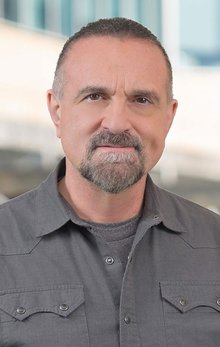
George Yancopoulos
President, Chief Scientific Office & co-Founder