
This Week's Top 5: Lidl, Sanofi, GSK, NVIDIA and New NHS CTO


Research commissioned by Lidl GB shows that Britain passes its 2026 Planetary Health Diet (PHD) Overshoot Day just over halfway through the year.
Based on the science-backed targets set by the EAT-Lancet PHD, the date marks the point at which the UK exceeds its annual recommended balance of foods for a healthy and sustainable diet.
PHD is a science-backed framework offering clear targets for feeding a growing global population healthily, while staying within planetary boundaries by 2050.
The analysis, conducted by consultancy WPI Economics, finds that Britons consume just 40% of the recommended amount of fruit and vegetables and only 15% of the suggested intake of fibre-rich wholegrains.
Plant-based protein consumption is also well below target, reaching just 18% of recommended levels, while animal protein intake exceeds guidance by 60%.
Richard Bourns, Chief Commercial Officer at Lidl GB, says: “These findings are a wake-up call. As a nation, we’re at a dietary tipping point, and we need a big shift in how we eat to ensure we’re consuming more of what we’re currently lacking.”
Sanofi has announced a reshaped Executive Committee and key leadership changes as the pharmaceutical giant prepares for its next phase of growth, bringing together a streamlined executive team from across its commercial businesses, research organisations and global functions.
Belén Garijo, CEO at Sanofi, says the refreshed leadership team will help guide the company through its next stage of development while maintaining a strong focus on patients and innovation.
"This Executive Committee brings together experienced professionals who will work together to help shape our future direction, make disciplined choices, execute them with focus and ensure we continue to deliver for our patients, our people and all our stakeholders," she says.
In addition to the refreshed Executive Committee, Sanofi announced that several key figures in its leadership team have taken on new responsibilities as part of the reshuffle.
GSK has reaffirmed its commitment to the UK's life sciences sector, pledging to invest £400m (US$531m) in the country over the next three years.
The centrepiece of the investment is a new research and development hub at Cambridge Biomedical Campus, strengthening GSK's presence within the UK's renowned life sciences "Golden Triangle" of Cambridge, Oxford and London.
As part of the restructure, GSK will close its Stevenage R&D site by 2029, while upgrading its nearby research laboratories in Ware and relocating some employees to the facility.
Luke Miels, CEO at GSK, says the investment “will accelerate our R&D and help us deliver new, competitive products. It integrates GSK further into one of the world’s leading centres of knowledge and demonstrates the attractiveness of the UK’s life sciences ecosystem.”
Before a healthcare robot can operate safely in a lab environment, it must first learn to interpret physical resistance.
Given the sheer volume and variety of data developers need to train, test and improve robot behaviour, ingraining this knowledge into prospective robots creates one of the biggest bottlenecks in healthcare robotics.
Open source simulators like NVIDIA’s Medical Physics Simulation framework, which enable healthcare teams to access and build upon shared simulation tools and AI models, are crucial to unlocking these bottlenecks and accelerating industry-wide surgical robotics progress.
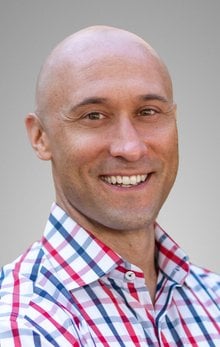
"The framework brings together anatomy and medical device behaviour with sensor simulation and robot learning so teams can create reusable simulation environments instead of rebuilding custom scenes for every workflow, saving developers time and bringing innovations to market faster," writes David Niewolny, Director of Business Development for Healthcare and Medical at NVIDIA, in a product announcement.
NHS England has announced the appointment of Kevin Humphries as its new Chief Technology Officer.
He will work under Rob Thompson to deliver the NHS’s 10 Year Health Plan and support evolving technology needs across the organisation.
Kevin brings more than 35 years of experience in engineering, digital transformation and consulting to his new position.
On LinkedIn, Kevin describes himself as “a technology leader with many years of experience helping private and public organisations with their digital transformations, helping them understand how to survive and thrive in the age of an exponential information and automation explosion.”
Company portals





Executives
Belén Garijo
CEO
David Niewolny
Sr. Dir, Global Head of Business Development - Healthcare / Medical

Kevin Humphries
Chief Technology Officer

Luke Miels
Chief Commercial Officer

Richard Bourns
Chief Commercial Officer