Top Five in Healthcare: Water, Nutrition & Health Literacy


NVIDIA's advanced reasoning and generative AI models for medical imaging development are now available on HOPPR AI Foundry, marking a significant advancement for healthcare professionals working with diagnostic imaging.
The platform provides a secure, compliant environment where medical developers and researchers can train, evaluate and refine AI systems designed specifically for clinical applications.
The integration represents a convergence of cutting-edge technology with practical clinical needs.
Haleon, a consumer goods company, aims to improve everyday health through its global brands including Sensodyne, Centrum and Voltarol.
It has set health literacy as a global public health priority, launching a global programme to make health advice and products more accessible.
The company has also set a new target to provide opportunities for more than 300 million people to take control of their everyday health by 2030.

Woolworths Group operates as Australia's largest retailer, employing more than 190,000 team members across its supermarket brands.
The company's operations are driven by its purpose of creating better experiences together for a better tomorrow.
As part of this commitment, Woolworths has released an updated Sustainability Plan that outlines its approach to environmental protection and encouraging healthier food choices amongst consumers, with a particular focus on nutrition and wellbeing.
Access to safe water and sanitation remains a critical health challenge affecting billions of people worldwide. According to global estimates, more than two billion people lack access to safe water while 3.4 billion people lack access to safe sanitation.
This creates significant public health risks, as contaminated water and poor sanitation are linked to diseases including cholera and dysentery, highlighting why safe water access is particularly vital for underserved communities.
Join us at Sustainability LIVE: The US Summit to hear from sustainability leaders on The Water Sustainability Summit panel, in association with Ecolab.

A breakthrough in medical data processing could transform how healthcare providers and insurers handle complex clinical documentation.
Aviva's expansion of its generative AI underwriting tool to support individual critical illness (CI) insurance applications represents a significant advancement in healthcare technology, demonstrating how AI can streamline the analysis of medical reports and accelerate decision-making for patients requiring insurance coverage.
The insurer has scaled its generative AI tool to process clinical documentation more efficiently, reducing medical report review times by 50% for critical illness applications. This development could signal a shift in how healthcare data is interpreted and applied within medical underwriting, potentially improving access to coverage for patients with complex medical histories.
Company portals







Executives
Courtney Tripp
Director of Sustainability and Strategy - Industry Americas
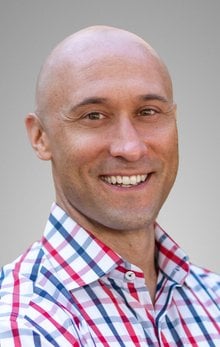
David Niewolny
Sr. Dir, Global Head of Business Development - Healthcare / Medical
Dr Khan Siddiqui
Founder, CEO and Chairman of the Board

Emilio Tenuta
Senior Vice President and Chief Sustainability Officer at Ecolab
John Ikeda
Chief Mission Officer
Oriana Raabe
Vice President - Sustainability
Rebecca Hastings
Head of Partnerships and Philanthropy, UK
Robert Morrison
Chief Underwriting Officer

Sarah McDonald
Vice President, Sustainability & Health Inclusivity
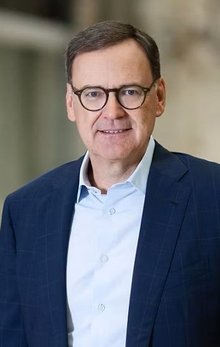
Scott Perkins
Chair

Simon Lowden
Chief Corporate Affairs and Sustainability Officer