How Will Trump’s WHO Departure Affect the US' Healthcare?
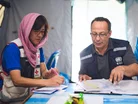
Founded in 1948, the World Health Organization (WHO) is the United Nations agency that connects nations, partners and people to promote health, keep the world safe and serve the vulnerable, with the aim that everyone, everywhere can attain the highest level of health.
After a year of initiation, On 20 January 2026 the US Department of Health and Human Services (USDHHS) announced that it has officially left WHO.
The withdrawal from WHO is due to “organisation's mishandling of the COVID-19 pandemic that arose out of Wuhan, China, its failure to adopt urgently needed reforms and its inability to demonstrate independence from the inappropriate political influence of WHO member states,” says USDHHS in its press release.
US ends membership in the WHO
Robert F. Kennedy, Jr, Secretary of the US Department of Health and Human Services, and Marco Rubio, the Secretary of State, issued a joint statement on 22 January, 2026 confirming the termination of US membership.
"Today, the United States withdrew from the World Health Organization (WHO), freeing itself from its constraints, as President Trump promised on his first day in office by signing E.O. 14155.
"This action responds to the WHO’s failures during the COVID-19 pandemic and seeks to rectify the harm from those failures inflicted on the American people.
"Promises made, promises kept."
President Trump first announced the plan to withdraw on January 20, 2025, signing Executive Order 14155 to formally initiate the process.
In line with the required one-year notice period, the United States Government formally exited from the WHO on January 22, 2026.
During the transition, the US stopped all funding to the organisation, recalled personnel and contractors from WHO headquarters in Geneva and from offices worldwide and suspended/discontinued hundreds of engagements previously conducted through WHO structures.
The US also ended official participation in WHO-sponsored committees, leadership bodies, governance mechanisms and technical working groups.
While limited coordination will continue solely to effectuate withdrawal, the US government has stated it will now pivot towards direct engagement with other countries and organisations outside of WHO frameworks.
Criticism of the WHO’s pandemic response
The withdrawal was driven largely by what the US describes as profound failures in the WHO’s handling of the COVID-19 pandemic originating in Wuhan, China.

Officials argue the organisation delayed declaring both a global public health emergency and a pandemic, costing the world critical weeks as the virus spread.
During the early stages, WHO leadership echoed and praised China’s response despite evidence of underreporting, suppression of information and delays in confirming human-to-human transmission.
US statements also highlight that the WHO downplayed risks of asymptomatic transmission and failed to promptly acknowledge airborne spread.
Following the pandemic, US officials say the organisation did not adopt meaningful reforms to address political influence, governance weaknesses or poor coordination.
Concerns were further reinforced by the WHO report evaluating the origins of COVID-19, which rejected the possibility that scientists created the virus despite China’s refusal to provide genetic sequences from early cases and information on Wuhan laboratory activities and biosafety conditions.
New direction for US global health engagement
Despite the withdrawal, the US government maintains it remains the world’s leading force in protecting public health, saving lives and responding rapidly to infectious disease outbreaks.
All sustainability, net zero and sustainable procurement leaders should attend:
- Procurement & Supply Chain LIVE: The Net Zero Summit - QEII Centre, London, March 4-5
- Procurement & Supply Chain LIVE: The US Summit - Navy Pier, Chicago, April 21-22
Co-located with Sustainability LIVE, these events brings together CPOs, CSCO, CSOs, ESG leaders and senior decision-makers at a moment when sustainability, supply chains and commercial performance are increasingly interconnected.
Tickets can be booked online today for The Net Zero Summit and The US Summit. Group discounts available.
Going forward, it will continue global health leadership through existing and new partnerships directly with other countries, the private sector, non-governmental organisations and faith-based entities.
US-led efforts will prioritise emergency response, biosecurity coordination and health innovation to protect America first while delivering measurable benefits to allies.
The administration has also framed the withdrawal as a step towards restoring accountability for US taxpayers.
Although the WHO is comprised of 194 member states, US officials argue the United States has carried a disproportionate share of the organisation’s financial burden.
In recent years, US assessed contributions averaged approximately US$111m annually, with voluntary contributions averaging roughly US$570m per year, amounting to billions of dollars over time.
Officials emphasise that the United States will continue to lead global health efforts independently, deploying resources efficiently and engaging credible international partners directly outside of WHO governance structures.
Completing the legal transition
Following its formal withdrawal in January 2026, the United States has now completed the legal withdrawal process, ending its membership, governance participation and funding contributions.
"Going forward, US engagement with the WHO will be limited strictly to effectuate our withdrawal and to safeguard the health and safety of the American people," says Robert and Marco.
"All US funding for and staffing of, WHO initiatives has ceased.
"The United States will continue to lead the world in public health, saving millions of lives and protecting Americans at home by preventing infectious disease threats from reaching our shores while advancing global health security through direct, bilateral and results-driven partnerships.
"We will continue to work with countries and trusted health institutions to share best practices, strengthen preparedness and protect our communities through a more focused, transparent and effective model which delivers real outcomes rather than the bloated and inefficient bureaucracy of the WHO."
The Executive Order also revoked prior actions that had retracted the US withdrawal notice in 2021 and halted negotiations on the WHO Pandemic Agreement and amendments to the International Health Regulations.
The administration has directed the National Security Council to establish mechanisms to safeguard public health and fortify biosecurity.
It also instructed federal agencies to identify transparent domestic and international partners to assume activities previously undertaken through WHO coordination, signalling what it describes as a new chapter in US global health strategy.