WHO and INTERPOL Partner to Boost Public Health Security
Protecting public health requires coordinated international law enforcement and strong health leadership to prevent counterfeit food and medicines, unsafe medical equipment and hazardous materials from entering supply chains.
Bolstering the global response to health security threats, INTERPOL and the World Health Organisation (WHO) have signed a cooperation agreement establishing a framework for joint action to detect, respond to and protect against risks that threaten lives worldwide.
The partnership brings together two global organisations with complementary roles in tackling transnational threats. INTERPOL works with police forces in 196 countries to combat international crime, while the WHO, a United Nations agency, coordinates global health responses and works to protect public health.
- 196 countries: INTERPOL works with police forces across 196 countries to tackle transnational crime.
- US$840-US$1.7bn: The estimated annual value of the illicit organ trade targeted by INTERPOL-WHO, according to UN figures.
- Two global organisations: WHO and INTERPOL have established a cooperation framework to strengthen joint responses to health security threats.
- Counterfeit goods in focus: The partnership targets falsified medicines, vaccines and medical devices, as well as illegally produced or mislabelled food, drink and alcohol.
- Emergencies and major events: Joint action will address exceptional health security incidents, including unusual biological events and the misuse of chemical or radioactive materials, as well as threats at major international gatherings.
Health security equals wider security
Leaders from INTERPOL and WHO believe the framework is critical as health threats increasingly intersect with wider security risks.
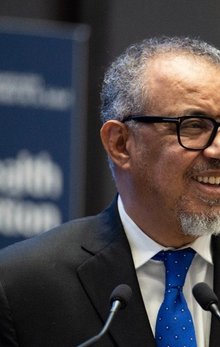
“Health security is global security,” says WHO Director-General Dr Tedros Adhanom Ghebreyesus. “By deepening our collaboration with INTERPOL, we are reinforcing our collective ability to prevent harm, respond to emergencies, and protect people from threats that undermine both health systems and public trust.”
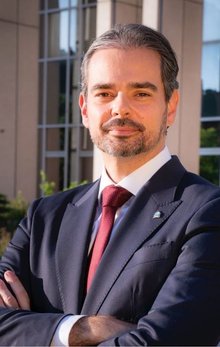
INTERPOL Secretary General Valdecy Urquiza echoes Dr Tedros’ view that health security and wider security outcomes are intrinsically linked.
“Crime and health are increasingly interconnected. From falsified medical products to the exploitation of vulnerable individuals, criminal networks are putting lives at risk,” Valdecy says.
“This agreement strengthens our ability to work with the World Health Organisation to protect communities and ensure that those who threaten them are brought to justice.”
The agreement’s primary focus is coordinating responses to exceptional health security incidents requiring joint health and security action. Examples cited in the announcement include “misuse of chemical or radioactive materials and unusual biological events.”
Responding to public health threats at major international events and mass gatherings will be another key focus of the INTERPOL-WHO partnership.
“Crime and health are increasingly interconnected. From falsified medical products to the exploitation of vulnerable individuals, criminal networks are putting lives at risk. ”
Protecting vulnerable individuals
In addition to bolstering responses to health security threats that could impact wider populations, the two organisations will cooperate on tackling human trafficking networks focused on organ removal, as well as the illegal trade in human organs, tissues and cells.
According to UN figures, the organ trade amounts to between US$840m and US$1.7bn annually, making it a sizeable illicit sector for the WHO and INTERPOL to clamp down on.
Seizing illicitly produced goods
Preventing counterfeit medical and consumer goods from entering supply chains is a key priority for WHO and INTERPOL, given the direct risks these products pose to public health.
The focus will span falsified medical products, including medical devices, vaccines and medicines, alongside illegally produced or mislabelled consumer goods such as food, drink and alcohol.

Tobacco will also be a key concern, with the partnership aiming to implement and enforce the WHO Framework Convention on Tobacco Control.
WHO’s food safety network, INFOSAN, will also play a pivotal role in monitoring the integrity and safety of consumer products.
As a global, voluntary network of national food safety authorities from almost all Food and Agriculture Organisation and WHO member nations, INFOSAN acts as a focal point for global communications around food safety issues.
Luz Maria De Regil, Director of Nutrition and Food Safety at WHO, highlighted INFOSAN’s crucial role in the partnership.
On LinkedIn, she writes: “As food fraud increasingly crosses borders, INFOSAN plays a critical role in managing international food safety incidents. By connecting food safety authorities worldwide, INFOSAN enables the rapid exchange of information and coordinated action to identify affected products and support their removal from international markets before they reach consumers.
“This collaboration highlights the importance of bringing together public health, food safety and law enforcement partners to prevent harm and protect people.”
WHO - key partners
UNICEF
Executive Director: Catherine Russell | HQ: New York
UNICEF works with WHO on child and maternal health, nutrition, immunisation and emergency response. Operating in more than 190 countries and territories, the UN agency delivers essential services, supports vulnerable children and families, and advocates for children's rights. Its global reach makes it a key partner in tackling public health challenges and strengthening health systems.
Gavi, the Vaccine Alliance
CEO: Dr Sania Nishtar | HQ: Geneva, Switzerland
Gavi is a global health partnership that expands equitable access to vaccines in lower-income countries. WHO is a founding partner and provides scientific guidance, vaccine standards and technical expertise, while Gavi helps finance immunisation programmes and support vaccine delivery. The alliance brings together governments, UN agencies, the vaccine industry and philanthropic organisations to improve access to life-saving immunisation.
Company portals
Executives
Luz Maria De Regil
Director, Nutrition & Food Safety
Tedros Adhanom Ghebreyesus
Director General
Valdecy Urquiza
Secretary General