
Why Bill Gates & OpenAI Invest in AI Healthcare in Africa
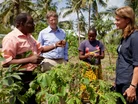
AI systems have advanced far faster than their broad, real-world deployment, creating a growing gap between what is possible and what people actually experience.
These models have become so capable that they are enabling new kinds of breakthroughs, particularly in healthcare, where the challenge is now turning powerful tools into solutions that work in everyday care.
Horizon 1000, a new pilot initiative launched by the Gates Foundation and OpenAI, aims to meet this moment by supporting African leadership in deploying AI to strengthen health systems.

A Horizon1000 commitment
The Gates Foundation and OpenAI have announced Horizon 1000, beginning in Rwanda, to help leaders in African countries advance AI capabilities for health.
Together, they are aiming to commit US$50m in funding, technology and technical support, with the ambitious goal of reaching 1,000 primary healthcare clinics and their surrounding communities by 2028.
“Primary health care is the foundation of strong, resilient health systems, yet remains inaccessible for half the world’s population,” writes OpenAI.
“Sub-Saharan Africa alone faces a health workforce shortfall of approximately 5.6 million workers, placing extraordinary strain on existing clinicians and underscoring the scale of unmet demand for care.
“Quality of care is also highly variable and is a major driver of preventable deaths.”
These shortages force health workers into impossible situations, triaging too many patients with too little administrative support, modern technology or up-to-date clinical guidance.
“AI is going to be a scientific marvel no matter what, but for it to be a societal marvel, we’ve got to figure out ways that we use this incredible technology to improve people’s lives,” says Sam Altman, CEO of OpenAI.
Quality of care is also highly variable and is a major driver of preventable deaths, with the World Health Organization estimating that low-quality care contributes to 6 to 8 million deaths in low- and middle-income countries every year, alongside the millions who die due to lack of access altogether.
All sustainability, net zero and sustainable procurement leaders should attend:
- Procurement & Supply Chain LIVE: The Net Zero Summit - QEII Centre, London, March 4-5
- Procurement & Supply Chain LIVE: The US Summit - Navy Pier, Chicago, April 21-22
Co-located with Sustainability LIVE, these events brings together CPOs, CSCO, CSOs, ESG leaders and senior decision-makers at a moment when sustainability, supply chains and commercial performance are increasingly interconnected.
Tickets can be booked online today for The Net Zero Summit and The US Summit. Group discounts available.
Rwanda’s role in reimagining care
Governments and health leaders across Sub-Saharan Africa have been at the forefront of rethinking how care can be delivered at scale, exploring how digital tools and AI can extend the reach of existing workforces and improve consistency.
“This announcement is a great example of why I remain optimistic about the improvements we can make,” writes Bill Gates, Co-chair of the Gates Foundation, in his ‘Expanding access to health care through AI’ article.
“I’m looking forward to seeing health workers using some of these AI solutions in action when I visit Africa and I plan to continue focusing on ways AI technology can help billions of people in low- and middle-income countries meet their most important needs.”
Rwanda, which currently has only one healthcare worker per 1,000 people, far below the WHO recommendation of four per 1,000, would take 180 years to close that gap at the current pace.
As part of the 4x4 reform initiative, Minister of Health Dr Sabin Nsanzimana has launched an AI-powered Health Intelligence Center in Kigali to ensure limited resources are being used as wisely as possible.
“This is a groundbreaking advancement for data-driven healthcare”, says Minister Dr. Sabin Nsanzimana at the launch.
“We are leveraging real-time data and AI for disease surveillance, resource allocation and smart policy-making to transform our health systems”.
AI for frontline health workers
Horizon 1000 aims to accelerate adoption of AI tools across primary care clinics, within communities and in people’s homes, supporting health workers rather than replacing them.
These tools can help frontline clinicians navigate complex guidelines, reduce administrative burden and spend more time delivering care.
Minister Nsanzimana has called AI the third major discovery to transform medicine after vaccines and antibiotics, and the initiative reflects a wider commitment to closing the innovation gap so poorer parts of the world do not have to wait decades for life-saving technologies to reach them.
Company portals


Executives
Bill Gates
Chair

Sam Altman