
Novartis, MMV & WHO: Securing a Newborn Antimalarial Drug
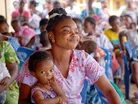
Children under five account for approximately 75% of all malaria deaths in Africa, according to the World Health Organization (WHO).
Novartis has announced that WHO has prequalified Coartem Baby, the first and only antimalarial developed specifically for newborns and young infants weighing from two to five kg.
The antimalarial is developed through a collaboration between Novartis and Medicines for Malaria Venture (MMV), representing a significant advancement in the global response to malaria.
The treatment helps to address a critical gap in malaria care for infants.

A long-standing treatment gap
WHO’s data shows that malaria remains one of the world’s deadliest infectious diseases, with an estimated 282 million cases and around 610,000 deaths in 2024.
Nearly all of these deaths occur in Africa, where children under five account for approximately three in four malaria-related fatalities.
Despite the high burden, newborns and young infants have historically been underrepresented in malaria research and treatment development.
Until recently, no approved antimalarial medicine existed for infants weighing below four and a half kg.
As a result, clinicians have often had to rely on formulations designed for older children, increasing the risks of incorrect dosing, reduced efficacy, or toxicity.
Coartem Baby is the first antimalarial specifically designed and approved for this previously unserved group.
It provides a targeted formulation for infants as small as two kg, helping close a dangerous gap in paediatric malaria care.
“This new formulation of artemether-lumefantrine represents an innovation as there are no antimalarial medicines specifically developed for the treatment of uncomplicated malaria in children from two to five kg body weight,” says Dr Daniel Ngamije Madandi, Director, Malaria and Neglected Tropical Diseases at the WHO.
In parts of West Africa, infection rates in infants under six months have been reported between 3.4% and 18.4%.
Across malaria-endemic regions in Africa, an estimated 30 million babies are born each year in areas at risk of infection.
This early vulnerability, combined with the lack of tailored treatment options, has created a persistent clinical challenge for frontline health systems.
What Coartem Baby means for procurement
WHO prequalification is a regulatory assessment process that evaluates the quality, safety, and efficacy of medicines for priority diseases such as malaria.
Its significance extends beyond clinical approval.
Products that achieve prequalification are included in WHO-endorsed lists used by United Nations agencies and other procurement bodies to guide purchasing decisions for publicly funded health programmes.
“For too long, newborns and young infants with malaria have fallen through the cracks because existing treatments were not designed with them in mind,” says Dr Martin Fitchet, CEO of MMV.
“WHO prequalification of Coartem Baby is a major public health milestone and reflects MMV’s commitment to ensuring that even the smallest and most vulnerable patients are not left behind.
“This achievement shows what is possible when partners come together to translate scientific innovation into real‑world impact.”
In practice, this status is a gateway to large-scale procurement.
It allows international donors, governments, and global health organisations to begin coordinated purchasing with confidence in product quality and suitability.
For Coartem Baby, this creates the conditions for rapid integration into national malaria treatment programmes in endemic countries.
Novartis has committed to making the treatment available largely on a not-for-profit basis in malaria-endemic regions, which further supports affordability and scale-up through public procurement systems.
“This decision takes us one step closer to ensuring that the tiniest babies have access to the first antimalarial designed specifically for them,” says Dr Lutz Hegemann, President of Global Health at Novartis.
“We have already introduced the treatment in Ghana and are pleased to now be going further together with our partners to reach even more of the smallest malaria patients.”
Case study: early use in Ghana
An early clinical example from Kumasi, Ghana, shows the practical impact of the new formulation.
An eight-month-old infant named Wonder was admitted to hospital at 12 weeks of age with malaria symptoms.
He was treated at Methodist Hospital using Coartem Baby after clinicians became aware of its introduction.
Previously, infants in this weight category would have been treated using formulations intended for older children due to the absence of suitable alternatives.
This approach carried potential risks linked to dosing accuracy and tolerability.
The availability of a dedicated infant formulation enabled clinicians to treat the patient with a product designed specifically for his weight and developmental stage, contributing to successful recovery.
“As doctors we’ve tended to look for malaria in older children, but when newborn babies got sick nobody seemed to know what to do,” says Dr Emmanuel Aidoo, a pediatrician at Methodist Hospital in Ankaase, Ghana.
“Having a new treatment tailor-made for infants that is well tolerated gives us confidence.”
Health systems and supply chains
For procurement agencies, Coartem Baby introduces a new category of essential medicine: a paediatric formulation tailored specifically for neonates and low-weight infants.
This has several operational implications:
- Forecasting demand: Health systems can now include infants under two to five kg in malaria treatment quantification models, improving supply chain accuracy
- Reducing off-label use: Procurement of appropriate formulations reduces reliance on paediatric dose adjustments of medicines intended for older children
- Improving safety standards: Standardised procurement of a neonatal-specific treatment helps reduce dosing errors and adverse outcomes
- Strengthening donor programming: WHO prequalification enables inclusion in donor-funded procurement frameworks and emergency stockpiles.
As countries begin integrating Coartem Baby into national essential medicines lists, procurement agencies are expected to prioritise phased introduction in high-burden regions with the highest neonatal malaria risk.

Executives

Dr Daniel Ngamije Madandi
Director, Malaria and Neglected Tropical Diseases

Dr Lutz Hegemann
President of Global Health

Dr Martin Fitchet
CEO