
Sanofi Agrees US$41bn Deal to Acquire US Biotech Insmed
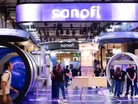
Sanofi has struck a bumper US$41bn deal to acquire US biotech firm Insmed as the French pharmaceutical giant looks to secure its future growth and mid- and early-stage clinical pipeline.
It marks the pharmaceutical industry's largest deal since Pfizer's US$43bn acquisition of oncology biotech Seagen in 2023.
The acquisition comes as Sanofi prepares for the loss of exclusivity of its blockbuster asthma and anti-inflammatory medicine Dupixent in the early 2030s. Having become one of the company's most important revenue drivers, Dupixent's eventual patent cliff leaves Sanofi with a revenue generation conundrum.
However, the Insmed deal, the biggest strategic move yet in Sanofi CEO Belén Garijo’s tenure, which began in May 2026 when she became the company’s first-ever female CEO, should quell some of these concerns.
- US$41bn – Total cash consideration for Sanofi's acquisition of Insmed, equivalent to US$175 per share.
- US$10bn+ – Expected peak sales potential of Insmed's acquired medicines, according to Sanofi's investor presentation.
- US$1.09bn – Brinsupri revenue generated in the first nine months of 2026, following its US launch in August 2025.
- US$433.8m – Arikayce revenue in 2025, representing annual growth of 19%.
- 2028 – Expected year in which the acquisition will become accretive to Sanofi's business earnings per share.
Insmed’s two prize possessions are the commercialised respiratory medicines Brinsupri and Arikayce, alongside a promising late-stage clinical pipeline and earlier-stage research programmes.
In the official company announcement, Belén says: “This acquisition is a major strategic step to significantly accelerate our mid- and long-term growth trajectory and further strengthen our mid- and early-stage pipeline.”
Will Lewis, CEO and Chair of Insmed, also believes Sanofi is the ideal partner for the US biotech, highlighting the pharmaceutical giant's ability to expand the global reach of its medicines.
“In Sanofi, we have a partner that recognises the value of our science, commercial execution and the exceptional culture we have created. Together, we expect to bring our therapies to more patients around the world, faster than we ever could on our own,” he explains.
The transaction, which has been approved by both companies' boards, remains subject to shareholder and regulatory approvals and is expected to close in the first half of 2027.
Belén Garijo’s impactful start
Since taking over in May 2026, Belén has wasted no time in stamping her mark on Sanofi and reshaping the organisation’s strategic priorities.
One of her most significant moves before the Insmed acquisition was the expansion of Sanofi's longstanding partnership with US biotech Regeneron.
Announced in October 2026, the agreement will see the companies collaborate on four next-generation, long-acting antibodies targeting inflammatory pathways, with Regeneron receiving US$1bn upfront and potentially a further US$7bn in development, regulatory and commercial milestone payments.
The expanded collaboration builds on the success of Dupixent, which generated almost US$20bn in revenue in 2025 and is now used by more than 1.5 million people across nine indications.
At the time of the partnership expansion announcement, Belén described it as “one of the most productive partnerships in our industry.”
Through the partnership, Sanofi and Regeneron hope to develop the next generation of immunology treatments, building on the commercial and scientific success of their existing portfolio.
Belén has also committed to strengthening Sanofi's manufacturing capabilities, including a new 36,000-square-metre insulin production facility at the company's BioCampus in Frankfurt, Germany. The investment forms part of a wider effort to reinforce Sanofi's European manufacturing infrastructure and long-term supply capabilities.
Alongside these investments, Belén has reshuffled Sanofi's executive committee as she looks to accelerate decision-making and sharpen the company's strategic focus.
The deal also follows the appointment of Sanofi's former chief executive, Paul Hudson, who led the company between 2019 and 2026, to Insmed's board in October 2026.
“This acquisition is a major strategic step to significantly accelerate our mid- and long-term growth trajectory. ”
Strong respiratory pipeline
Building on Sanofi's established presence in respiratory medicine, Insmed brings two commercialised treatments targeting chronic and difficult-to-treat lung diseases, alongside a promising late-stage clinical pipeline.
Its commercial portfolio is anchored by Brinsupri, which treats non-cystic fibrosis bronchiectasis (NCFB), and Arikayce, an inhaled antibacterial treatment for patients with refractory Mycobacterium avium complex (MAC) lung disease.
Brinsupri is a first-in-class, once-daily oral treatment and the first and only approved medicine specifically indicated for NCFB. It targets neutrophilic inflammation, a key driver of the chronic airway inflammation associated with the disease.
Approved in the US, EU, UK and Japan, Brinsupri has quickly established itself as a resounding commercial success.
Since its US launch in August 2025, the medicine has achieved blockbuster status, generating US$1.09bn in revenue.

Arikayce, meanwhile, offers a targeted inhaled approach to treating MAC lung disease, a chronic bacterial infection that can cause irreversible lung damage.
It is the only approved inhaled treatment specifically indicated for patients with treatment-refractory MAC lung disease in the US, EU and Japan.
The treatment generated US$433.8m in revenue during 2025, representing annual growth of 19%. Further growth could follow in the US, where the FDA accepted an application for an expanded MAC lung disease indication under priority review in September 2026.
Beyond its two marketed medicines, Insmed also brings a late-stage development opportunity in treprostinil palmitil inhalation powder (TPIP).
Currently in Phase III development, the once-daily inhaled therapy is being investigated across pulmonary arterial hypertension, pulmonary hypertension associated with interstitial lung disease and progressive pulmonary fibrosis.
“Insmed builds on our already successful presence in respiratory diseases through its highly differentiated portfolio, strong science and proven commercial success,” explains Belén.
“Together, we have the opportunity to build on these achievements, reach more patients globally and reinforce our leadership in diseases of significant unmet medical need.”
Sanofi - key partners
– Regeneron: Sanofi and Regeneron have maintained a clinical and commercial alliance since 2003, developing several medicines together, most notably Dupixent, which treats multiple type 2 inflammatory conditions. In October 2026, the companies expanded their collaboration through an agreement worth up to US$8bn to develop four next-generation antibodies targeting inflammatory pathways, combining Regeneron's research capabilities with Sanofi's global commercial reach.
– AstraZeneca: Sanofi and AstraZeneca entered a collaboration in 2017 to develop and commercialise Beyfortus, a long-acting antibody designed to protect newborns and infants against respiratory syncytial virus (RSV). AstraZeneca leads development and manufacturing, while Sanofi oversees commercialisation. The partnership has supported the medicine's international rollout, with both companies working to expand manufacturing capacity and improve global availability.
– Owkin: Sanofi and Owkin have collaborated since 2021, initially through a €90m (US$98.5m) strategic partnership focused on identifying drug targets in oncology and improving patient subgrouping. The relationship has since expanded into immunology and AI-powered drug development. In June 2026, the companies announced a multi-year collaboration to develop specialised AI agents through Owkin's K Pro platform, supporting research and clinical development workflows across Sanofi's pharmaceutical business.
Company portals




Executives
Belén Garijo
CEO
Will Lewis
Chair and CEO