Sanofi Invests in Europe’s Pharma Manufacturing Future
French pharmaceutical giant Sanofi has demonstrated its continued commitment to European pharmaceutical manufacturing amid fears that the continent is struggling to compete with rival markets.
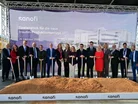
The company has broken ground on a new insulin manufacturing facility at its BioCampus in Frankfurt, Germany, in a major investment aimed at strengthening its production capabilities and supply chain resilience.
According to Sanofi, the facility will “bring a new generation of insulin production” to one of the company’s largest integrated research and manufacturing sites, helping meet the needs of millions of people living with diabetes worldwide.
Brendan O’Callaghan, Head of Manufacturing and Supply at Sanofi, says the investment builds on the company’s longstanding expertise in insulin production while bringing new technologies to the site.
“With this investment, we are building on more than 100 years of experience in insulin manufacturing at the site, to bring the latest innovations in Biopharma manufacturing to help us further advance the supply of Insulins for the increasing number of patients living with Diabetes, in Europe and around the world,” he writes on LinkedIn.
“With this investment, we are building on more than 100 years of experience in insulin manufacturing at the site. ”
Covering the entire insulin supply chain
Sanofi’s under-construction insulin manufacturing facility will occupy 36,000 square metres at its BioCampus in Frankfurt, equivalent to around five football pitches.
The site will incorporate advanced manufacturing technologies, automation, AI and digital tools to support production and quality control.
Full production of insulin active pharmaceutical ingredients (APIs) is expected to begin in 2032, subject to the facility receiving the necessary licences.

Drawing on more than a century of manufacturing expertise in Frankfurt, the facility is expected to become one of Europe’s largest and most advanced insulin manufacturing sites, bolstering Sanofi’s global insulin supply network.
The Frankfurt BioCampus already spans the full insulin manufacturing value chain, from API production and filling to device assembly and packaging. Around 4,000 employees work on insulin at the site, which supplies approximately 20 insulin products.
- 36,000 square metres – the footprint of Sanofi’s new insulin manufacturing facility in Frankfurt.
- 2032 – the planned start date for full insulin active pharmaceutical ingredient production, subject to licensing.
- 100+ years – Sanofi’s history of insulin manufacturing at its Frankfurt site.
- 4,000 employees – the approximate number working on insulin at the Frankfurt BioCampus.
- 31% – Europe’s share of global pharmaceutical R&D today, down from 43% in 1990, according to figures cited by European pharmaceutical companies.
A boost for European pharma manufacturing
The development is welcome news for the European pharmaceutical sector as Europe’s pharmaceutical manufacturing competitiveness is under increasing scrutiny.
A growing number of pharmaceutical companies are announcing new or planned manufacturing facilities in the US, including European-headquartered groups such as AstraZeneca and Bayer. Europe, by contrast, has yet to see a comparable wave of investment in new manufacturing facilities.
The trend has fuelled concerns among industry leaders about Europe’s ability to compete with the US and China for investment and manufacturing capacity.
In September 2026, chairs of nine leading European pharmaceutical companies, including Sanofi’s Frédéric Oudéa, jointly called for action to strengthen Europe’s pharmaceutical sector in an open letter to European political leaders.
Sanofi CEO Belén Garijo echoed this message in a LinkedIn post following the Frankfurt announcement, describing the facility as “the single largest manufacturing investment in our history.”
“This investment is about more than one site. It is about building a stronger, more resilient Europe,” she writes.
Garijo adds that Europe needs “stable, predictable policy that rewards innovation and sustains investments” to ensure medicines reach the patients who need them. The comments reflect wider industry concerns that the continent must create a more supportive environment for pharmaceutical research, development and manufacturing.
“This investment is about more than one site. It is about building a stronger, more resilient Europe. ”
Europe’s share of global pharmaceutical R&D has fallen from 43% in 1990 to 31% today, according to figures cited by the companies. Its share of commercial clinical trials has also halved over the past decade to 9%, limiting research investment and opportunities for patients to participate in studies.
The consequences extend to access to new treatments. European Federation of Pharmaceutical Industries and Associations (EFPIA) data cited in the letter suggests around 40% of newly approved therapies never reach European patients, while those that do can take nearly 600 days to become available.
Sanofi - key partners
AstraZeneca
CEO: Pascal Soriot | HQ: Cambridge, UK
Sanofi and AstraZeneca jointly developed and commercialise Beyfortus (nirsevimab), a long-acting monoclonal antibody designed to protect infants from respiratory syncytial virus (RSV). The partnership combines AstraZeneca’s antibody expertise with Sanofi’s global commercial and manufacturing capabilities, and has helped establish Beyfortus as an important tool in infant RSV prevention.
Novavax
CEO: John C. Jacobs | HQ: Gaithersburg, Maryland
Sanofi and Novavax have a licensing partnership covering co-commercialisation of Novavax’s adjuvanted COVID-19 vaccine, alongside development of potential flu-COVID-19 combination vaccines. The agreement also gives Sanofi a non-exclusive licence to use Novavax’s Matrix-M adjuvant in vaccine products, broadening its access to protein-based vaccine technology.
Company portals


Executives
Belén Garijo
CEO

Brendan O'Callaghan
Executive Vice President, Manufacturing and Supply