
This Week in Healthcare: AstraZeneca, Verizon, Netskope, GSK
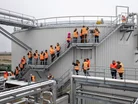
AstraZeneca: Biomethane Energy for UK Healthcare Operations
When AstraZeneca and Future Biogas commissioned the UK's first unsubsidised biomethane plant in February 2025, the project marked a significant moment for renewable energy infrastructure. As of February 2026, the Moor Bioenergy facility demonstrates how strategic corporate partnerships could enable biomethane to scale across industries without relying on taxpayer support, potentially strengthening the country's green energy capabilities.
The plant's first year of operation suggests that biomethane could become a commercially viable energy source when the right partnerships are established, offering a blueprint for other organisations looking to decarbonise their operations through direct investment in new renewable capacity.

Future Biogas's biomethane plant delivers renewable energy
Future Biogas's biomethane plant is located at Gonerby Moor in Lincolnshire. Since opening in February 2025, it has added almost 100 GWh of renewable biomethane into the gas grid, which has avoided around 17,000 tonnes of CO₂e. This represents almost 100% of total UK gas consumption for AstraZeneca, the plant's exclusive offtaker.
The companies have signed a long-term agreement for Moor to provide the gas that AstraZeneca uses to generate clean heat for its research and development (R&D) and manufacturing operations. The facility also incorporates carbon capture technology into its operations, with biogenic CO₂ separated in the process of upgrading raw biogas into biomethane.
The captured carbon can then be used for commercial applications, including beverage carbonisation. This dual-purpose approach maximises the facility's environmental and commercial value.
Top 10: RPA in Pharmaceuticals
Robotic Process Automation (RPA) uses automated bots to emulate human actions in digital systems, usually focused on handling repetitive tasks such as data entry.
Many of the world’s largest pharmaceutical companies are leveraging RPA to automate tasks, including regulatory compliance, clinical trial data and supply chain management.
As the pharmaceutical sector is approaching Pharma 4.0, which aims to digitise the industry, companies are integrating technologies to increase efficiency in production.
Healthcare Digital explores the Top 10 pharmaceutical companies in the world using RPA, ranked by market capitalisation.
Why is Verizon Pushing for Private 5G for Hospitals?
Healthcare facilities are reaching a critical threshold in their wireless infrastructure capabilities as the proliferation of connected medical equipment and artificial intelligence applications continues to strain existing networks.
Traditional Wi-Fi systems are becoming inadequate for contemporary clinical settings, according to Verizon. The telecommunications company is advocating for the healthcare industry to embrace private wireless networks (PWNs) and embedded 5G cellular connectivity for medical apparatus.
Verizon suggests that establishing private wireless connectivity standards could enable healthcare organisations to implement new digital services with greater reliability while alleviating network strain.
Robin Goldsmith, Practice Leader of Healthcare and Life Sciences at Verizon Business, says the sector will require dedicated wireless infrastructure as medical facilities advance their digital capabilities.
"I believe that in the coming years, PWNs will be the standard requirement for every new hospital build. The reality is that the vast majority of hospitals are years away from being able to do so," he says.
Netskope Threat Labs: Healthcare Facing Data Security Risks
Netskope Threat Labs has released its annual healthcare threat report, revealing critical security challenges facing the sector over the past 13 months.
The analysis highlights how the rapid adoption of cloud services and AI tools is creating significant data security vulnerabilities for healthcare organisations, particularly concerning regulated patient information.
The growing use of generative AI applications among healthcare staff has emerged as a primary concern for data protection.
According to the report, regulated data such as patient records and medical information accounted for 89% of all data policy violations occurring in the context of generative AI usage.
This figure could indicate a substantially higher risk compared to the cross-industry average of 31%, suggesting that healthcare organisations face unique challenges in managing sensitive information within AI tools.
Who is Adele Cheli, GSK's New VP Global Sustainability?
Claire Lund is departing GSK after more than 13 years with the pharmaceutical company, where she has served as Vice President of Sustainability.
Adele Cheli, who most recently held the position of Head of Nature Action and Partnerships at GSK, will take over the role.
Claire's impact on sustainability
Throughout her tenure at GSK, Claire worked across the company's global operations, encompassing medicines, vaccines, R&D and supply chains.
Her focus centred on advancing both planetary and human health mitigation, whilst supporting the sector's adaptation to climate change and nature loss.
Under Claire's leadership, GSK secured A scores from CDP – the highest possible rating – in both Climate and Water categories.
She brings more than 25 years of experience in leading transformational strategic change programmes across energy, facilities, capital and renewables.
Company portals




Executives

Adele Cheli
Global VP Sustainability

Claire Lund
Outgoing Vice President sustainability
Philipp Lukas
Chief Executive Officer
Ray Canzanese
Director of Netskope Threat Labs
Robin Goldsmith
Practice Leader, Healthcare, Insurance & Life Sciences