
Women, AI Wellness & Patient Data: This Week’s Top stories
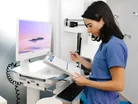

Electronic health records (EHRs) and critical applications are moving their way from physical to online documents.
As EHRs and critical clinical applications move to the web, clinicians need fast, familiar access that doesn’t compromise security or compliance.
Google's Chrome Enterprise Premium (CEP) extends the Chrome experience with enterprise-grade protections and healthcare-focused integrations, helping organisations keep patient data safe while keeping care teams in flow.
The wellness industry has changed substantially in the past decade.
Technology now analyses body metrics rather than simply counting steps and gen AI is converting standard exercise programmes into personalised health routines.
Determining what the body requires at a specific time could present more difficulty than the physical activity itself.
Technogym has partnered with Google Cloud across multiple years to integrate Gemini AI into its equipment.
Healthcare providers face an execution gap between AI ambition and operational reality. Data from Infor shows more than half of businesses cannot scale AI beyond pilot programmes.
The industry cloud provider has released capabilities across its Velocity Suite and Infor Agentic Orchestrator to address this gap.
These tools target sector-specific challenges that prevent healthcare organisations from deploying AI at scale.
"At Infor, agentic AI is not a feature we bolted on. It's the culmination of two decades of deliberate foundation building," says Kevin Samuelson, CEO of Infor.
"Our industry specific platforms, multi-tenant architecture and deep process intelligence give our agents a level of contextual precision that generic AI simply cannot replicate."
Kuehne+Nagel has increased its presence in the Indian pharmaceutical logistics sector by launching a new temperature-controlled airfreight cross dock in Hyderabad.
This development follows the company’s efforts to strengthen its HealthChain-certified network in the region and follows an increase in demand for specialised handling of medical shipments.
The move marks a further step in the firm’s long-term investment strategy within the healthcare vertical.
By establishing a dedicated site for temperature-sensitive goods, the logistics provider aims to maintain the integrity of pharmaceutical products as they move through the global supply chain.
PwC: Women’s Healthcare Expected to Reach US$600bn by 2030
PwC has released its report From margin to mainstream - The future of women’s health.
According to the company’s 2026 report, “women’s health is one of the most undercapitalised growth markets in healthcare today.”
Despite women representing roughly half of the global population and driving the majority of healthcare decisions, they receive only about 5% of total healthcare R&D and investment funding.
This gap reflects a long-standing structural imbalance in research, product design and care delivery.