Top 10: Pharmaceuticals in EMEA
The EMEA region is home to some of the world’s most influential pharmaceutical companies, from established Europe-centric research powerhouses to global businesses with extensive international operations.
These organisations shape the development of new medicines, invest billions in research and development, and help determine how treatments reach patients.
The sector is evolving rapidly, with patent expiries, intensifying competition, advances in AI and changing healthcare demands reshaping strategic priorities.
From oncology and immunology to vaccines, rare diseases and next-generation therapies, Healthcare Digital assesses the ten leading EMEA pharmaceutical firms ordered by annual revenue generated in 2025.
10. Teva Pharmaceuticals
Annual revenue: US$17.3bn
HQ: Tel Aviv, Israel
CEO: Richard Francis

Teva Pharmaceuticals is an Israeli-headquartered biopharmaceutical company with more than 125 years of history, combining a global generics business with an expanding portfolio of innovative medicines.
Under CEO Richard Francis, its 'Pivot to Growth' strategy is shifting the business towards higher-value treatments, including Austedo for movement disorders and Ajovy for migraine.
Recent developments include expanding its biosimilar partnerships and advancing its neuroscience pipeline, including ecopipam for Tourette syndrome and Weltruza for schizophrenia.
9. Merck Group
Annual revenue: US$23.5bn
HQ: Darmstadt, Germany
CEO: Kai Beckmann

Merck Group is a German science and technology business spanning healthcare, life sciences and electronics, with 2025 revenue of €21bn (US$23.5bn).
Under CEO Kai Beckmann, who took over in May 2026, the company is pursuing growth across biopharmaceutical manufacturing, specialist medicines and semiconductor materials.
A major recent development is its proposed US$11.3bn acquisition of US-based Bio-Techne, aimed at strengthening its life science capabilities. The business remains majority-owned by the founding family.
8. Boehringer Ingelheim
Annual revenue: US$31.4bn
HQ: Ingelheim am Rhein, Germany
Chairman of the Board of Managing Directors: Shashank Deshpande
Boehringer Ingelheim is one of the world's largest privately owned pharmaceutical companies, spanning human medicines and animal health.
The family-owned business reported €27.8bn (US$31.4bn) in revenue in 2025, investing €6.4bn (US$7.2bn) in research and development.
Under chairman Shashank Deshpande, it is expanding its innovative medicines portfolio, with recent launches in lung cancer and pulmonary fibrosis. Its experimental obesity treatment, survodutide, developed with Zealand Pharma, is also progressing through late-stage trials, positioning the company in a competitive market.
7. GSK
Annual revenue: US$43.3bn
HQ: London, UK
CEO: Luke Miels
Founded in 2000 following the merger of Glaxo Wellcome and SmithKline Beecham, GSK is a UK-based biopharmaceutical company specialising in vaccines and medicines for infectious diseases, HIV, respiratory conditions and cancer.
Under CEO Luke Miels, who took over in January 2026, the company reported £32.7bn (US$43.3bn) in sales in 2025.
In July 2026, GSK announced a £1.9bn (US$2.5bn) cost-saving programme to accelerate drug development, alongside plans to more than double its target for late-stage clinical trials.
6. Novo
Annual revenue: US$48.59bn
HQ: Bagsværd, Denmark
CEO: Maziar Mike Doustdar
Novo is a global pharmaceutical company best known for its diabetes and obesity GLP-1 treatments, including Ozempic and Wegovy.
Under CEO Mike Doustdar, the company reported US$48.59bn in revenue in 2025, with obesity-care sales rising 26%.
Novo is locked in competition with US firm Eli Lilly to dominate the GLP-1 market. In 2026, Novo launched its Wegovy pill in the US, expanding its approach to weight management beyond injectable medicines.
5. Bayer
Annual revenue: US$51bn
HQ: Leverkusen, Germany
CEO: Bill Anderson

Founded in 1863 in Barmen, Germany, Bayer is a global life sciences company spanning pharmaceuticals, consumer health and crop science.
Led by CEO Bill Anderson, the group reported €45.6bn (US$51.05bn) in sales in 2025, with its pharmaceutical business contributing €17.8bn (US$19.9bn).
Bayer is streamlining its operating model while investing in new medicines, including Nubeqa and Kerendia. The company is also expanding its US presence, announcing a US$2.2bn manufacturing facility in Ohio.
4. Sanofi
Annual revenue: US$52.9bn
HQ: Paris, France
CEO: Belén Garijo
Headquartered in Paris, Sanofi is a global biopharmaceutical company whose portfolio spans immunology, rare diseases, vaccines and neurology.
Its blockbuster medicine Dupixent, developed with Regeneron, generated €15.7bn (US$17.6bn) in sales in 2025, helping drive annual net sales to €43.6bn (US$52.9bn).
Under CEO Belén Garijo, who took over in May 2026, Sanofi is focused on strengthening its research pipeline and securing growth beyond Dupixent. Recent moves include expanding its Regeneron antibody partnership and pursuing new opportunities in immunology and vaccines.
3. Novartis
Annual revenue: US$54.5bn
HQ: Basel, Switzerland
CEO: Vasant Narasimhan

Headquartered in Basel, Switzerland, Novartis is a global pharmaceutical company focused on innovative medicines, with expertise spanning oncology, immunology, neuroscience and cardiovascular disease.
Under CEO Vasant Narasimhan, the company reported US$54.5bn in net sales in 2025, an 8% increase year on year.
Its growth was driven by medicines including Kisqali for breast cancer, Kesimpta for multiple sclerosis and Pluvicto for prostate cancer. Novartis is also investing in radioligand therapies and expanding its research pipeline as it navigates patent expiries affecting established medicines.
2. AstraZeneca
Annual revenue: US$58.7bn
HQ: Cambridge, UK
CEO: Pascal Soriot
Headquartered in Cambridge, UK, AstraZeneca is a global biopharmaceutical company developing prescription medicines across oncology, cardiovascular, renal and metabolism, respiratory and immunology, and rare diseases.
Led by CEO Pascal Soriot, the company reported total revenue of US$58.7bn in 2025, an 8% increase.
Oncology remains its largest therapy area, with medicines including Tagrisso, Imfinzi and Enhertu supporting growth alongside treatments for chronic and rare conditions.
Research and development is central to AstraZeneca’s strategy, with the company reporting 16 positive Phase III trial results in 2025.
It aims to reach US$80bn in annual revenue by 2030, supported by pipeline development, new treatment launches and continued investment in manufacturing and research capabilities.
1. Roche
Annual revenue: US$73.8bn
HQ: Basel, Switzerland
CEO: Thomas Schinecker

Headquartered in Basel, Switzerland, Roche is a global healthcare company combining pharmaceuticals and diagnostics, with a focus on personalised healthcare and treatments for serious diseases.
Led by CEO Thomas Schinecker, the company reported sales of CHF61.5bn (US$73.8bn) in 2025.
Its pharmaceutical portfolio includes Ocrevus for multiple sclerosis, Hemlibra for haemophilia A and Vabysmo for serious eye conditions, while its diagnostics business develops laboratory tests and technologies to support disease detection and treatment decisions.
Research and development remains central to Roche’s strategy, with ten potential new medicines advancing into late-stage development during 2025.
The company is also investing in AI-driven research, including autonomous laboratories designed to accelerate drug discovery and strengthen its R&D capabilities.
Company portals






Executives
Belén Garijo
CEO

Bill Anderson
Member of the Board of Management
Kai Beckmann
Chairman of the Executive Board and Group CEO at Merck
Luke Miels
Chief Commercial Officer
Maziar Mike Doustdar
President and CEO
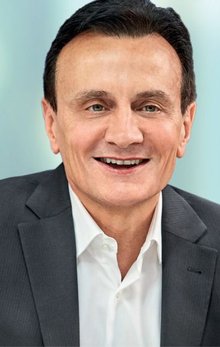
Pascal Soriot
CEO
Richard Francis
President and Chief Executive Officer
Shashank Deshpande
Chairman of the Board of Managing Directors & Head of Human Pharma
Thomas Schinecker
CEO Roche Group

Vas Narasimhan
CEO