Danaher, NVIDIA, FedEx, Sanofi: This Week in Healthcare

Danaher is stepping up efforts to influence the future of AI-enabled science.
Just days after announcing plans to launch its “first AI-powered autonomous lab”, the diagnostics giant announced a partnership with the world’s most valuable company and AI technology innovator, NVIDIA, to “advance autonomous science.”
The collaboration combines Danaher’s scientific instruments, automation technologies, laboratory workflow software and life sciences expertise with NVIDIA’s accelerated computing and AI capabilities.
By integrating these technologies, the companies aim to help researchers move more quickly from computational predictions to experimental validation, creating a continuous feedback loop in which experimental results refine AI models and those models inform the design of future experiments.
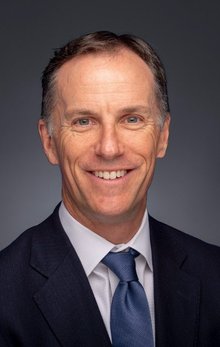
“By combining Danaher's workflows, data and deep scientific expertise with NVIDIA's AI and accelerated computing capabilities, we're creating a faster, more connected research process,” writes Danaher CEO Julie Sawyer Montgomery on LinkedIn.
“The goal is a continuous cycle where experiments improve AI models, and those models help scientists design better experiments.
“And that's what gets me excited. Helping researchers move faster to advance discoveries that can improve patients' lives.”
Rush University System for Health and Endeavor Health have announced plans to merge, bringing together two major healthcare providers serving Chicago and the wider Illinois region to create an integrated academic health system spanning 12 hospitals and more than 400 care sites.
The combined organisation will operate under the Rush brand and employ more than 46,000 team members and clinicians, serving more than 2 million patients annually across northern Illinois and Northwest Indiana.
The proposed merger aims to combine Rush's academic, research and clinical expertise with Endeavor's extensive regional care network, creating opportunities to expand access to high-quality care, accelerate medical innovation and strengthen relationships with the communities both organisations serve.
Gerald “J.P.” Gallagher, President and CEO of Endeavor Health, will lead the unified system as President and CEO once the transaction closes. Dr Omar Lateef, President and CEO of Rush University System for Health and Rush University Medical Centre, will remain in his current position until completion, before becoming CEO Emeritus and Strategic Advisor to the CEO.
Governance will be overseen by a 20-member system Board, with equal representation from Rush and Endeavor Health and a chair drawn from the Rush system.
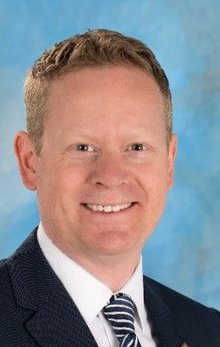
Writing on LinkedIn following the announcement, J.P. says: “Together we will advance our shared mission as an integrated academic health system deeply connected to the communities we serve across greater Chicagoland.”
The end-of-year peak season brings a surge in pharmaceutical shipping activity across Europe, with volumes for major logistics companies such as FedEx sometimes reaching a peak of two million packages a day.
Preparing for this increase in demand, while maintaining the integrity of temperature-sensitive, patient-critical medicines, places additional strain on pharmaceutical supply chains.
To help customers prepare for these challenges, FedEx Europe has launched a digital portal enabling pharmaceutical and life sciences companies to book and manage temperature-controlled shipments.
Available across 26 European markets, the platform provides access to FedEx's Temp-Assure Advantage solution. Customers can onboard, order pre-conditioned packaging, schedule shipments and manage returns through a streamlined digital experience, helping them coordinate critical deliveries more efficiently.
“The portal helps provide greater visibility and control throughout the shipping process, supporting more efficient planning and execution,” says Toby Hay, Managing Director of International Marketing at FedEx Europe.
“While it does not simplify the complexity of healthcare logistics itself, it helps customers manage shipments more effectively, maintain operational continuity and respond more quickly to changing business needs.”

Global life sciences and diagnostics leader Waters Corporation is aiming to connect AI directly to its laboratory instruments, enabling pharmaceutical researchers to move from AI-generated hypotheses to physical experiments with less manual intervention.
Central to this goal is the company's launch of Waters AI Link, a software capability that brings Anthropic’s Model Context Protocol (MCP) to its waters_connect informatics platform.
The integration allows scientists to use natural language to direct Waters instruments and manage laboratory workflows through AI models and agents, including Anthropic’s Claude and Claude Science.
AI Link supports tasks such as creating methods, running acquisitions and processing results, while coordinating connected equipment such as sample preparation systems.
Waters’ announcement is the latest example of a wider industry shift, as automated, AI-powered research environments increasingly blur the lines between computational research and physical experimentation.
French pharmaceutical giant Sanofi has demonstrated its continued commitment to European pharmaceutical manufacturing amid fears that the continent is struggling to compete with rival markets.
The company has broken ground on a new insulin manufacturing facility at its BioCampus in Frankfurt, Germany, in a major investment aimed at strengthening its production capabilities and supply chain resilience.
According to Sanofi, the facility will “bring a new generation of insulin production” to one of the company’s largest integrated research and manufacturing sites, helping meet the needs of millions of people living with diabetes worldwide.
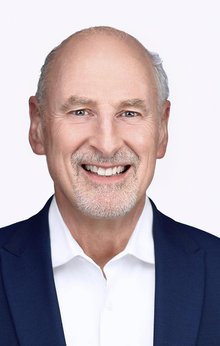
Brendan O’Callaghan, Head of Manufacturing and Supply at Sanofi, says the investment builds on the company’s longstanding expertise in insulin production while bringing new technologies to the site.
“With this investment, we are building on more than 100 years of experience in insulin manufacturing at the site, to bring the latest innovations in Biopharma manufacturing to help us further advance the supply of Insulins for the increasing number of patients living with Diabetes, in Europe and around the world,” he writes on LinkedIn.








Executives
Brendan O'Callaghan
Executive Vice President, Manufacturing and Supply
J.P. Gallagher
President & CEO, Endeavor Health
Julie Sawyer Montgomery
CEO
Toby Hay
Managing Director of International Marketing